

Reviewed by the Coppell ER emergency care team
| 🚨 Call 911 If Any of These Appear After a Head Impact
Loss of consciousness of any duration. Repeated vomiting. Seizure or convulsion. Slurred speech or weakness on one side. Unequal pupil sizes. Clear fluid draining from the nose or ears. Severe worsening headache. Confusion or inability to recognize people. Do not drive yourself or the injured person. Coppell ER is at 720 N Denton Tap Rd. Phone: 469-763-3136. |
Head injury when to go to ER is often unclear because dangerous brain bleeding can develop hours or days after impact, not just in the first minutes. Most head injuries are minor and heal on their own. A small percentage need urgent evaluation for bleeding, swelling, or skull fracture that can worsen rapidly without treatment. Recognizing the warning signs at each stage after an impact separates a safe recovery from a preventable disability.
Quick Timeline Reference

| Time After Impact | What to Watch For |
|---|---|
| First minutes | Loss of consciousness, seizure, unequal pupils, repeated vomiting, severe headache |
| First hour | Progressive drowsiness, worsening confusion, difficulty walking, personality change |
| First 24 hours | Persistent nausea, memory problems, sleep changes, light or noise sensitivity |
| Days to weeks | Worsening headache, mood changes, chronic subdural bleeding signs |
In the First Minutes — Signs That Mean 911
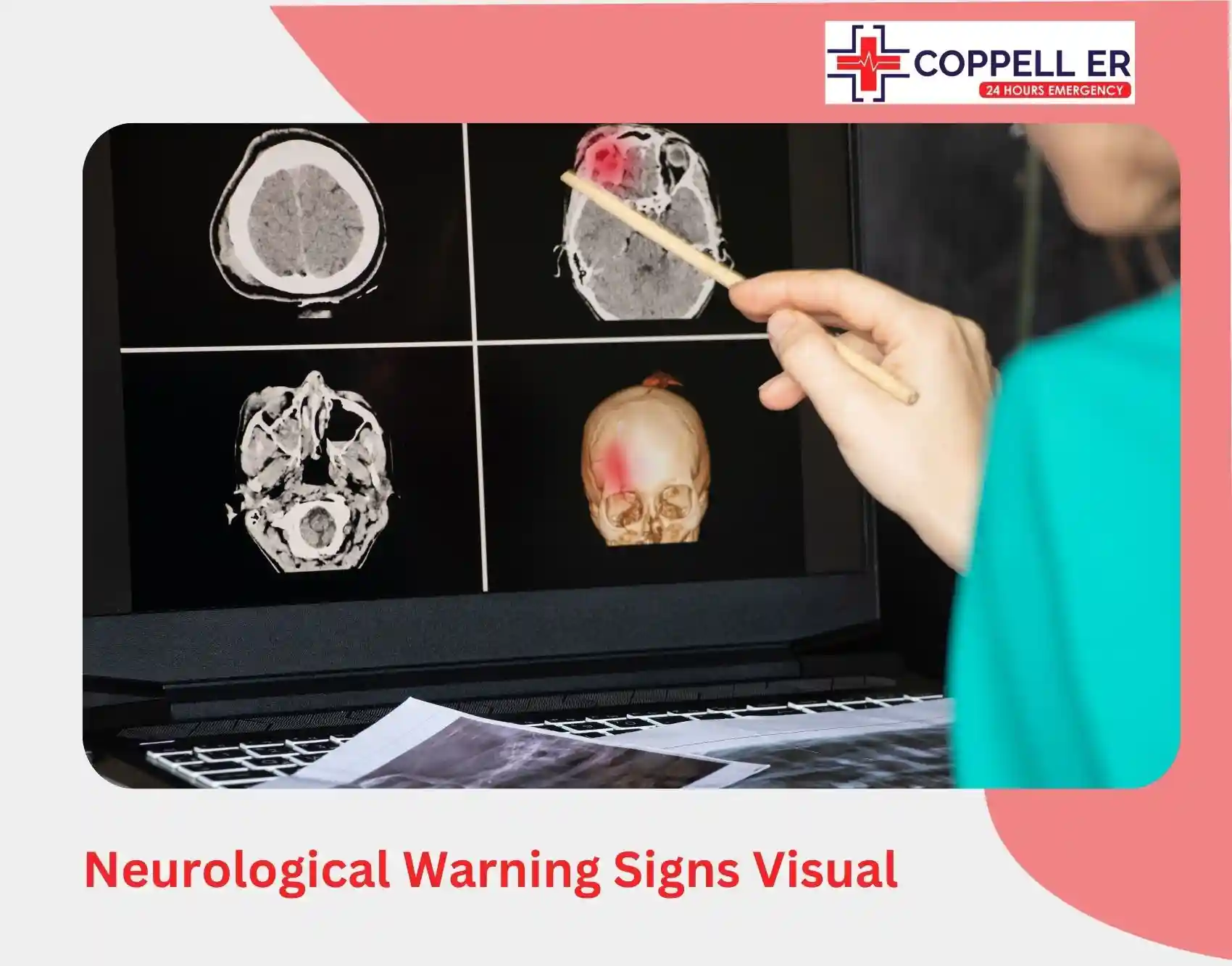
| Certain signs after a head impact mean the ER right now. Loss of consciousness, unequal pupil sizes, repeated vomiting, seizures, and severe worsening headache all indicate possible brain bleeding or swelling. Any one of these signs of brain bleeding needs 911, not a wait-and-see approach. |
These signs in the first minutes after any head impact override ordinary caution. Call 911 without waiting to see if things improve:
Loss of consciousness of any duration. Even a few seconds warrants evaluation, especially in adults or after significant force.
Seizure or convulsion. Any seizure after head impact is a red flag for brain injury requiring immediate imaging.
Repeated vomiting. More than one or two episodes within an hour points toward rising pressure inside the skull.
Unequal pupil sizes. One pupil noticeably larger than the other suggests bleeding pressing on the brain.
Slurred speech or weakness on one side. Stroke-like symptoms after head trauma suggest bleeding in a specific brain region.
Clear fluid from the nose or ears. May indicate a skull fracture with cerebrospinal fluid leak, one of the classic skull fracture symptoms.
Severe, worsening headache. Pain that intensifies rather than settling within an hour warrants imaging to rule out bleeding.
Confusion or inability to recognize people. A neurological red flag suggesting significant brain involvement.
The CDC HEADS UP resource lists these as immediate danger signs requiring 911 or the nearest emergency department.¹
In the First Hour — What to Watch For
| Not every dangerous head injury announces itself immediately. In the first hour after impact, watch for progressive drowsiness, unusual behavior, difficulty walking or speaking, and rising confusion. Someone who seemed fine right after the injury can decline rapidly as bleeding accumulates inside the skull. |
The first hour is when close observation matters most. Anyone with a possible head injury should stay with a companion who can watch for gradual changes. Concerning developments during this window include:
- Progressive drowsiness or difficulty staying awake
- Increasing confusion about time, place, or events
- Difficulty walking, standing, or maintaining balance
- Trouble speaking clearly or finding words
- Rising irritability or unusual behavior
- Nausea that will not settle
- Growing headache intensity despite rest
- Pupils that dilate or become unequal
Any deterioration during observation, even without dramatic symptoms, means head to the ER. Silent bleeding can produce subtle changes that predict serious problems.
In the Next 24 Hours — Delayed Danger Signs
| Concussion symptoms can appear hours after the injury and grow worse overnight. Persistent nausea, memory problems, sleep disturbances, sensitivity to light or noise, and a headache that will not resolve are head injury symptoms hours later that need same-day medical evaluation. |
The next 24 hours reveal concussion warning signs that were not obvious in the first minutes. Any of these merit prompt evaluation:
- Headache that persists or worsens despite rest and over-the-counter treatments
- Memory problems, particularly about events just before or after the injury
- Difficulty concentrating or feeling mentally slowed down
- Sleeping much more or much less than usual
- Feeling dazed, foggy, or unusually emotional
- Sensitivity to bright light or loud noise that was not present before
- Balance problems or feeling off-balance when standing
- Nausea that continues throughout the day
Any of these delayed symptoms warrant same-day evaluation at our 24-hour emergency room, which is set up for exactly these situations where a bump on the head evolves into concerning changes overnight or the next day.
In the Days After — The Sneaky Conditions
| Some head injuries produce serious problems days or even weeks after the initial impact. Chronic subdural hematoma, second impact syndrome, and post-concussion syndrome can all appear after the injury seemed to resolve. Any new or worsening symptom in the weeks after a head impact deserves medical evaluation. |
The dangerous conditions that emerge over days or weeks include three specific patterns worth knowing:
Chronic subdural hematoma. Slow bleeding between the brain and its outer covering, most common in older adults on blood thinners. Symptoms include gradual headache, confusion, personality changes, or weakness that appears weeks after a fall the person may not even remember.
Second impact syndrome. Rapid catastrophic brain swelling from a second head impact before an initial concussion has fully healed. Rare but often fatal, particularly in young athletes. This is why return-to-play decisions after concussion should never be rushed.
Post-concussion syndrome. Persistent concussion symptoms lasting weeks to months after the original injury. Includes ongoing headache, brain fog, sleep problems, and mood changes. Not immediately dangerous but requires evaluation and structured management.
The CDC’s TBI symptom guidance emphasizes that a healthcare provider should evaluate any brain injury where symptoms persist, worsen, or newly appear in the days after impact.²
Head Injury When to Go to ER for Higher-Risk People
| Older adults on blood thinners, young children, and anyone with a recent concussion face elevated risks from head injuries. In these groups, head injury when to go to ER shifts firmly toward earlier evaluation, since bleeding can develop with even minor impacts and progress silently for hours. |
The same head impact carries different risks depending on who sustained it. These groups deserve lower thresholds for immediate ER care after any head bump:
- Anyone taking blood thinners such as warfarin, apixaban, rivaroxaban, or daily aspirin — bleeding risk rises substantially even from minor impacts
- Adults over 65 — thinning brain tissue creates space where slow bleeding can accumulate quietly for weeks; our fall and trauma emergency team evaluates post-fall head injuries in this group with lower thresholds for imaging
- Children under two years old — neurological assessment is difficult in this age group, and our pediatric emergency care team uses specialized protocols for young patients
- Athletes with a recent concussion — second impact syndrome risk is highest in the weeks after an initial concussion
- Anyone intoxicated at the time of injury — alcohol or drugs can mask neurological signs that would normally prompt care
- People with known bleeding disorders such as hemophilia
- Anyone whose head injury involved high force — falls from height, motor vehicle collisions, or sports impacts
When is a head injury serious in these groups? The threshold is much lower. If any doubt exists, get evaluated rather than waiting for warning signs that may not appear until damage has occurred.
What Coppell ER Does for a Suspected Head Injury

| Evaluation at Coppell ER begins within minutes of walk-in. A board-certified emergency physician performs a detailed neurological exam and orders CT imaging of the brain when indicated. Most patients receive a definitive answer about bleeding, skull fracture, or concussion within about an hour of arrival. |
The typical workup follows this sequence:
- Rapid triage and Glasgow Coma Scale assessment by an emergency physician trained in acute brain injury
- Detailed history of the injury mechanism, symptom timeline, and risk factors
- Full neurological examination including cranial nerves, strength, reflexes, coordination, and mental status
- On-site CT scan of the brain when imaging is indicated, providing definitive answers about bleeding, swelling, or fracture within minutes
- Cervical spine imaging when the injury mechanism involved potential neck trauma
- Observation period with repeated neurological checks when appropriate
- Discharge planning with concussion instructions or coordination with neurosurgery for serious findings
Most head injury evaluations result in reassuring findings and clear home instructions. When something serious is found, treatment starts immediately.
Frequently Asked Questions
Should I wake someone up during the night after a head injury?
Modern guidance says continuous sleep is fine if the person was alert and behaving normally when they went to bed. Waking them is only needed if they had concerning symptoms or your doctor specifically recommended checks.
How long can concussion symptoms take to appear?
Most concussion symptoms show within minutes to hours, but some can develop over 24 to 72 hours after impact. Delayed symptoms are common enough that continued observation for a full day is recommended after any significant head injury.
Do I need the ER for a mild bump on the head?
Usually no if you feel completely normal, had no loss of consciousness, and have no risk factors. But if you are on blood thinners, over 65, or if any warning signs develop, get evaluated to rule out silent bleeding.
What is the difference between a concussion and a skull fracture?
A concussion is a functional brain injury without a break in the bone. A skull fracture is a break in the skull itself, which may occur with or without brain injury underneath. Both need evaluation, but skull fractures always require imaging.
Is it dangerous to fall asleep after hitting your head?
Sleep itself is not dangerous, but sleeping through worsening symptoms is. If the injured person was alert and behaved normally beforehand, sleep is fine. Any confusion, vomiting, or severe headache before sleep means head to the ER first.
Fast Answers About Head Injury When to Go to ER
Head injuries do not follow business hours, and neither does Coppell ER. Open 24 hours a day with board-certified emergency physicians, on-site CT imaging, and no appointment required. Walk in, get evaluated fast, and get answers about whether that bump on the head needs more than an ice pack.
Coppell ER | Open 24/7
720 N Denton Tap Rd, Coppell, TX 75019 | 469-763-3136
Most commercial insurance accepted. In-house billing. No surprise billing.