
Reviewed by the Coppell ER emergency care team
| 🚨 Call 911 Immediately If Any of These Apply Right Now
Sudden face drooping, arm weakness, or slurred speech. Chest pressure with sweating or arm pain. Difficulty breathing or blue lips. Severe uncontrolled bleeding. Sudden worst headache of your life. Confusion, seizure, or loss of consciousness. Signs of severe allergic reaction. Do not drive yourself. Coppell ER is at 720 N Denton Tap Rd. Phone: 469-763-3136. |
Symptoms you should never ignore cross every body system, and recognizing them in the first minutes separates full recovery from permanent damage or death. Most daily aches resolve with rest. But a specific list of warning signs, stroke speech slurring, chest pressure with sweating, sudden breathing collapse, severe abdominal pain, means minutes matter. Learning this short, system-by-system list is one of the most protective skills any Coppell area adult can build.
This life-saving reference, built for Coppell, Lewisville, Grapevine, Irving, Flower Mound, and Valley Ranch families, pairs with walk-in access to the Coppell ER emergency services team, a freestanding emergency room open 24 hours a day with board-certified physicians, on-site imaging, and no waiting room delays.
Quick Reference Dashboard
| Body System | Warning Signs That Mean the ER Now |
|---|---|
| 🧠 Brain & Nerves | Face drooping, arm weakness, slurred speech, worst headache of life, seizure, sudden confusion |
| ❤️ Heart & Chest | Chest pressure, pain spreading to arm or jaw, cold sweat, shortness of breath, nausea with chest pain |
| 🫁 Lungs & Breathing | Severe breathlessness, blue lips, wheezing with hives, choking that will not clear |
| 🩺 Abdomen & Digestion | Severe sudden belly pain, blood in vomit or stool, rigid abdomen, pain with high fever |
| 🩸 Bleeding & Trauma | Uncontrolled bleeding, head injury with vomiting, deep puncture wounds, severe burns |
| 🤒 Whole-Body Signs | High fever with stiff neck, sudden swelling of face or tongue, confusion with fever, fainting |
Brain and Nervous System Warning Signs
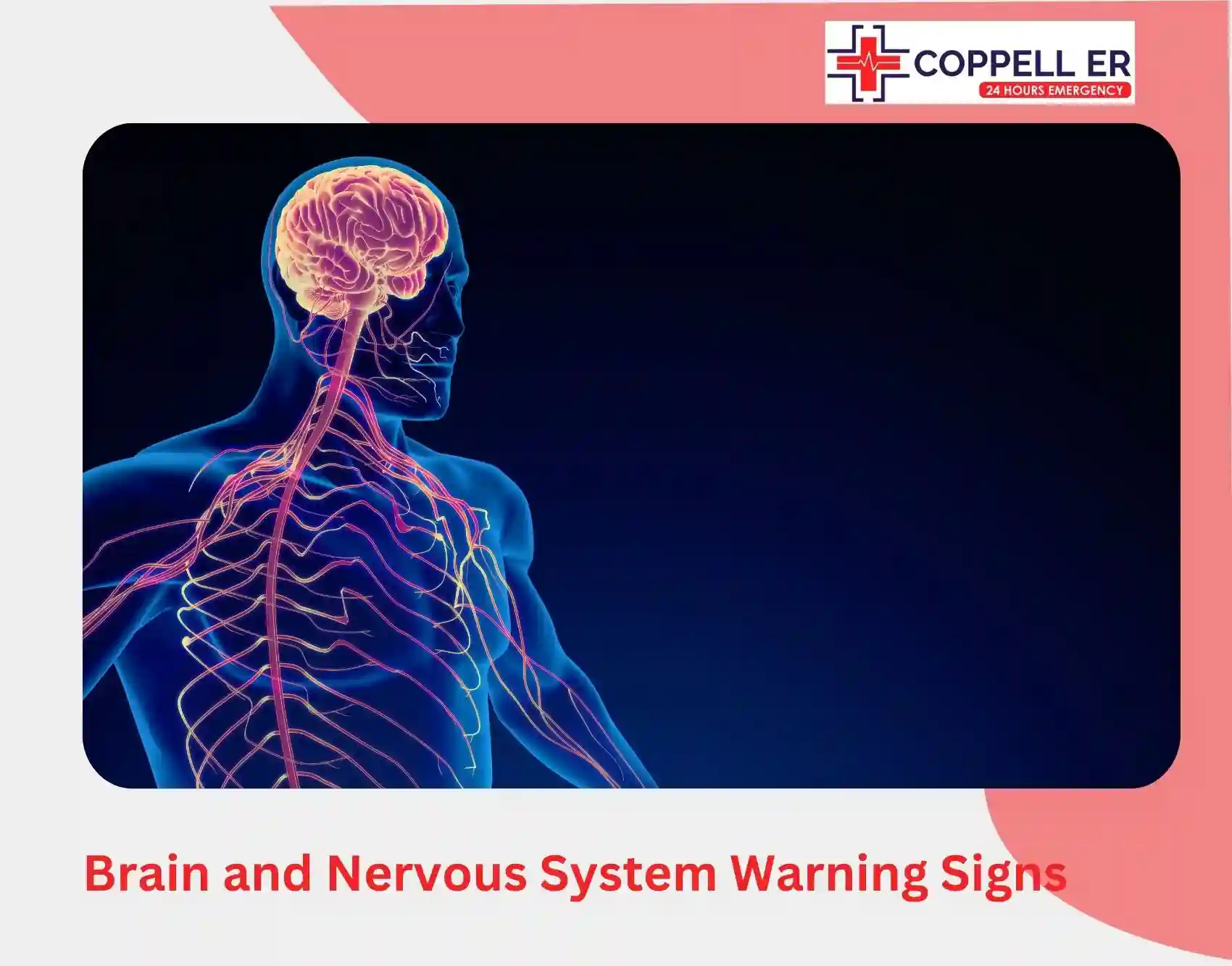
| Brain-related warning signs of medical emergency include face drooping, arm weakness, slurred speech, sudden severe headache, seizures, and confusion. Stroke treatment has a 4.5-hour window for clot-busting therapy. The sooner the ER evaluates, the better the long-term outcome for brain tissue. |
Act fast on these specific neurological symptoms you should never ignore. Every minute of delay costs brain cells:
Face drooping on one side. A classic stroke sign. Ask the person to smile; if one side does not lift, call 911.
Arm weakness or inability to raise one arm. Have them raise both arms. If one drifts down or cannot move, this is a stroke until proven otherwise.
Slurred, garbled, or confused speech. Ask them to repeat a simple sentence. If words are jumbled or they cannot speak, call 911 immediately.
Sudden worst headache of your life. A thunderclap headache reaching peak intensity in under a minute can indicate bleeding around the brain.
Seizure of any duration. A first-time seizure, or a seizure lasting more than 5 minutes, needs emergency evaluation.
Sudden confusion or inability to recognize people. A new abrupt change in mental status in anyone, especially older adults, warrants immediate ER care.
Loss of consciousness. Any unexplained fainting or loss of consciousness deserves prompt evaluation.
Heart and Chest Warning Signs
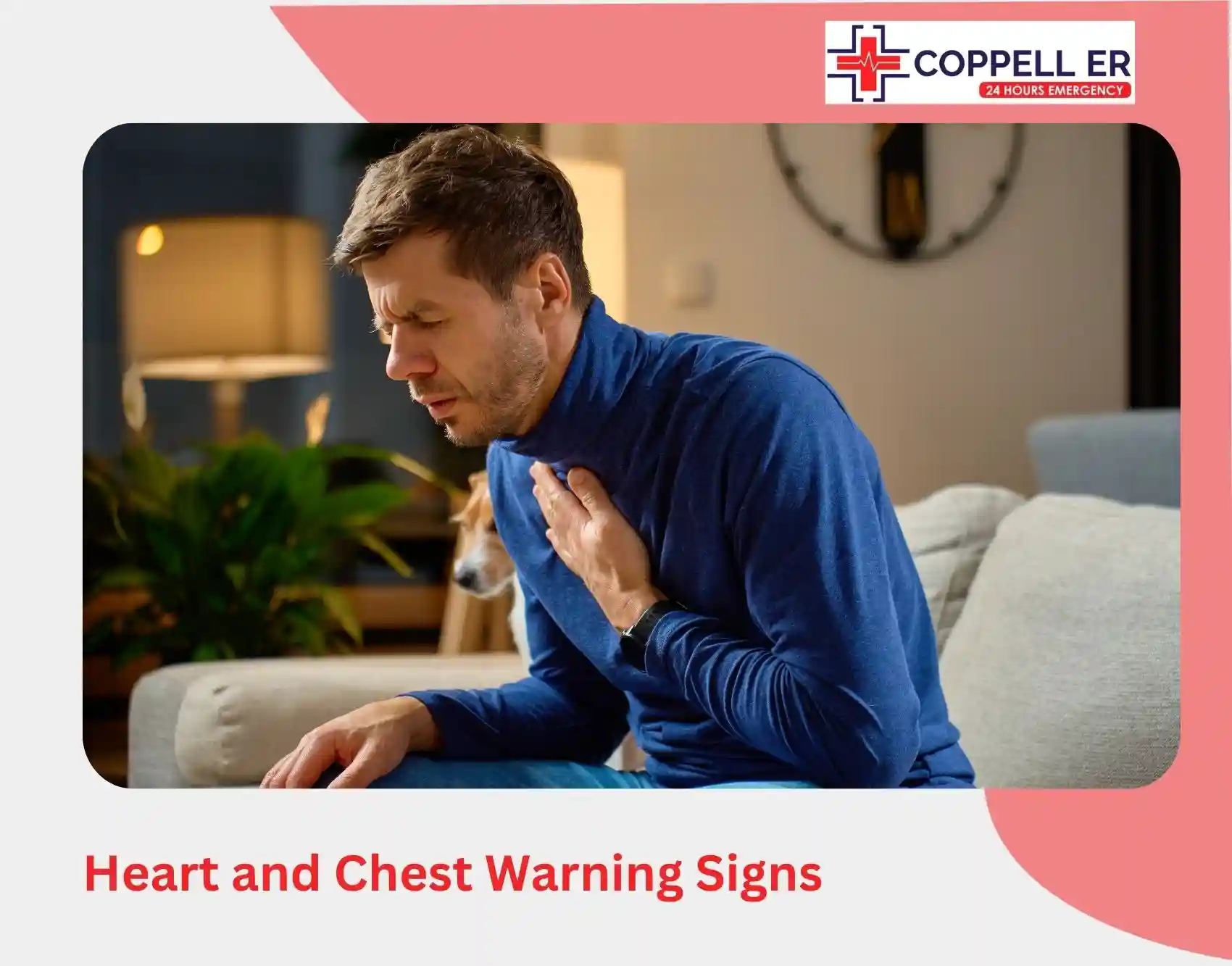
| Chest-related life-threatening symptoms include pressure or squeezing in the center of the chest, pain spreading to the arm, jaw, or back, cold sweat, nausea, and shortness of breath. Women often experience different symptoms, which raises the risk of missed diagnosis. |
These heart and chest symptoms are not worth watching at home:
- Pressure, tightness, or squeezing in the center of the chest lasting more than a few minutes
- Pain or discomfort spreading to one or both arms, the jaw, neck, shoulder, or upper back
- Shortness of breath with chest discomfort, or by itself with no obvious cause
- Cold sweat, lightheadedness, nausea, or vomiting with chest or upper-body pain
- Sudden tearing pain in the chest or back, which can signal aortic dissection
- Unusual fatigue, especially in women, that is new or dramatically worse
- Rapid or irregular heartbeat with dizziness or chest pain
The American Heart Association guidance on heart attack warning signs emphasizes that calling 911 at the first sign gets treatment started faster than driving yourself, since paramedics can begin care en route.¹
Lung and Breathing Warning Signs
| Breathing emergencies include severe shortness of breath at rest, blue or dusky lips, wheezing with hives or swelling, chest pain with breathing, and choking that will not clear. Oxygen deprivation causes organ damage within minutes, making these among the most time-critical warning signs of medical emergency. |
Respiratory symptoms that need immediate ER evaluation include:
- Severe shortness of breath at rest, or difficulty finishing a sentence due to breathlessness
- Blue, gray, or dusky lips, tongue, or fingertips, indicating low blood oxygen
- Wheezing or hives paired with throat swelling, lip swelling, or dizziness, which signals anaphylaxis
- Choking that cannot be cleared with back blows or abdominal thrusts
- Coughing up blood, large amounts of pink frothy sputum, or thick dark material
- Sharp chest pain that worsens with each breath, which can indicate pulmonary embolism or pneumothorax
- Rapid shallow breathing with confusion, which may indicate sepsis or metabolic emergency
- Any sudden breathing problem after a bee sting, food exposure, or new medication
Abdominal and Digestive Warning Signs
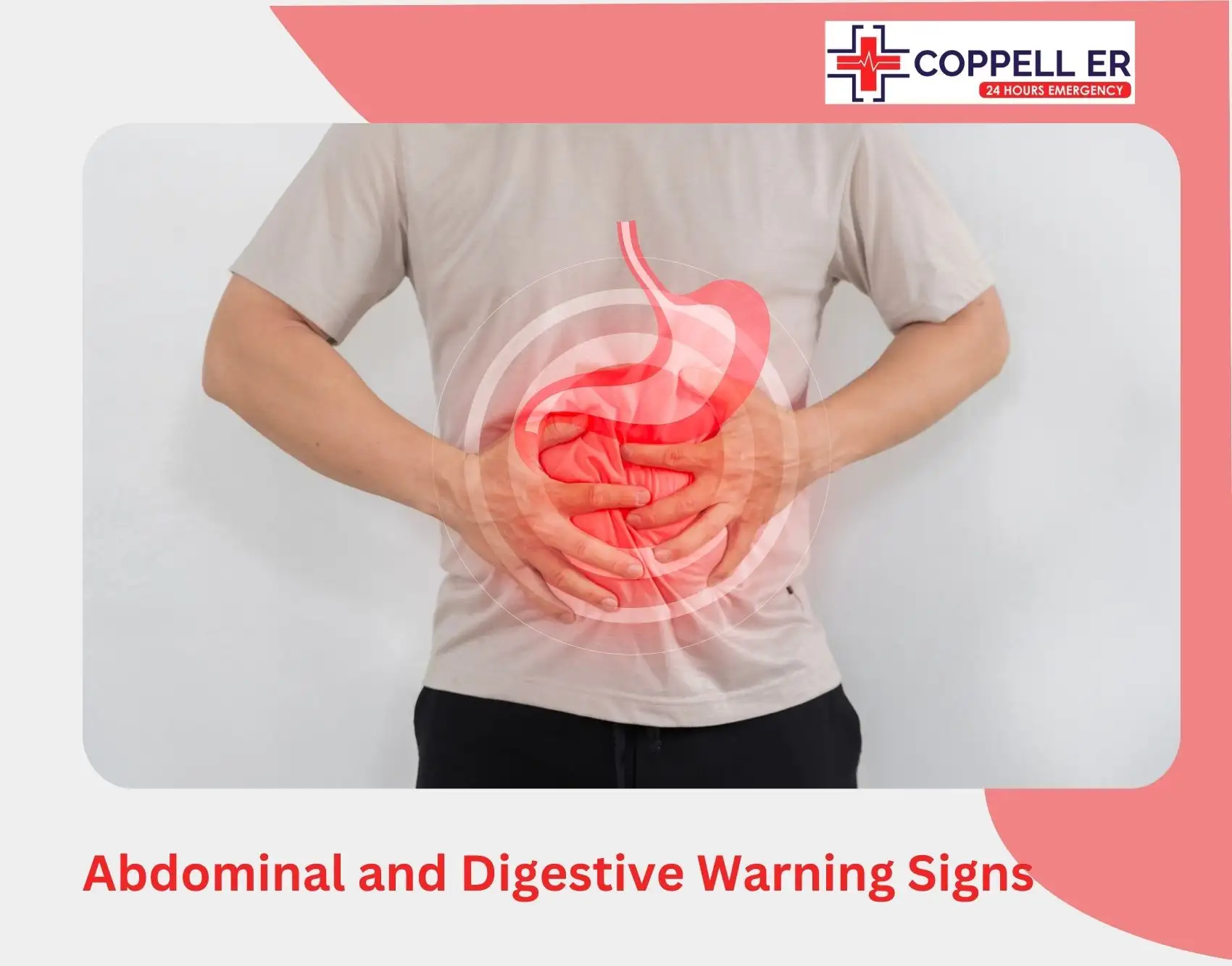
| Serious abdominal symptoms include sudden severe pain, pain with high fever, blood in vomit or stool, a rigid or board-like belly, and pain that cannot be relieved by any position. Appendicitis, perforation, aortic aneurysm, and bowel obstruction all present as abdominal pain that needs same-visit evaluation. |
These abdominal patterns earn an immediate walk-in:
Sudden severe abdominal pain. especially pain that starts intensely and does not ease within 30 to 60 minutes. Can indicate appendicitis, perforation, or an aneurysm.
Rigid or board-like belly. a hard, inflexible abdomen that is tender everywhere suggests infection has spread inside the abdomen.
Blood in vomit or stool. bright red blood, dark coffee-ground vomit, or black tarry stools all indicate active bleeding somewhere in the digestive tract.
Pain with high fever. especially with chills, suggests infection such as appendicitis, cholecystitis, or diverticulitis.
Severe pain with vomiting that will not stop. combined with abdominal swelling and no bowel movement, can indicate obstruction.
Tearing pain in the back or abdomen. in adults over 60, can suggest abdominal aortic aneurysm, a true 911 emergency.
The American College of Emergency Physicians’ Know When to Go overview lists severe abdominal pain alongside chest pain and stroke symptoms as the top reasons for immediate ER evaluation rather than a scheduled appointment.²
Symptoms You Should Never Ignore in High-Risk Adults
| Symptoms you should never ignore become even more urgent in certain adults. Older adults, people with heart disease or diabetes, pregnant women, immunosuppressed patients, and anyone on blood thinners should treat warning signs with lower thresholds and seek walk-in evaluation sooner rather than later. |
The same symptom carries different risks depending on who has it. These groups deserve immediate walk-in care for symptoms others might monitor at home:
- Adults over 65 with any new chest pain, confusion, or weakness, particularly after a fall, should be evaluated with same-visit CT imaging to rule out stroke or bleeding
- Anyone on blood thinners such as warfarin, apixaban, rivaroxaban, or daily aspirin with any head impact, abdominal pain, or unusual bleeding
- People with diabetes experiencing confusion, fruity breath, or vomiting that will not stop, which can indicate diabetic ketoacidosis
- Pregnant women with severe headache, vision changes, swelling, or upper abdominal pain, which can indicate preeclampsia
- Anyone with cancer, HIV, or recent transplant, since infection and medication complications progress rapidly
- People with a history of stroke, TIA, or atrial fibrillation experiencing new neurological symptoms, even if symptoms resolve quickly
- Anyone with known heart disease experiencing new chest pain, shortness of breath, or unusual fatigue
- Adults who recently had surgery or hospitalization developing new fever, pain, or shortness of breath
What Coppell ER Does for Serious Symptoms
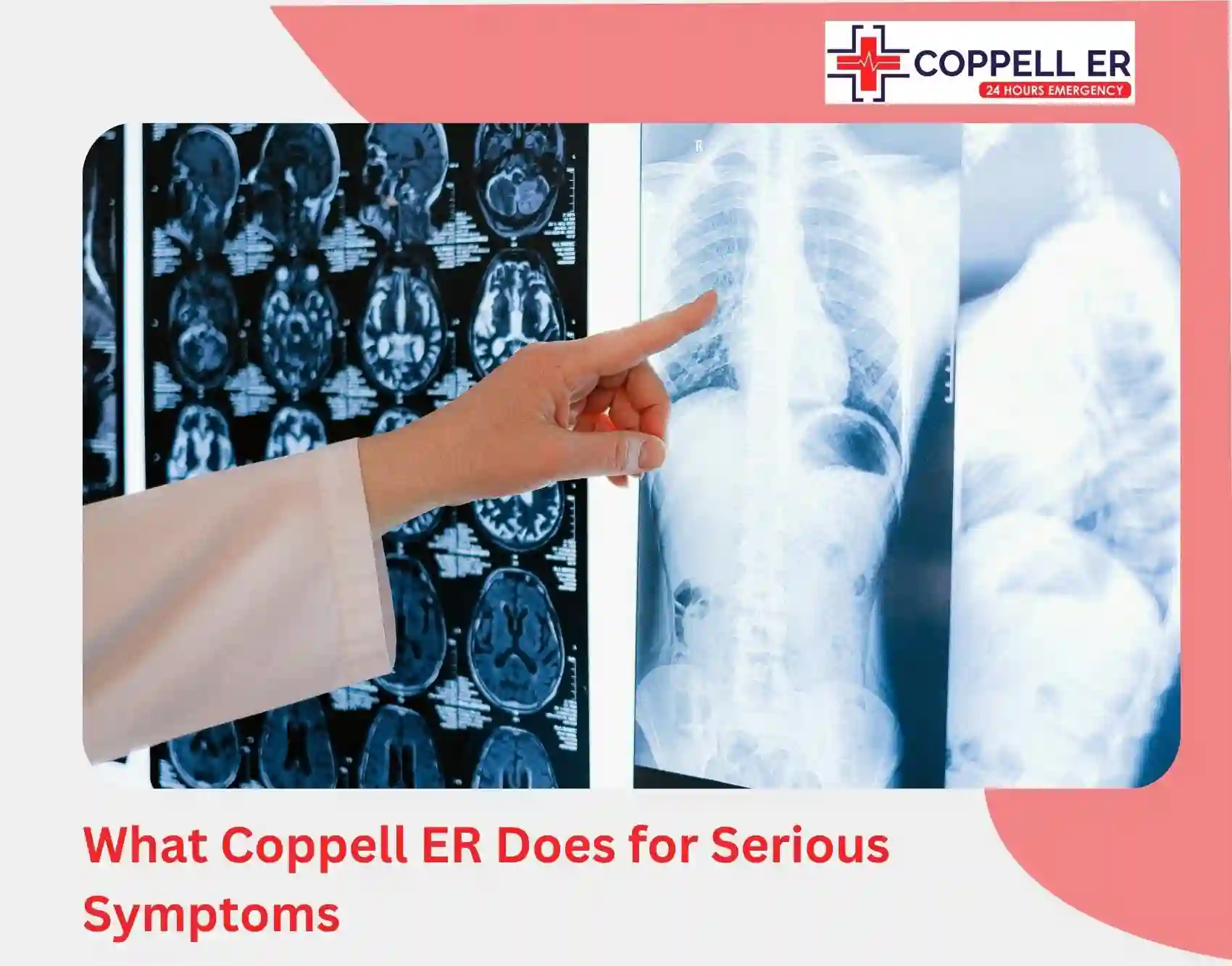
| Evaluation at Coppell ER begins within minutes of walk-in, with board-certified emergency physicians, continuous monitoring, and on-site CT, X-ray, ultrasound, and lab testing. Coppell area adults can walk in day or night to get answers in about an hour rather than waiting for a hospital triage queue. |
The typical serious-symptom workup follows this sequence:
- Immediate triage without appointment at our freestanding emergency room
- Vital signs, continuous cardiac monitoring, and focused physical exam targeted at the presenting symptom
- On-site diagnostic imaging including CT, X-ray, ultrasound, and echocardiography evaluated by board-certified emergency physicians
- Comprehensive blood work including cardiac enzymes, infection markers, blood counts, and metabolic panels
- Rapid testing for stroke, heart attack, pulmonary embolism, or sepsis depending on the suspected condition
- Immediate treatment including oxygen, IV fluids, blood pressure management, pain control, or blood products as needed
- Direct coordination with cardiology, neurology, surgery, or critical care when hospital-level intervention is required
- Clear written home instructions with warning signs that should prompt a return visit
For questions before walking in with concerning symptoms, feel free to message the Coppell ER team at 469-763-3136 any time of day or night. For stroke-like signs, call 911 instead of driving.
Frequently Asked Questions
What are the top symptoms you should never ignore in adults?
Chest pressure with sweating, sudden face drooping or arm weakness, severe sudden headache, breathing difficulty with blue lips, severe abdominal pain, uncontrolled bleeding, and loss of consciousness all warrant immediate 911 or ER evaluation.
Should I drive myself to the ER for serious symptoms?
No, for suspected stroke, heart attack, severe breathing problems, or any symptom that could cause loss of consciousness. Call 911 so paramedics can start treatment and alert the ER. For other urgent symptoms, have someone drive you.
How is a freestanding ER different from a hospital ER?
A freestanding ER like Coppell ER has the same board-certified physicians, imaging, and lab capability as a hospital ER, but with walk-in access and minimal waiting room delays. For symptoms needing surgery or ICU, we coordinate rapid hospital transfer.
What symptoms are more concerning at night?
Any neurological symptom, chest pain, severe breathing difficulty, or new severe pain that develops at night still warrants immediate ER care. Night does not make a serious symptom less serious, which is why Coppell ER is open 24 hours a day.
Can anxiety mimic serious medical symptoms?
Yes. Panic attacks can mimic heart attack and stroke. But anxiety is a diagnosis of exclusion. First-time severe chest pain, breathing difficulty, or neurological symptoms still need ER evaluation to rule out serious causes before assuming anxiety.
A Coppell Freestanding ER for Every Serious Symptom, Open 24/7
Coppell ER is a freestanding emergency room open 24 hours a day, seven days a week, serving families across Coppell, Lewisville, Grapevine, Irving, Flower Mound, and Valley Ranch. Board-certified emergency physicians. On-site CT, X-ray, ultrasound, and full lab. No appointment needed. No long waiting room delays. When you have a symptom you cannot ignore and need answers now, walk in for the peace of mind of same-visit evaluation.
Coppell ER | Open 24/7 | Freestanding Emergency Room
720 N Denton Tap Rd, Coppell, TX 75019 | 469-763-3136
Most commercial insurance accepted. In-house billing. No surprise billing.