Reviewed by the Coppell ER emergency care team
| 🚨 Call 911 If Any of These Appear After a Fall
Pale, cold, clammy skin with a rapid weak pulse. Confusion or fainting. Severe abdominal pain or rigid belly. Coughing up or vomiting blood. Blood in urine or stool. Rapidly growing bruising or swelling. Do not drive yourself or the injured person if these signs are present. Coppell ER is at 720 N Denton Tap Rd. Phone: 469-763-3136. |
Signs of internal bleeding after fall matter because damaged organs and torn blood vessels can bleed silently for hours before dangerous symptoms show up. Most falls cause bruising, sprains, or fractures that heal on their own. A small percentage cause internal injuries that need emergency treatment to prevent shock, organ damage, or death. Recognizing whole-body and localized warning signs, particularly in the hours after a fall, is what separates a safe recovery from a preventable crisis.
Bedside Observer Checklist
If someone in your household has fallen, this four-part check gives you a fast frame for what to watch:
| LOOK | Face color, breathing pattern, alertness, and any expanding bruising. |
| FEEL | Pulse rate and quality, skin temperature, sweating, and any abdominal rigidity. |
| ASK | Where does it hurt, feeling dizzy or weak, blood in mouth or when using the bathroom. |
| WATCH | Symptom changes over the next 24 hours. Anything worse means return to the ER. |
The Whole-Body Signs of Shock
| The most dangerous signs of internal bleeding after fall are systemic. Pale or clammy skin, rapid weak pulse, shallow rapid breathing, confusion, and lightheadedness together suggest the body has lost enough blood to affect circulation. Any combination is a 911 emergency. |
Shock develops when internal blood loss becomes significant enough that the body cannot maintain blood pressure. These signs override everything else and mean 911 now:
Pale, cold, or clammy skin. The body redirects blood away from the skin to keep vital organs supplied, producing a pale or grayish appearance.
Rapid, weak pulse. The heart speeds up to compensate for lost blood volume. A racing but thready pulse is one of the earliest warning signs.
Rapid, shallow breathing. Breathing quickens to move more oxygen through the reduced blood supply.
Dizziness or lightheadedness. Reduced circulation to the brain triggers the sensation of being about to faint, especially when standing.
Confusion or unusual behavior. Falling blood flow to the brain shows up as disorientation, agitation, or difficulty answering simple questions.
Fainting or loss of consciousness. A late-stage warning sign. Any post-fall fainting means immediate 911.
Severe thirst. The body signals dehydration as blood volume drops.
According to Cleveland Clinic’s guidance on internal bleeding, these systemic warning signs can appear once someone has lost 15 to 30 percent of total blood volume, a threshold that can be crossed silently within hours.
The Signs You Can See on the Body
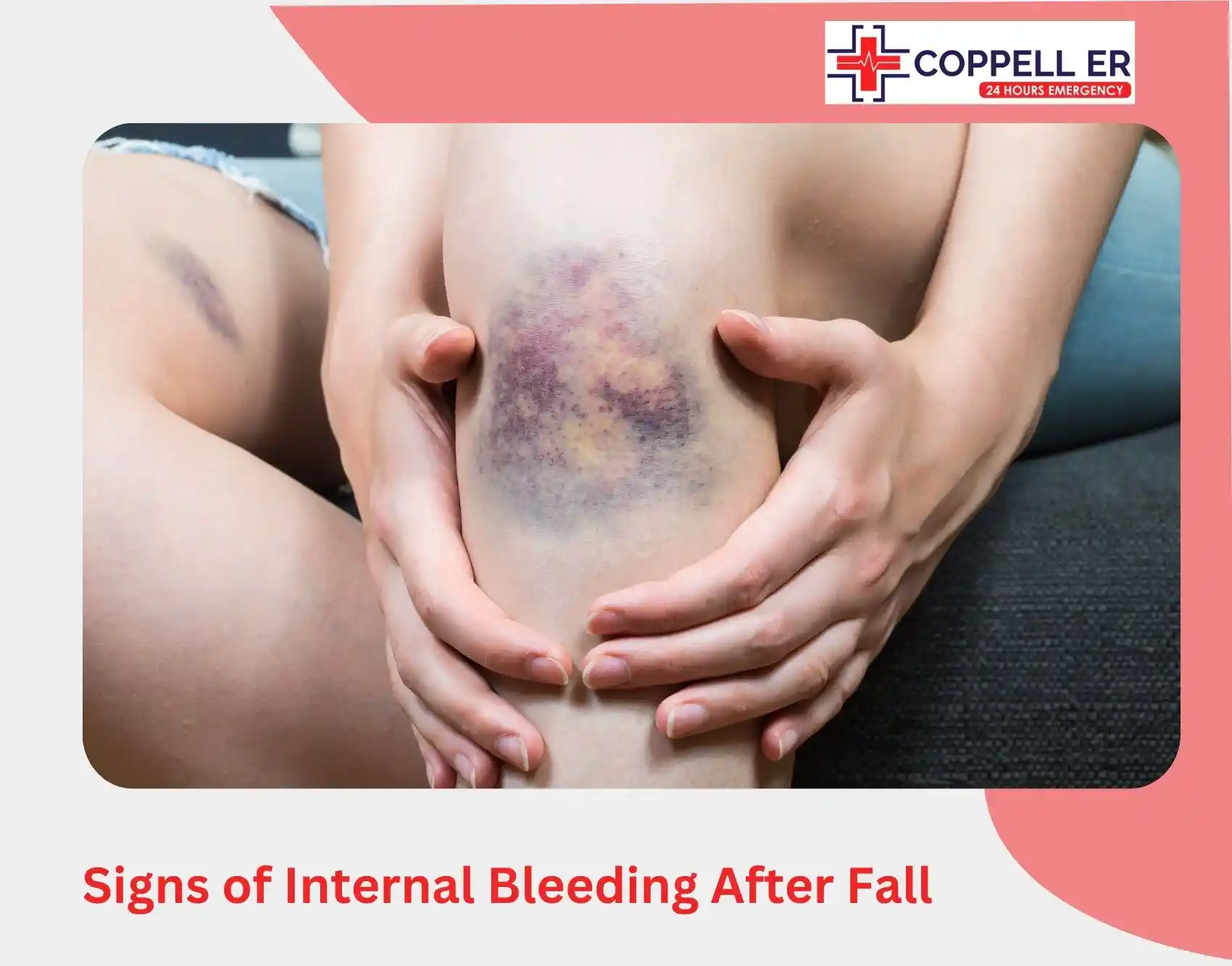
| Some internal bleeding produces visible signs. Deep bruising in unusual patterns, swelling that grows over hours, blood coming from unexpected places, and skin discoloration around the abdomen or flanks all point to internal blood loss that needs immediate imaging and evaluation. |
The bruising patterns emergency physicians look for tell a specific story about where bleeding is happening:
Bruising around the navel. Called Cullen’s sign. Bluish-purple discoloration around the belly button hours or days after abdominal trauma suggests retroperitoneal bleeding, typically from the pancreas or a ruptured spleen.
Bruising on the flanks. Called Grey Turner’s sign. Discoloration along the sides of the trunk below the ribs also points to retroperitoneal bleeding and needs urgent imaging.
Seat belt or restraint pattern. A horizontal band of bruising across the abdomen after any fall or crash raises concern for damage to underlying organs, even without immediate pain.
Rapidly expanding hematomas. A bruise that grows visibly larger within hours indicates active bleeding into soft tissue rather than a stable, healing bruise.
Blood appearing in body fluids is another category of visible warning. Bright red or coffee-ground vomit, black tarry stools or bright red blood in stool, pink or brown urine, and coughing up blood all point to internal injury and require emergency evaluation.
The Signs by Where It Hurts
| Localized pain after a fall can indicate specific organ injury. Severe abdominal pain and rigidity suggest liver or spleen damage. Chest pain with breathing difficulty points to lung bleeding. Pelvic pain with instability warns of major blood loss. Persistent flank pain suggests kidney injury. |
Where the pain sits gives clues about which organ system may be bleeding:
- Abdomen: severe pain, worsening tenderness, rigid or board-like belly, distension, or referred pain to the shoulder tip
- Chest: sharp pain, difficulty breathing, coughing up blood, or a sensation of chest tightness that worsens
- Pelvis: pain when weight-bearing, instability, or pain that spreads to the groin and lower back
- Flank or lower back: persistent one-sided pain, bloody urine, or bruising along the side, which can point to kidney injury
- Head: severe or worsening headache, confusion, vomiting, or vision changes, which can signal brain bleeding
- Thigh: significant swelling and pain from a femur fracture, which can hide a large amount of internal blood loss
For post-fall trauma evaluation across any body region, our fall and trauma emergency team performs on-site imaging and physician assessment 24 hours a day.
The Signs That Show Up Hours or Days Later
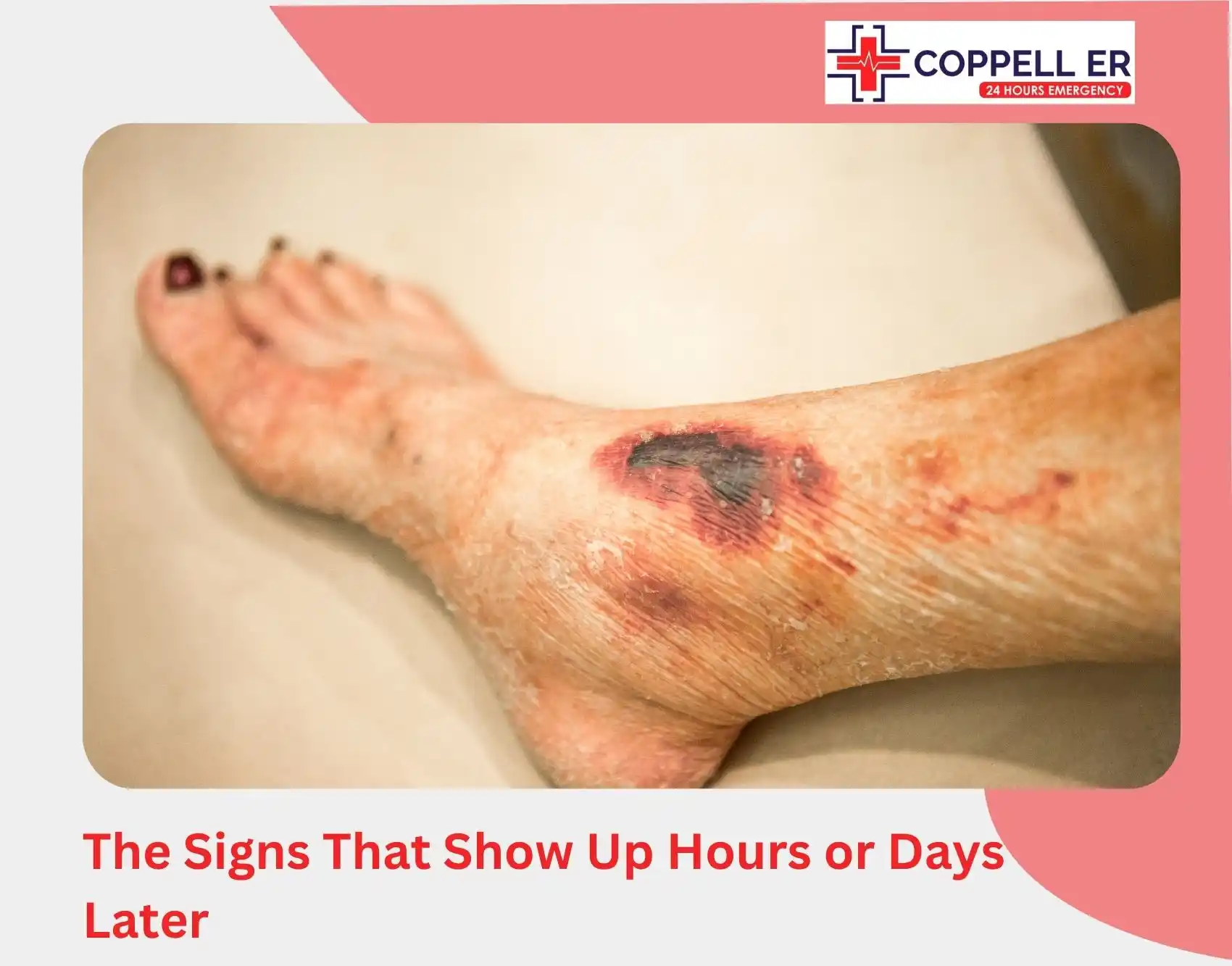
| Not every internal bleeding announces itself immediately. Delayed signs of internal bleeding after fall can appear 6 to 24 hours later. Progressive weakness, worsening pain, growing bruising, increasing shortness of breath, and new confusion warrant a return trip to the ER, not a wait-and-see approach. |
Delayed warning signs are the ones most often missed because the person felt fine right after the fall. Any of these appearing in the hours or days that follow warrants a return to the ER:
- Growing bruising that expands over hours rather than fading
- Progressive weakness or exhaustion that seems out of proportion to the injury
- Increasing pain in one specific location, especially the abdomen
- New or worsening shortness of breath at rest
- Confusion appearing hours after the fall in someone who was previously alert
- Fainting or near-fainting when standing up
- Blood appearing in vomit, stool, or urine within the first days
- Pale skin that persists despite rest and hydration
The MedlinePlus first-aid guide on bleeding confirms that internal bleeding often has no external signs until shock symptoms appear, which is why delayed evaluation matters even when the initial hours after a fall seem uneventful.
Signs of Internal Bleeding After Fall for Higher-Risk People
| Adults over 65, anyone on blood thinners, people with liver disease, pregnant women, and those with clotting disorders face elevated risks after any fall. In these groups, the question of signs of internal bleeding after fall shifts firmly toward earlier evaluation, since bleeding can start with minimal impact and progress silently. |
The same fall carries very different risks depending on who has fallen. These groups deserve lower thresholds for immediate ER care after any impact:
- Anyone taking blood thinners including warfarin, apixaban, rivaroxaban, dabigatran, or daily aspirin
- Adults over 65, whose blood vessels bleed more readily and whose organs recover more slowly
- Children after significant falls, since assessment can be difficult and internal injuries may be masked; our pediatric emergency care team uses specialized protocols
- Pregnant women, particularly in the second and third trimesters when placental injury becomes a specific concern
- Anyone with a bleeding disorder such as hemophilia or von Willebrand disease
- People with liver disease, which impairs the body’s ability to clot
- Anyone intoxicated at the time of the fall, since alcohol or drugs can mask pain and neurological signs
- Falls from height, down stairs, or onto hard surfaces regardless of the person’s baseline health
What Coppell ER Does for Suspected Internal Bleeding
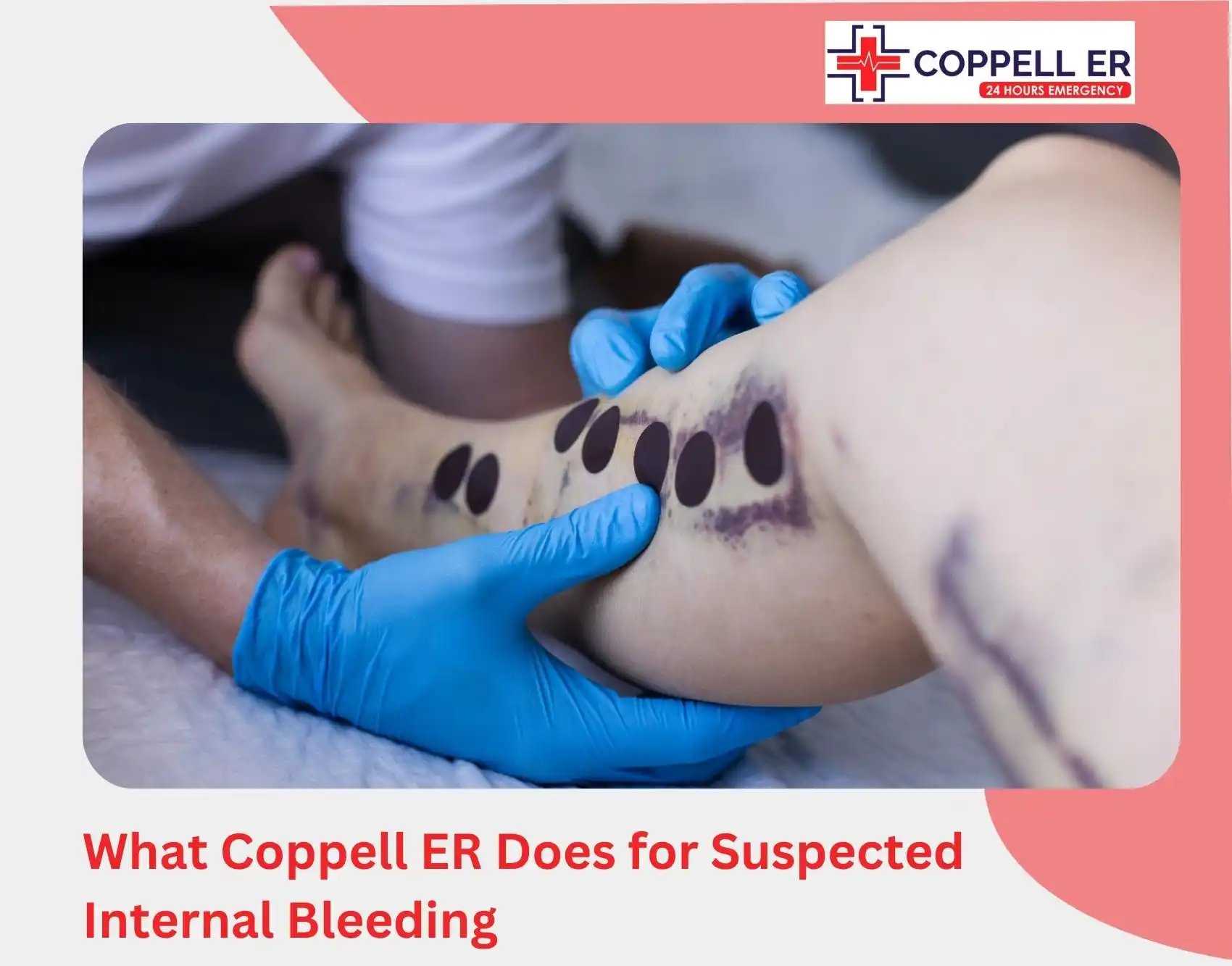
| Evaluation at Coppell ER begins within minutes of walk-in. A board-certified emergency physician performs a rapid trauma assessment, monitors vital signs continuously, and orders imaging including CT and ultrasound. Most patients receive a definitive answer about internal injury within about an hour of arrival. |
The typical workup follows this sequence:
- Rapid primary trauma survey by an emergency physician trained in acute trauma evaluation
- Continuous monitoring of blood pressure, heart rate, oxygen levels, and mental status
- Blood work including complete blood count, clotting studies, and blood type in case transfusion becomes necessary
- On-site CT scan of the chest, abdomen, and pelvis when imaging is indicated for suspected internal injury
- Bedside ultrasound to check for free fluid or blood inside body cavities
- IV access with fluid resuscitation and blood products when needed
- Direct coordination with trauma surgery when a serious internal injury is confirmed
Because internal bleeding evolves quickly, walk-in access to our 24-hour emergency room means the workup starts as soon as you arrive, not after waiting for an appointment or a hospital triage line.
Frequently Asked Questions
How long after a fall can internal bleeding show up?
Internal bleeding symptoms can appear immediately or take 6 to 24 hours to become obvious. Slower bleeds can develop over several days. This is why monitoring for delayed symptoms matters even when someone feels fine right after a fall.
Can you feel internal bleeding in your abdomen?
Sometimes. Abdominal bleeding often causes worsening pain, a firm or tender belly, or referred pain to the shoulder. But some internal bleeds cause little pain initially and are noticed only through systemic signs like dizziness or weakness.
Is bruising after a fall a sign of internal bleeding?
Usually not by itself. Most bruises are surface-level and heal on their own. Concerning bruises are those that grow rapidly, appear far from the impact site, or show up around the navel or flanks days later.
What does internal bleeding in stool look like?
Upper digestive tract bleeding produces black, tarry stool called melena. Lower tract bleeding produces bright red blood. Either type after a fall or trauma warrants ER evaluation, particularly if paired with weakness or dizziness.
Can dizziness after a fall be from internal bleeding?
Yes. Dizziness after a fall can result from head injury or from blood loss dropping blood pressure. When paired with pale skin, fast pulse, or thirst, internal bleeding should be considered until an ER rules it out.
Fast Answers About Internal Injury After a Fall
Falls do not follow business hours, and neither does Coppell ER. Open 24 hours a day with board-certified emergency physicians, on-site CT and ultrasound imaging, and no appointment required. Walk in, get evaluated fast, and get answers about whether a fall caused more than the visible bruise.
Coppell ER | Open 24/7
720 N Denton Tap Rd, Coppell, TX 75019 | 469-763-3136
Most commercial insurance accepted. In-house billing. No surprise billing.
External References Links :
1.Cleveland Clinic’s guidance
2.MedlinePlus