Reviewed by the Coppell ER pediatric emergency care team
| 🚨 Call 911 or Come to Coppell ER Right Now If Your Baby Has
Bluish lips, tongue, or face. Grunting with every breath. Severe chest or neck retractions. Flaring nostrils with each breath. Pauses in breathing longer than 20 seconds. Unresponsive, limp, or difficult to wake. Choking that will not clear. Do not drive if the baby’s color is changing. Coppell ER is at 720 N Denton Tap Rd. Phone: 469-763-3136. |
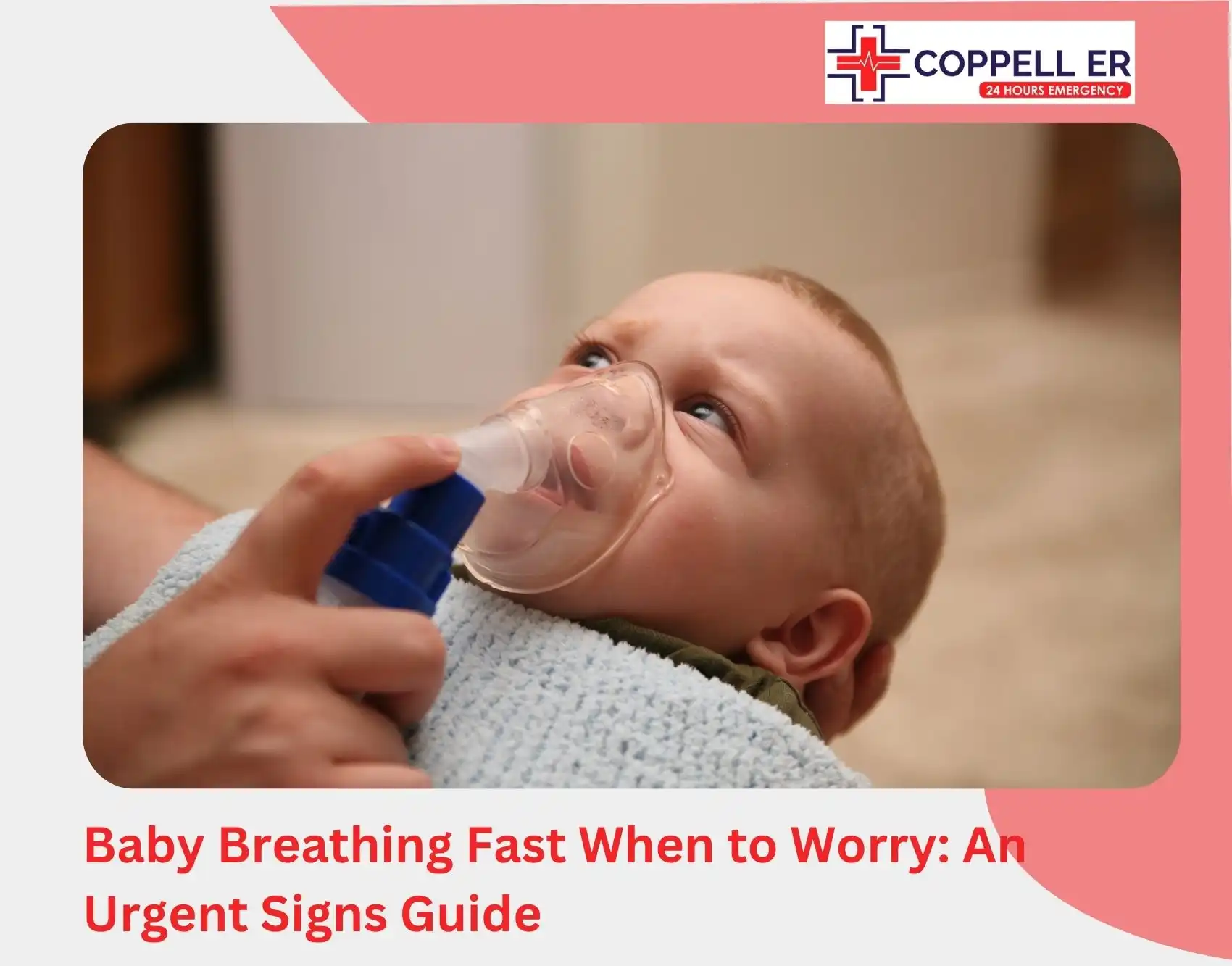
Baby breathing fast when to worry is one of the most common night-time questions for Coppell area parents, and the answer depends on more than just the breath count. A sleeping newborn can breathe quickly for a minute, then slow down, with no illness at all. But fast breathing paired with chest sinking in, nostril flaring, grunting sounds, or a color change signals respiratory distress that needs same-visit medical evaluation.
Coppell ER serves families across Coppell, Lewisville, Grapevine, Irving, Flower Mound, and Valley Ranch as a freestanding emergency room with pediatric-experienced physicians, on-site oxygen monitoring, and walk-in access day or night. When your baby is breathing fast and you need an answer now, walk-in evaluation is often faster than any other option.
The Count: What a Normal Breathing Rate Looks Like
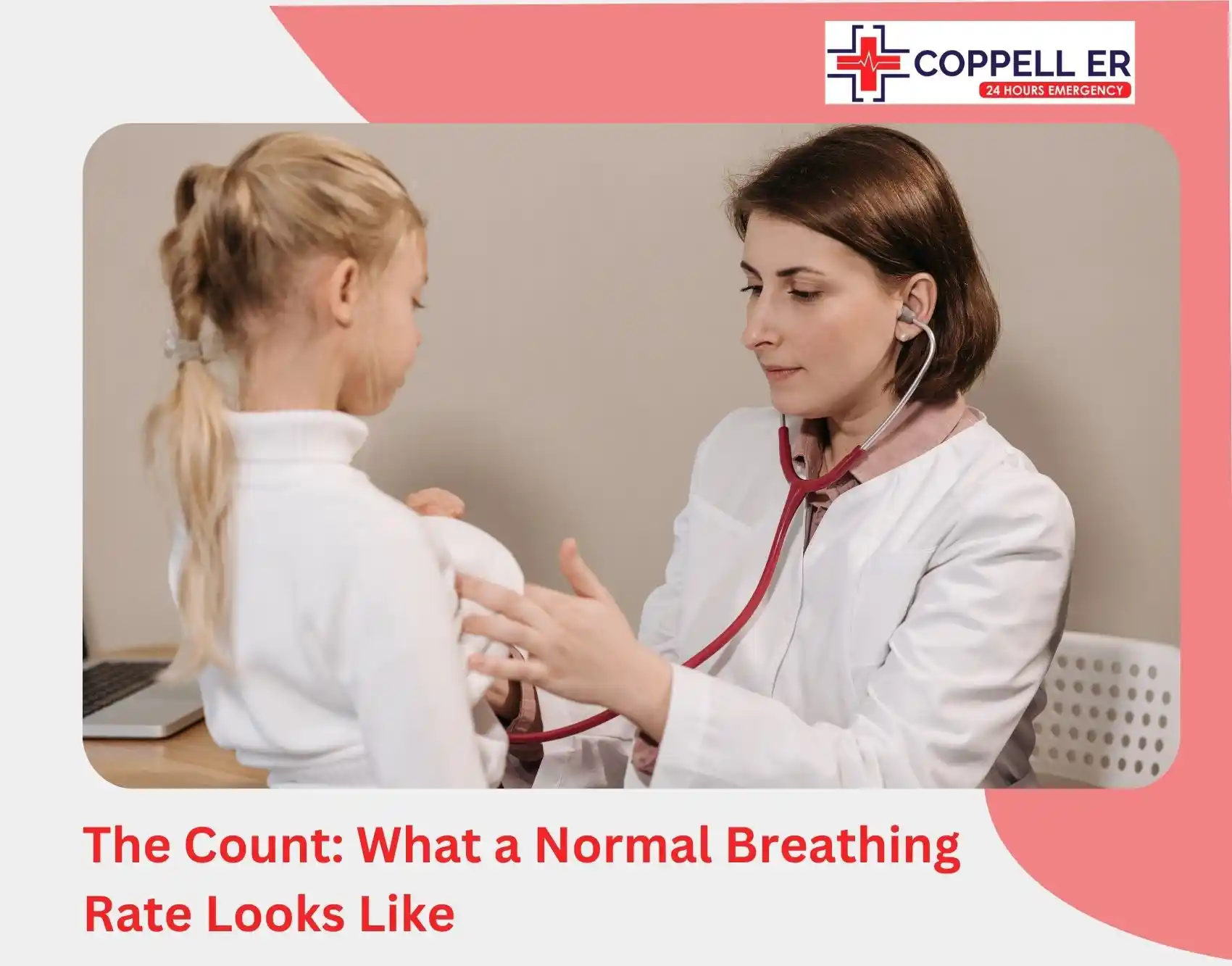
| A normal baby respiratory rate changes dramatically with age. Newborns breathe 30 to 60 times per minute, infants 20 to 40, toddlers 20 to 30. Counting is the first step, but context matters: a count above normal during sleep or at rest is more concerning than one taken during fussiness. |
Count the baby’s breaths for a full 60 seconds while they are calm or sleeping, not while crying or feeding. One breath equals one chest rise and fall. This age-indexed reference shows what counts as normal and what should prompt a walk-in evaluation:
| Age | Normal (breaths/min) | Concerning (breaths/min) |
|---|---|---|
| Newborn (0 to 1 month) | 30 to 60 | Over 60 at rest |
| Infant (1 to 12 months) | 25 to 50 | Over 50 at rest |
| Toddler (1 to 3 years) | 20 to 30 | Over 40 at rest |
| Preschooler (3 to 5 years) | 20 to 25 | Over 35 at rest |
| School-age (6+ years) | 15 to 20 | Over 30 at rest |
Rates above the concerning threshold that persist across several counts, especially during sleep, deserve walk-in evaluation. A single elevated reading in a baby who is crying, feeding, or warm is often normal and settles with time.
The Look: Visual Signs of Trouble
| Beyond the number, what the baby’s body is doing while breathing is often more telling than the rate itself. Chest retractions, nostril flaring, head bobbing, and skin color changes all signal that the baby is working harder than normal to move air and may need urgent care. |
Watch the baby’s chest, nose, and skin while they breathe. Any of these visible signs crosses into ER territory:
Chest or rib retractions. The skin pulls inward between the ribs, under the breastbone, or above the collarbone with each breath, meaning the baby is working extra muscles to breathe.
Nostril flaring. The nostrils widen visibly with each breath as the baby tries to pull in more air. A clear sign of respiratory distress at any age.
Head bobbing. The baby’s head rocks forward and back in rhythm with breathing, especially in a very young infant. Suggests the baby is using neck muscles to help breathe.
Blue, gray, or dusky skin color. Bluish lips, tongue, nail beds, or face, called cyanosis, means the blood is not carrying enough oxygen. This is a 911 situation.
Pale or mottled skin. A grayish-white tone, or blotchy skin on the chest and arms, can indicate poor circulation from respiratory or circulatory distress.
Belly breathing that looks exaggerated. The belly rises dramatically with each breath while the chest barely moves. Normal babies use their diaphragms, but exaggerated belly breathing with other signs is concerning.
The Seattle Children’s Hospital trouble breathing guidance identifies retractions and nostril flaring as hallmark signs that a child is working too hard to breathe and needs urgent medical evaluation.¹
The Sound: What You Hear With Each Breath
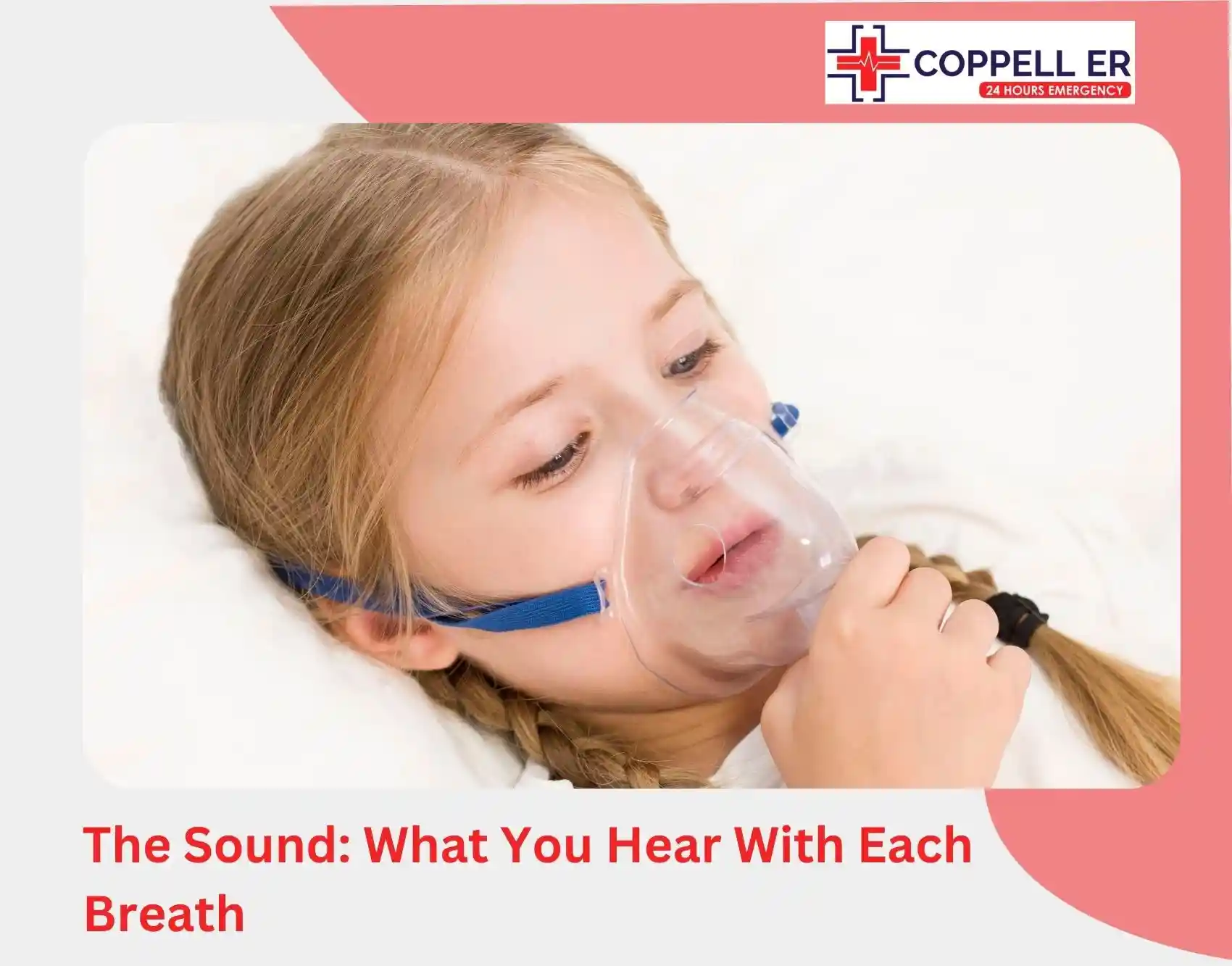
| Noisy breathing in a baby is almost always worth evaluating. Grunting, wheezing, stridor, and whistling all tell doctors something specific about where the problem is in the airway. Any new breathing sound that persists for more than a few minutes, especially with other distress signs, needs same-day walk-in evaluation. |
Different breathing sounds point to different parts of the airway. Listen for these specifically:
- Grunting: a short, low sound at the end of each breath as the baby tries to keep air in. Serious in young babies and often means pneumonia, severe bronchiolitis, or significant respiratory distress
- Wheezing: a high-pitched whistling, usually heard when the baby breathes out. Common with bronchiolitis, asthma, or RSV, especially during fall and winter months in Texas
- Stridor: a harsh, musical sound heard when the baby breathes in. Suggests an upper airway problem such as croup, swelling, or a possible foreign object
- Barking cough: a sharp, seal-like cough paired with stridor is the classic croup pattern. Many cases improve with cool mist air, but severe croup needs evaluation
- Whistling or high-pitched sound from the nose: may indicate a blocked nasal passage, often from secretions, swelling, or a foreign object
- Pauses in breathing: any pause longer than 20 seconds, or shorter pauses with color change or limpness, is a 911 situation
According to the American Academy of Pediatrics guidance on RSV, wheezing and labored breathing in a baby under 12 months old, particularly during RSV season, deserves same-day medical evaluation.²
The Context: What Else Is Going On
| Fast breathing with a fever, after feeding, during a known cold, or in a baby who was recently feeding normally and has now stopped tells a different story than fast breathing in a calm, healthy-looking baby. The context around the breathing often decides whether the ER is the right next step. |
Context changes everything. These scenarios around fast breathing deserve immediate evaluation:
- Fast breathing with fever over 100.4°F in any baby under three months
- Fast breathing with a cough, runny nose, or other cold symptoms that worsen rather than improve
- Fast breathing after a possible choking event, even if the baby seems recovered
- Fast breathing with poor feeding, where the baby cannot pause long enough to swallow
- Fast breathing with unusual sleepiness, limpness, or difficulty waking
- Fast breathing after a recent allergic reaction or new food exposure
- Fast breathing with fewer wet diapers, suggesting dehydration adding to the respiratory stress
- Fast breathing that comes on suddenly in a previously well baby, with no obvious cause
Baby Breathing Fast When to Worry Most: Higher-Risk Infants
| Some babies face elevated risks when they start breathing fast. Premature infants, babies with heart conditions, those with chronic lung issues, and newborns under three months need lower thresholds for ER care. In these groups, baby breathing fast when to worry shifts firmly toward earlier walk-in evaluation. |
Certain babies face higher stakes with any respiratory symptoms. These groups deserve earlier ER care for signs that might otherwise be watched at home:
- Newborns under three months, where any respiratory change can indicate serious infection; our pediatric emergency care team uses newborn-specific evaluation protocols
- Babies born prematurely, whose lungs may still be developing and are more susceptible to respiratory viruses
- Infants with a known heart defect, which can show up first as fast or labored breathing during feeding
- Babies with chronic lung disease, cystic fibrosis, or bronchopulmonary dysplasia
- Infants with Down syndrome or other conditions associated with airway or heart differences
- Babies currently exposed to secondhand smoke or wood-burning fires at home
- Infants with weakened immune systems from cancer treatment or chronic illness
- Any baby with a sibling or caregiver who has active RSV, flu, COVID-19, or pertussis
What Coppell ER Does for a Baby With Fast Breathing
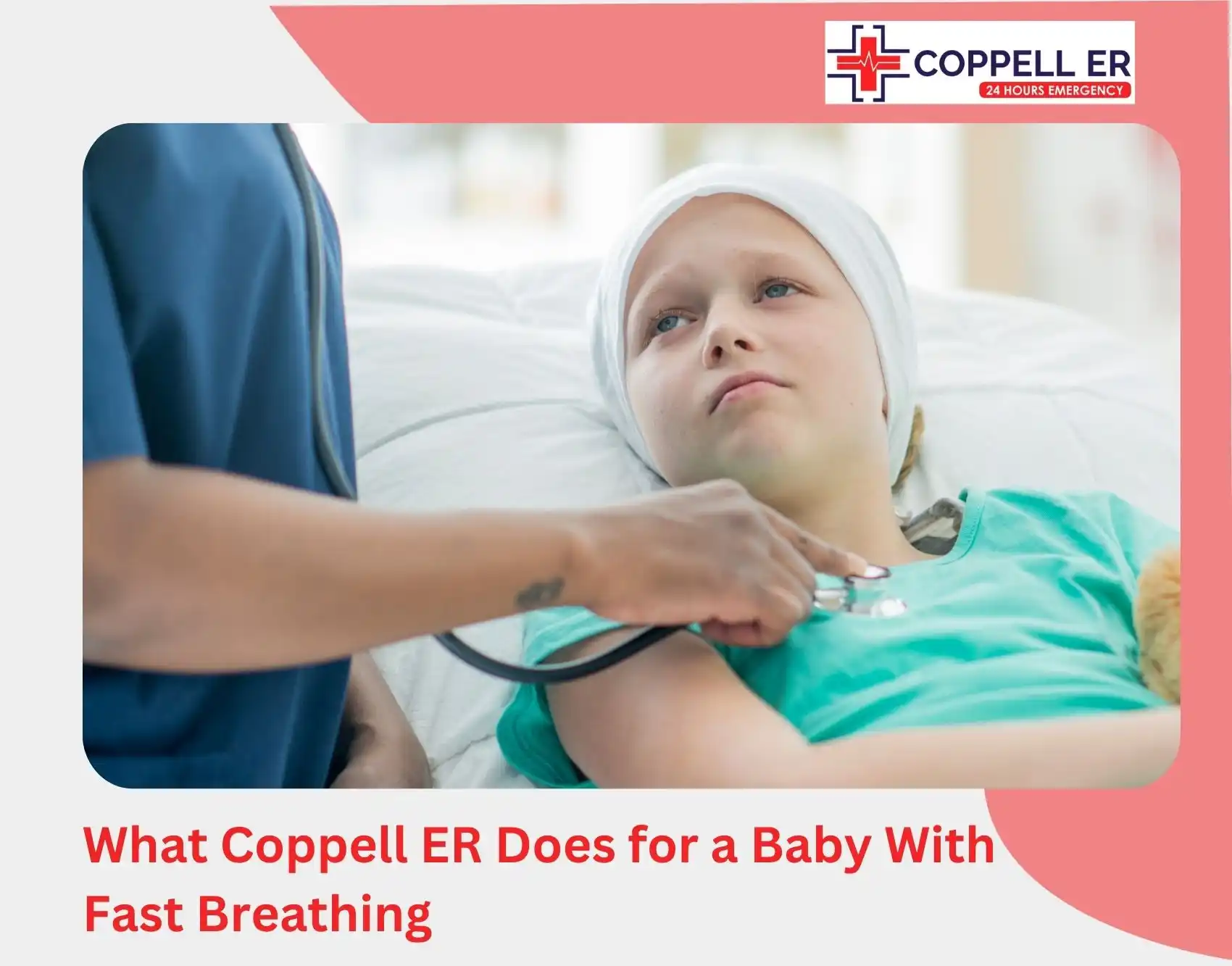
| Evaluation at Coppell ER begins within minutes of walk-in, with pediatric-experienced physicians, on-site oxygen monitoring, and respiratory testing. Coppell area families can walk in without an appointment day or night, for a same-visit answer about whether the fast breathing requires oxygen, imaging, or safe home monitoring. |
The typical pediatric breathing workup follows this sequence:
- Immediate triage without appointment by our board-certified emergency physicians
- Vital signs including respiratory rate, pulse, temperature, and continuous oxygen saturation monitoring
- Focused examination of the chest, airway, and feeding ability
- Rapid testing for RSV, flu, and COVID-19 during respiratory virus season
- Chest X-ray when pneumonia, aspiration, or airway obstruction is suspected
- Blood work when infection, dehydration, or serious illness is suspected
- Oxygen therapy, nebulizer treatments, or suctioning when needed to stabilize breathing
- Clear written home instructions with warning signs to watch for after discharge
For questions before walking in with a baby breathing fast, or to confirm directions from your Coppell neighborhood, feel free to contact the Coppell ER team at 469-763-3136 any time of day or night.
Frequently Asked Questions
Is it normal for a newborn to breathe fast while sleeping?
Yes, within limits. Newborns breathe 30 to 60 times per minute and often have irregular patterns during sleep, including brief pauses. Rates consistently over 60 at rest, or any pause longer than 20 seconds, deserve walk-in evaluation.
How do I count my baby’s breaths accurately?
Count chest rises for a full 60 seconds while the baby is calm or sleeping, not fussing, feeding, or warm. A quick 15-second count multiplied by four can miss irregular patterns, especially in young infants.
What are retractions and why do they matter?
Retractions are visible skin pulling inward between the ribs, under the breastbone, or above the collarbone during breathing. They mean the baby is using extra muscles to breathe and signal respiratory distress needing evaluation.
Can a stuffy nose cause my baby to breathe fast?
Yes, mild congestion often causes faster breathing, especially during feeding and sleep. Saline drops and gentle suctioning usually help. If the fast breathing continues after clearing the nose, or includes retractions, evaluation is warranted.
How quickly can RSV become serious in a baby?
RSV can worsen rapidly over the first three to five days, with respiratory signs peaking around day three to five. Any baby with fast breathing, poor feeding, or signs of distress during RSV season deserves same-day evaluation.
A Coppell Freestanding ER for Your Family, Open 24/7
Coppell ER is a freestanding emergency room open 24 hours a day, seven days a week, serving families across Coppell, Lewisville, Grapevine, Irving, Flower Mound, and Valley Ranch. Board-certified emergency physicians. Pediatric-experienced care team. On-site oxygen monitoring, respiratory testing, and X-ray. No appointment needed. No long waiting room delays. When your baby is breathing fast and you need answers now, walk in for the peace of mind of same-visit care.
Coppell ER | Open 24/7 | Freestanding Emergency Room
720 N Denton Tap Rd, Coppell, TX 75019 | 469-763-3136
Most commercial insurance accepted. In-house billing. No surprise billing.
External References Links :