
Reviewed by the Coppell ER pediatric emergency care team
| 🚨 Come to Coppell ER Right Now If Your Child Has
Vomit that is bright green, bright red, or looks like coffee grounds. Vomiting after a head injury. Vomiting with a stiff neck or severe headache. A baby under 12 weeks vomiting more than twice. No wet diapers or urine for 8 hours. Extreme drowsiness or an inability to wake. Do not wait if these signs are present. Coppell ER is at 720 N Denton Tap Rd. Phone: 469-763-3136. |
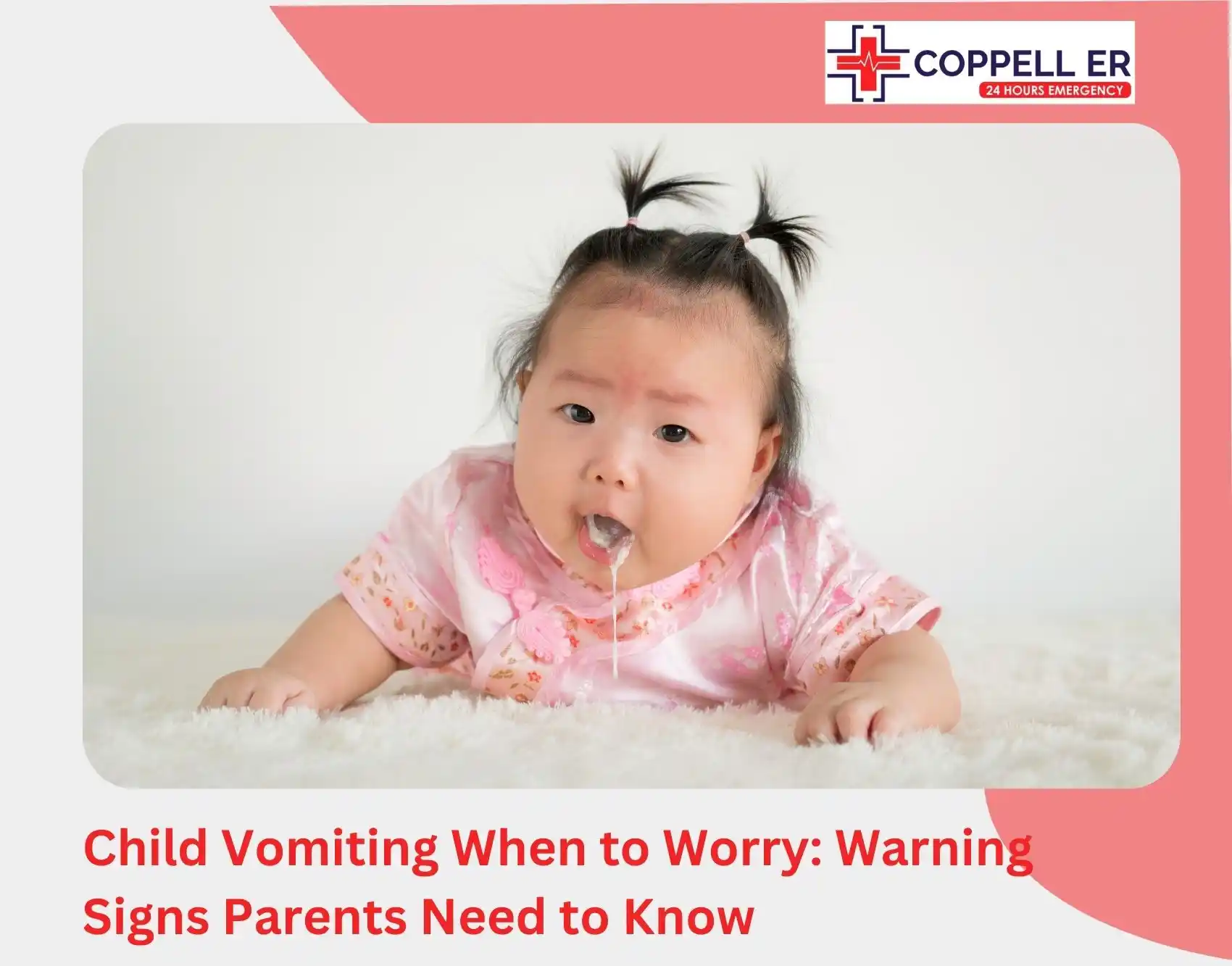
Child vomiting when to worry is a decision many Coppell area parents face several times a year, usually with a stomach bug that resolves on its own. Most childhood vomiting is short-lived and harmless. But certain colors, patterns, and companion symptoms signal something more serious, such as intestinal obstruction, appendicitis, or dangerous dehydration. Knowing what to look for helps you decide when a freestanding ER walk-in makes sense right now instead of watching at home.
Coppell ER serves families across Coppell, Lewisville, Grapevine, Irving, Flower Mound, and Valley Ranch as a freestanding emergency room with pediatric-experienced physicians, on-site lab and imaging, and no long waiting rooms. When your child cannot keep anything down and you need real answers fast, walk-in evaluation is often faster than an after-hours pediatrician call back.
What the Color of the Vomit Tells You

| The color of a child’s vomit gives one of the fastest clues about how serious the problem might be. Clear or yellow stomach contents are usually a common virus. Bright green, bright red, or coffee-ground vomit signals possible intestinal obstruction, bleeding, or bile issues, and warrants immediate ER evaluation. |
Use this at-a-glance reference for what different vomit colors typically suggest and how urgent they are:
| Color | What It Likely Means | Urgency |
|---|---|---|
| Clear or White | Undigested food, mucus, or empty-stomach vomiting. Most often a viral stomach bug. | Monitor |
| Yellow | Stomach acid or bile-tinged after repeated vomiting. Common with prolonged viral illness. | Monitor |
| Bright Green | Bile in vomit, which can indicate intestinal blockage or obstruction. Not typical of a stomach bug. | ER Now |
| Bright Red | Fresh blood, possibly from the stomach or upper digestive tract, or from severe strain. | ER Now |
| Coffee Ground | Older blood that has partially digested. Suggests slow bleeding higher in the digestive tract. | ER Now |
| Brown | Could indicate blood, food dye, or intestinal contents backing up. Needs evaluation. | ER Now |
How Forceful and How Often the Vomiting Happens
| Beyond color, the character of the vomiting itself matters. Projectile vomiting in babies, especially after every feeding, can indicate pyloric stenosis. Repeated forceful vomiting in older kids can lead to dangerous dehydration or signal an infection or obstruction requiring urgent care. |
Pay attention to how the vomiting looks and how frequent it is. Certain patterns cross into ER territory quickly:
Projectile vomiting in a baby. Vomit that shoots out forcefully, especially in a baby under three months after every feeding, can indicate pyloric stenosis and needs same-day evaluation.
Vomiting more than three or four times in a few hours. This level of persistent vomiting raises the risk of dangerous dehydration, particularly in babies and toddlers.
Inability to keep any fluids down. If nothing stays down for 6 to 8 hours in a young child, IV fluids may be needed to prevent or treat dehydration.
Vomit that appears without gagging or effort. Effortless regurgitation in an older child, especially with weight loss, can indicate reflux disease or a structural problem.
Vomiting immediately after every meal. In a baby, this can point to a feeding intolerance or obstruction. In an older child, it can suggest a stomach ulcer or blockage.
Companion Symptoms That Change Everything
| A child vomiting alone with a stomach bug looks and behaves very differently from a child vomiting because of a serious infection or injury. Certain symptoms alongside vomiting move the decision from home care straight to the ER, regardless of how many times the child has thrown up. |
Any of the following alongside vomiting warrants immediate ER evaluation:
- Recent head injury or fall, since vomiting after head trauma can signal brain injury
- Severe abdominal pain, particularly in the lower right side, which can indicate appendicitis
- Stiff neck, severe headache, or unusual sensitivity to light, which can suggest meningitis
- High fever over 102°F, or any fever in a baby under three months
- Extreme drowsiness, difficulty waking, or confusion
- A rash that appears with the vomiting, especially one that does not fade under pressure
- Rapid or labored breathing, or blue lips
- Suspicion of accidental poisoning or ingestion of medication, plant, or chemical
- Seizure or convulsion of any duration
According to Nationwide Children’s Hospital, vomit that is bright green, contains blood, or has coffee-ground specks, or is paired with high fever, requires prompt medical evaluation regardless of how well the child otherwise appears.
The Dehydration Warning Signs Every Parent Should Recognize

| The biggest danger of prolonged vomiting is dehydration, and the youngest children are the most vulnerable. Watch for reduced urine output, dry mouth, no tears when crying, sunken eyes, or unusual drowsiness. Any of these alongside vomiting warrants immediate evaluation for fluid replacement. |
Dehydration develops silently as fluid losses outpace what a child can take in. Warning signs include:
- No wet diaper or urine in the past 8 hours in babies and toddlers, or 12 hours in older children
- Dry mouth, cracked lips, or a dry-feeling tongue
- Crying without tears
- Sunken eyes or a sunken soft spot on the top of a baby’s head
- Unusual sleepiness or difficulty waking the child
- Dark yellow urine when a wet diaper does appear
- Cold, blotchy, or clammy hands and feet
- Rapid breathing or a fast heartbeat
The American Academy of Pediatrics guidance on dehydration emphasizes that early signs are subtle and easy to miss, which is why any prolonged vomiting in a young child deserves close monitoring for these specific patterns.
Child Vomiting When to Worry: Higher-Risk Kids
| Certain children need a lower threshold for ER evaluation when they start vomiting. Babies under 12 weeks, kids with weak immune systems, children with diabetes, and anyone with a recent surgery face elevated risks. In these groups, child vomiting when to worry shifts firmly toward earlier walk-in evaluation. |
Some children face higher stakes with any vomiting episode. These groups deserve earlier ER care for symptoms that might otherwise be watched at home:
- Babies under 12 weeks old, particularly with any vomiting beyond typical spitting-up; our pediatric emergency care team uses infant-specific evaluation protocols
- Children with weakened immune systems from cancer treatment, organ transplant, or long-term steroids
- Children with diabetes, since vomiting can rapidly trigger dangerous blood sugar changes and diabetic ketoacidosis
- Anyone with a recent head injury or fall in the past few days
- Children with a recent abdominal surgery or known structural issue in the gut
- Kids with sickle cell disease or other chronic blood conditions
- Any child who has already been dehydrated recently or is on medications that increase dehydration risk
- Children who cannot communicate symptoms well due to age or developmental differences
What Coppell ER Does for a Vomiting Child
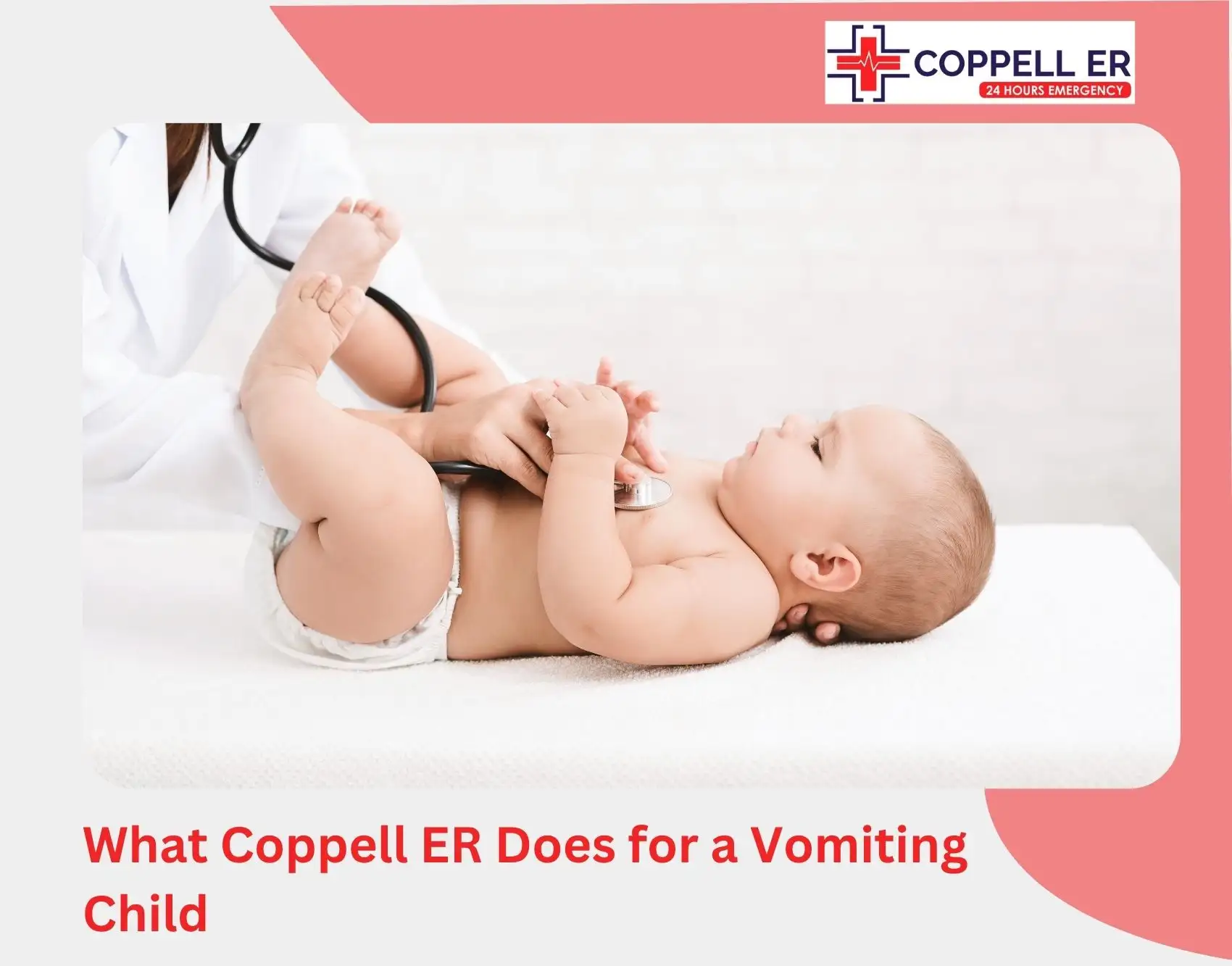
| Evaluation at Coppell ER begins within minutes of walk-in, with pediatric-experienced physicians, on-site lab work, and imaging when needed. Coppell area families can walk in without an appointment day or night, for a same-visit answer about whether the vomiting requires IV fluids, imaging, or observation. |
The typical pediatric vomiting workup follows this sequence:
- Immediate triage without appointment by our board-certified emergency physicians
- Focused examination of hydration status, abdomen, vital signs, and mental status
- Blood work when indicated for infection, dehydration, or blood sugar concerns
- Urine testing for dehydration status and possible infection
- Abdominal ultrasound or X-ray when obstruction, appendicitis, or pyloric stenosis is suspected
- IV fluids for moderate to severe dehydration, delivered while the workup continues
- Anti-nausea treatment appropriate for the child’s age when needed
- Clear written home instructions with warning signs to watch for after discharge
For questions before walking in with a vomiting child, or to confirm hours and directions from your Coppell neighborhood, feel free to call or message the Coppell ER team at 469-763-3136 any time of day or night.
Frequently Asked Questions
How long is too long for a child to vomit?
For babies under two years, more than 24 hours of vomiting warrants ER evaluation. For older children, more than 48 hours without improvement, or an inability to keep down any fluids for 6 to 8 hours, warrants walk-in care.
What does bright green vomit mean in a child?
Bright green vomit contains bile and can indicate an intestinal obstruction or blockage. This is not typical of a routine stomach bug and warrants immediate ER evaluation for imaging, even if the child otherwise seems reasonably well.
How can I tell if my child is dehydrated from vomiting?
Watch for no wet diaper in 8 hours, dry mouth, no tears when crying, sunken eyes, unusual sleepiness, or dark yellow urine. Any of these alongside vomiting means the child needs prompt medical evaluation.
Is projectile vomiting in a baby always an emergency?
For babies under three months, forceful projectile vomiting after every feeding raises concern for pyloric stenosis, a treatable but urgent condition. Any baby with repeated projectile vomiting should be evaluated the same day at the ER.
When does vomiting mean appendicitis in a child?
Vomiting paired with abdominal pain that shifts to the lower right side, walking hunched over, refusing to jump or move, or pain that worsens over hours can indicate appendicitis. Any of these needs immediate ER evaluation.
A Coppell Freestanding ER for Your Family, Open 24/7
Coppell ER is a freestanding emergency room open 24 hours a day, seven days a week, serving families across Coppell, Lewisville, Grapevine, Irving, Flower Mound, and Valley Ranch. Board-certified emergency physicians. Pediatric-experienced care team. On-site lab, ultrasound, and X-ray. No appointment needed. No long waiting room delays. When your child is vomiting and you need answers now, walk in for the peace of mind of same-visit care.
Coppell ER | Open 24/7 | Freestanding Emergency Room
720 N Denton Tap Rd, Coppell, TX 75019 | 469-763-3136
Most commercial insurance accepted. In-house billing. No surprise billing.