Nipah is a dangerous virus, with a fatality rate as high as 40 to 75%.1 There is currently no approved treatment or vaccine. This means preventing Nipah virus is the best way to protect yourself and others.
Most outbreaks have happened in parts of Asia, but infectious diseases can cross borders. By learning how to protect ourselves, we help keep our community safe from a major outbreak.
Let’s look at practical safety tips for preventing Nipah virus in Coppell. And how ER Coppell works to keep everyone safe. Remember, preventing an infection is much easier than controlling an outbreak after it has begun.
Preventing Nipah Virus: Symptoms and Transmission
Nipah virus primarily affects the respiratory and nervous systems. Early symptoms resemble influenza or other viral illnesses, including fever, headache, cough, sore throat, vomiting, and breathing difficulty.
Severe cases may progress to encephalitis (brain inflammation), seizures, confusion, and coma. Symptoms typically appear 4–14 days after exposure.
Nipah virus transmission occurs through:
- Direct contact with infected animals (bats and pigs)
- Consumption of contaminated fruits or raw date palm sap
- Close contact with infected individuals or bodily fluids
- Exposure in healthcare settings without proper precautions
As there are currently no vaccines or definitive treatments, prevention is the frontline defense against the Nipah virus. With proper infection control measures, this highly lethal virus can be contained effectively.
How Can We Prevent Nipah Virus? 7 Prevention Tips for the Public
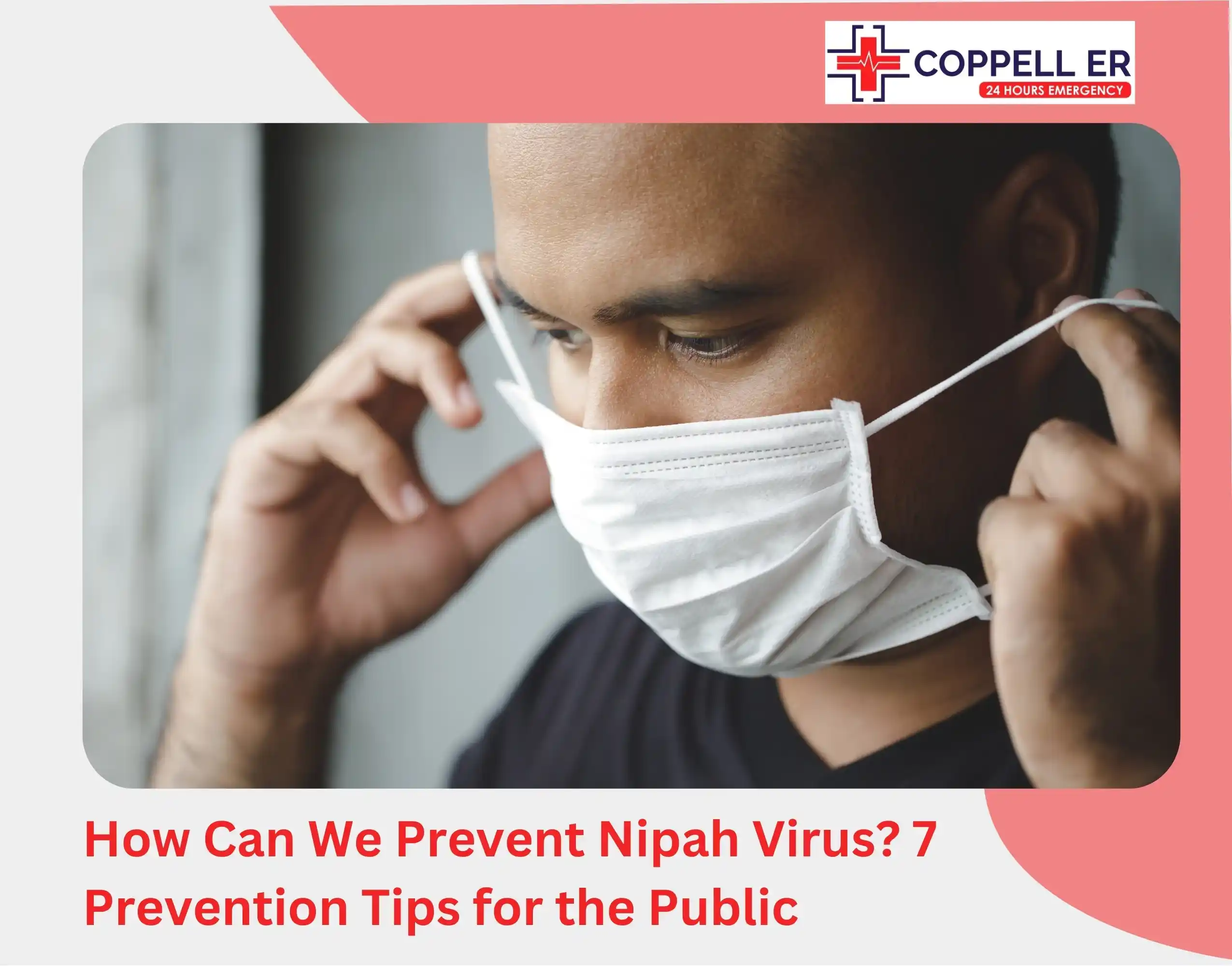
The World Health Organization (WHO) and Centers for Disease Control and Prevention (CDC) emphasize that community-level prevention and hygiene are a big help in preventing Nipah virus. Here are everyday life steps to prevent nipah virus.
1. Good Hand Hygiene
Viruses spread when contaminated hands touch the mouth, nose, eyes, or food. Regular handwashing alone can significantly reduce transmission of many infections.
Scrub your hands with soap for at least 20 seconds and then rinse. If soap and water are not available, use an alcohol-based hand sanitizer containing at least 60% alcohol.
When to Wash Your Hands:
- Before eating or preparing food
- After using the restroom
- After coughing, sneezing, or blowing your nose
- After caring for someone who is sick
- After touching animals or animal waste
- After returning home from public places
- After touching frequently used surfaces (door handles, phones, public transport)
2. Be Careful with Food Safety
Fruit bats (also called flying foxes) are natural carriers of the Nipah virus. They contaminate fruit or sap with saliva or urine. Some Nipah virus outbreaks in South Asia have been linked to the consumption of contaminated fruits or raw date palm sap.
Safe Food Practices to prevent Nipah virus:
- Wash fruits and vegetables before eating
- Peel fruits
- Don’t consume fruits/vegetables that appear bitten or damaged
- Keep food covered
- Store food at proper temperatures
- Avoid consuming raw or unpasteurized juices
- Use clean utensils and preparation surfaces
3. Avoid Close Contact with Sick Individuals
Nipah virus can spread from person to person through close, prolonged contact with bodily fluids. Maintain safe physical distance with infected individuals and avoid sharing utensils, cups, towels, or bedding.
Close caregiving of sick individuals without protection massively increases the risk of the Nipah virus.
Preventive measures for the caregiver:
- Wash your hands frequently
- Wear a mask when in close contact
- Use disposable tissues for coughs or sneezes
- Dispose of waste safely
- Avoid touching your face unnecessarily
4. Stay Home When You’re Sick
Many infections spread because people continue daily activities while sick. If you feel unwell, stay home and avoid public gatherings. Return to work, school, or public spaces only when a healthcare provider advises it is safe.
Your responsible behavior protects vulnerable individuals such as the elderly, children, and those with weakened immune systems.
5. Stay Informed from Reliable Sources
WHO has repeatedly emphasized that misinformation during outbreaks can hinder prevention efforts and create unnecessary panic. Before sharing information, verify it through trusted sources.
Rely on verified information from local health departments and official government health websites like CDC (Centers for Disease Control and Prevention) and WHO (World Health Organization).
6. Practice Respiratory Hygiene
Respiratory hygiene and environmental cleanliness are very important in preventing Nipah virus. Cover your coughs and sneezes with a tissue or your elbow and dispose of used tissues safely.
Wipe and disinfect things that are touched often, like phones, doorknobs, and tables. Make sure rooms have good airflow, and try to avoid crowded, stuffy places if you’re sick.
7. Special Considerations for Travelers
Although Nipah virus cases are rare globally, travelers should remain aware.
If traveling internationally:
- Follow travel health advisories
- Avoid contact with sick animals
- Eat well-washed and properly cooked foods
- Seek medical care if symptoms appear after travel.
- Inform healthcare providers about recent travel history
How ER Coppell Prevent Nipah Virus
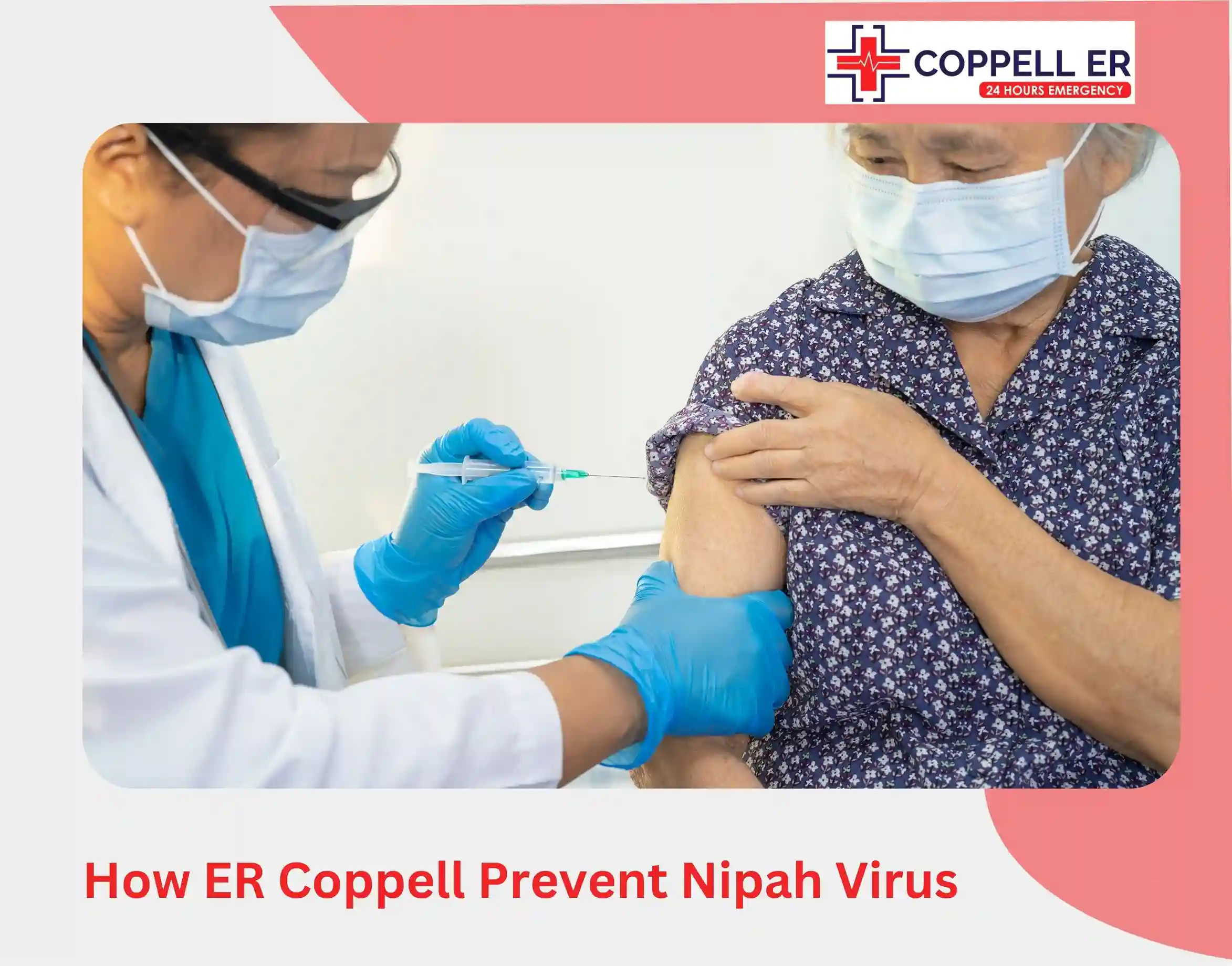
Preventing Nipah virus is not only on people’s end. Healthcare providers like ER Coppell also play an equal part. Here’s how:
1. Screening and Early Detection
When patients arrive with fever or unusual symptoms, we perform quick assessments. We ask about recent travel history, contact with sick individuals, and exposure to animals. Early detection ensures the right precautions are taken immediately and halts the outbreaks.
2. Isolation Procedures
Hospitals and clinics can be the major centers of infection spread if infected individuals are not isolated. At ER Coppell, we keep contagious patients in private rooms separately. Staff use protective equipment PPE when treating patients.
3. Strict Hygiene and Cleaning
Emergency rooms maintain high standards of cleanliness:
- Frequent disinfection of surfaces
- Hand hygiene stations throughout the facility
- Safe disposal of medical waste
- Continuous staff training. Prepared teams can respond calmly and effectively if any unusual case appears.
When Should You Seek Medical Care?
Most flu-like illnesses are not Nipah virus. However, you should seek medical attention if you experience:
- High fever with severe headache
- Difficulty breathing
- Confusion or unusual drowsiness
- Seizures
- Rapid worsening of symptoms
- Recent travel to an outbreak-affected area with symptoms
Note: Calling ahead an ER when you have suspected Nipah virus symptoms helps the ER prepare isolation and protective measures before you arrive. It reduces the risk of virus spreading to staff and other patients.
Preventing Nipah Virus: Final Thoughts
Even though the risk of the Nipah virus in the United States is very low, prevention is still important. You can prevent Nipah virus by adopting good hygiene practices, maintaining food safety, and following safe isolation protocols for suspected cases.
If you develop unusual symptoms after traveling to affected regions, seek medical care at the ER Coppell. We provide observation services for suspected cases and emergency respiratory care if your condition worsens. With awareness, preparation, and cooperation, we can prevent Nipah virus outbreak in our community.
FAQs About Preventing Nipah Virus:
1. How does the Nipah virus spread to humans?
The virus spreads through contact with infected animals (especially fruit bats or pigs), contaminated food, or close contact with infected people and their bodily fluids.
2. What foods should you avoid during a Nipah virus outbreak?
Avoid drinking raw date palm sap and eating fruits that may have been bitten by bats or fallen on the ground. Wash and peel fruits before eating them.
3. What are the first symptoms of Nipah virus?
Early symptoms of Nipah virus may include fever, headache, muscle pain, vomiting, and sore throat. In severe cases, it can progress to breathing problems or brain inflammation.
4. How long does it take for Nipah symptoms to appear?
Nipah virus symptoms usually appear 4–14 days after exposure. The incubation period may be longer sometimes.
5. Is Nipah virus airborne?
Nipah virus is not primarily airborne. It spreads through direct contact with infected animals, contaminated food, or bodily fluids of infected people.