
RSV often starts with symptoms so mild that most parents assume it’s just a cold. But in babies, especially those under 6 months, the virus can move into the lower lungs and cause serious breathing problems within hours.
The first signs of RSV in babies are easy to miss if you don’t know what to look for. And by the time breathing difficulty becomes obvious, the window for early intervention has already narrowed.
What Is RSV, and Why Are Babies More Vulnerable?
RSV is a highly contagious virus that infects the respiratory tract. Nearly all children contract at least one RSV infection by age two. In many cases, it passes like a simple cold. But RSV is the leading cause of bronchiolitis and pneumonia in infants under 12 months.
Babies face greater risk because:
- Their airways are small and easily blocked by swelling or mucus
- They breathe primarily through their noses
- Their immune systems are still developing
- They fatigue quickly when working harder to breathe
Premature infants and babies with lung disease or congenital heart conditions carry especially high risk.
The First Signs of RSV in Babies
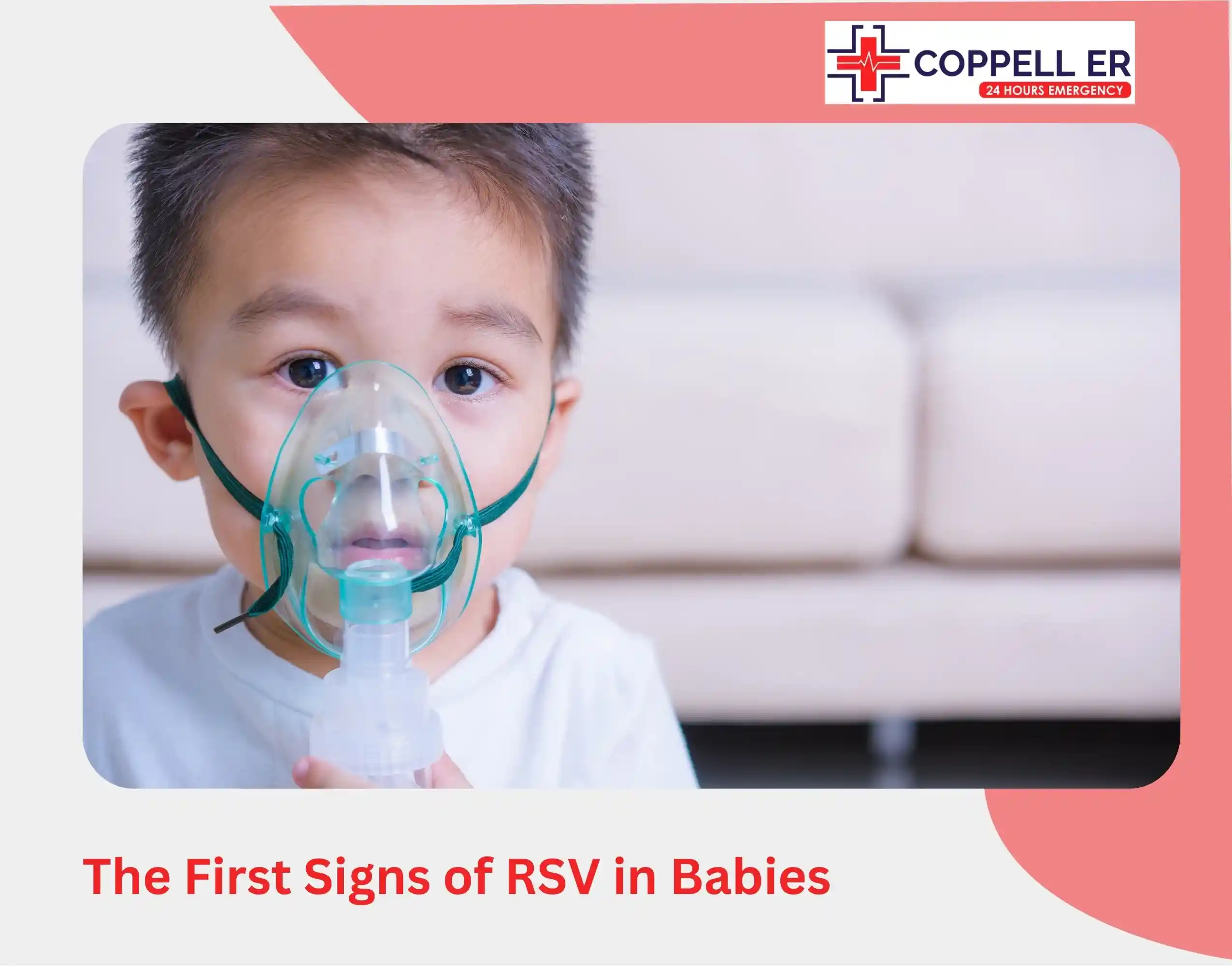
The first signs of RSV in babies often look like an ordinary cold. These initial symptoms typically appear 4 to 6 days after exposure, and parents frequently mistake them for teething, seasonal congestion, or minor allergies.
1. Runny or Stuffy Nose
This is usually the very first symptom parents notice. Babies may sound congested, breathe noisily, or struggle to feed because they can’t coordinate breathing through a blocked nose.
2. Sneezing
Frequent sneezing is another early signal as the body tries to clear the nasal passages.
3. Feeding Changes: The Most Telling Early Indicator
A sudden decrease in feeding is one of the most important signs of RSV in infants. Because babies breathe through their noses while feeding, any congestion disrupts their ability to suck, swallow, and breathe at the same time.
Watch for:
- Baby tires quickly during feeds
- Baby pulls away from the breast or bottle repeatedly
- Feeds take noticeably longer to finish
- Fewer wet diapers than usual
Feeding decline is often the first symptom that worsens before obvious breathing trouble begins. If your baby’s intake drops sharply, that alone warrants closer monitoring.
4. Mild Cough
A soft, intermittent cough often begins early and may deepen over several days.
5. Low-Grade Fever (or No Fever At All)
Many infants have no fever with RSV. If present, it’s usually mild. This catches parents off guard because we tend to associate viruses with fevers. A lack of fever does not rule out RSV, so rely on breathing and feeding patterns rather than temperature alone.
6. Irritability or Unusual Fussiness
Because babies can’t describe discomfort, irritability may be the only sign that breathing is getting slightly harder or congestion is building.
These mild symptoms can last 1 to 2 days before RSV moves deeper into the lower airways. Recognizing these first signs of RSV in babies during this window is what gives parents the advantage.
How RSV Symptoms Progress in Babies
If RSV moves into the bronchioles (the small airways in the lungs), symptoms become more serious within a short timeframe. This lower respiratory involvement is what separates RSV from a regular cold and makes it dangerous for infants.
Progressive RSV symptoms in babies include:
- Deepening cough (more frequent, wetter, or harsher)
- Wheezing: a whistling sound during exhale
- Rapid or shallow breathing
- Chest retractions: skin pulls in between the ribs or below the ribcage with each breath
- Flaring nostrils as the baby works harder to get air in
- Difficulty sleeping due to increased breathing effort
- Continued feeding decline
- Fewer wet diapers, signaling early dehydration
These changes can escalate quickly, especially in infants under 6 months. If you notice any of these signs of respiratory infection worsening over hours rather than days, your baby needs medical evaluation.
For a day-by-day breakdown of what to expect, see our guide on how long RSV lasts and how to manage it.
When RSV Becomes an Emergency: Red Flag Symptoms
This is the section you need to act on, not just read.
According to the CDC, RSV can cause life-threatening breathing problems in babies and requires immediate medical attention. Know when to take baby to ER for breathing if you see any of the following:
Breathing red flags:
- Fast, labored breathing that is not improving
- Grunting: a soft, rhythmic “ugh” sound with each exhale, meaning the baby is struggling to keep air in the lungs
- Pauses in breathing (apnea), especially in newborns
Color changes:
- Blue or gray lips, tongue, or skin (cyanosis)
- Pale or mottled skin
Feeding and hydration red flags:
- Refusing feeds entirely
- Vomiting mucus
- Fewer than 3 wet diapers in 24 hours
Behavioral red flags:
- Difficulty waking the baby
- Limpness or extreme lethargy
- Unusual unresponsiveness
Fever thresholds:
- Over 100.4°F (38°C) in babies under 3 months
- Over 102°F (38.9°C) in older infants
Don’t wait for multiple symptoms to appear. Any single breathing red flag is reason enough to know when to take baby to ER for breathing. Arriving earlier gives medical teams more options and more time to stabilize your infant.
What Happens When You Bring Your Baby to the ER
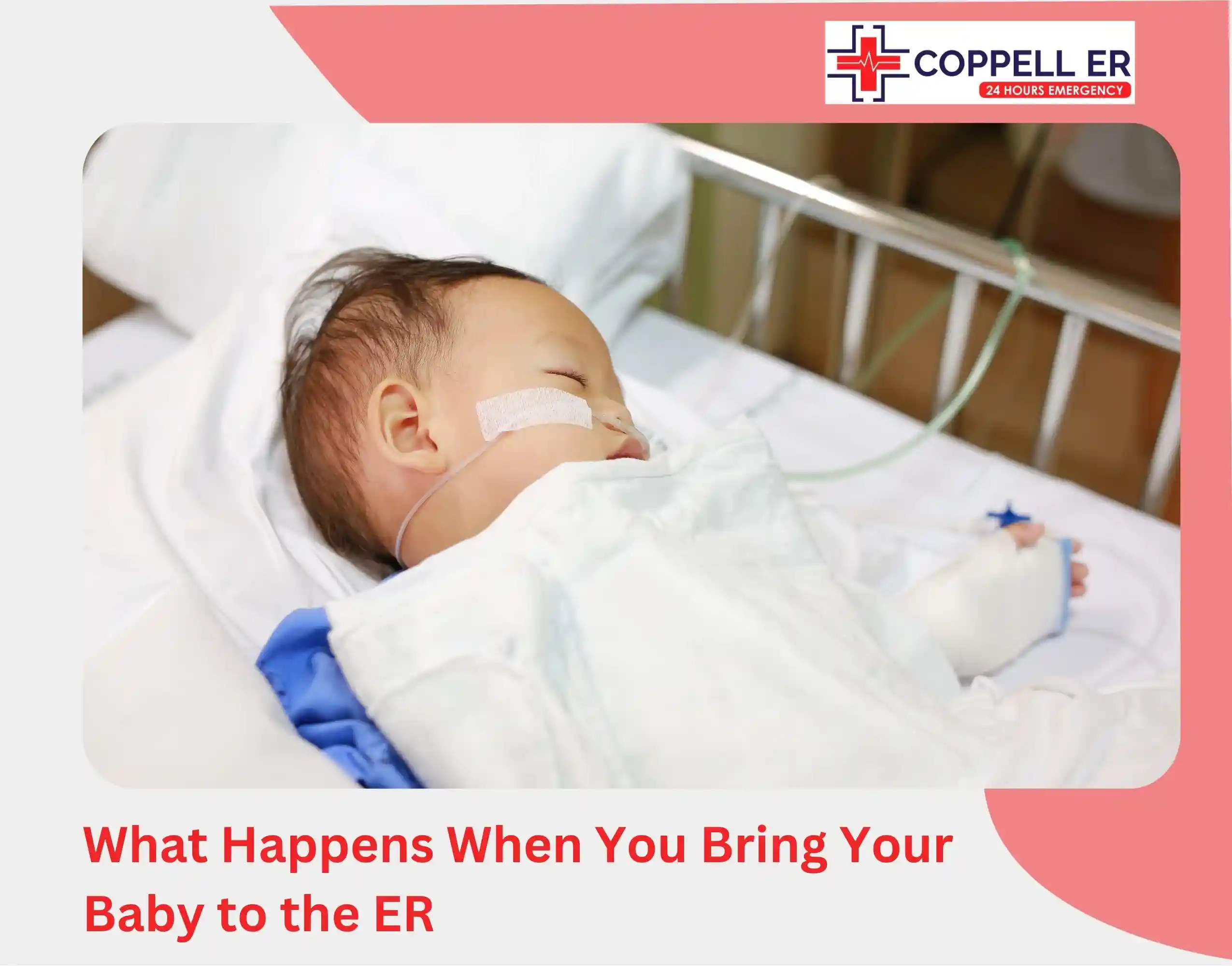
When you arrive with signs of RSV in infants, the medical team moves quickly.
Assessment:
- Listening to the baby’s lungs for wheezing or crackling
- Checking breathing rate and effort
- Measuring oxygen saturation with a pulse oximeter
- Reviewing feeding patterns and diaper output
Testing (when indicated):
- Nasal swab PCR test for RSV confirmation
- Rapid RSV antigen test for faster initial results
- Chest X-ray if pneumonia is suspected
- Blood tests if dehydration or secondary infection is a concern
Treatment depends on severity:
- Oxygen therapy or high-flow nasal support
- IV fluids if feeding has declined significantly
- Suctioning of mucus from the airways
- Monitoring for apnea, especially in newborns
- Treatment of complications like pneumonia if present
There is no antiviral medication for RSV in most cases. Care is supportive, meaning the goal is to keep the baby breathing, hydrated, and stable while the immune system fights the virus.
At Coppell Emergency Room, we provide 24/7 pediatric care with on-site labs, imaging, and IV capability. As a freestanding ER, we assess and begin treatment immediately, without the wait times common in hospital emergency departments.
Caring for Mild RSV at Home
For babies with mild RSV symptoms in babies and no breathing difficulties, home care is often safe. Helpful strategies include:
- Saline nose drops followed by gentle suctioning (bulb syringe or electric nasal aspirator)
- Cool-mist humidifier to moisten the air
- More frequent, smaller feedings to reduce fatigue
- Keeping the baby slightly upright during congestion
- Monitoring breathing rate, feeding volume, and wet diapers closely
Do not use over-the-counter cough or cold medications in infants. They are not safe for babies and can mask worsening symptoms.
If mild symptoms haven’t improved within 3 to 5 days, or if you notice any of the progression signs listed above, contact your pediatrician or visit the ER.
Can RSV Be Prevented?
New preventive options now exist and are worth discussing with your pediatrician.
- For infants: Nirsevimab is a long-acting monoclonal antibody recommended for all babies entering their first RSV season. It provides passive protection for several months.
- For pregnant women: An RSV vaccine given during pregnancy can protect newborns during their most vulnerable first months.
General prevention steps:
- Frequent handwashing before handling the baby
- Keeping infants away from anyone with cold symptoms
- Cleaning high-touch surfaces regularly
- Limiting exposure to crowds during RSV season (typically fall through spring)
- Asking visitors to wash hands before holding the baby
RSV spreads through respiratory droplets and contaminated surfaces. Young siblings in daycare are one of the most common sources of household transmission.
When in Doubt, Trust Your Instincts
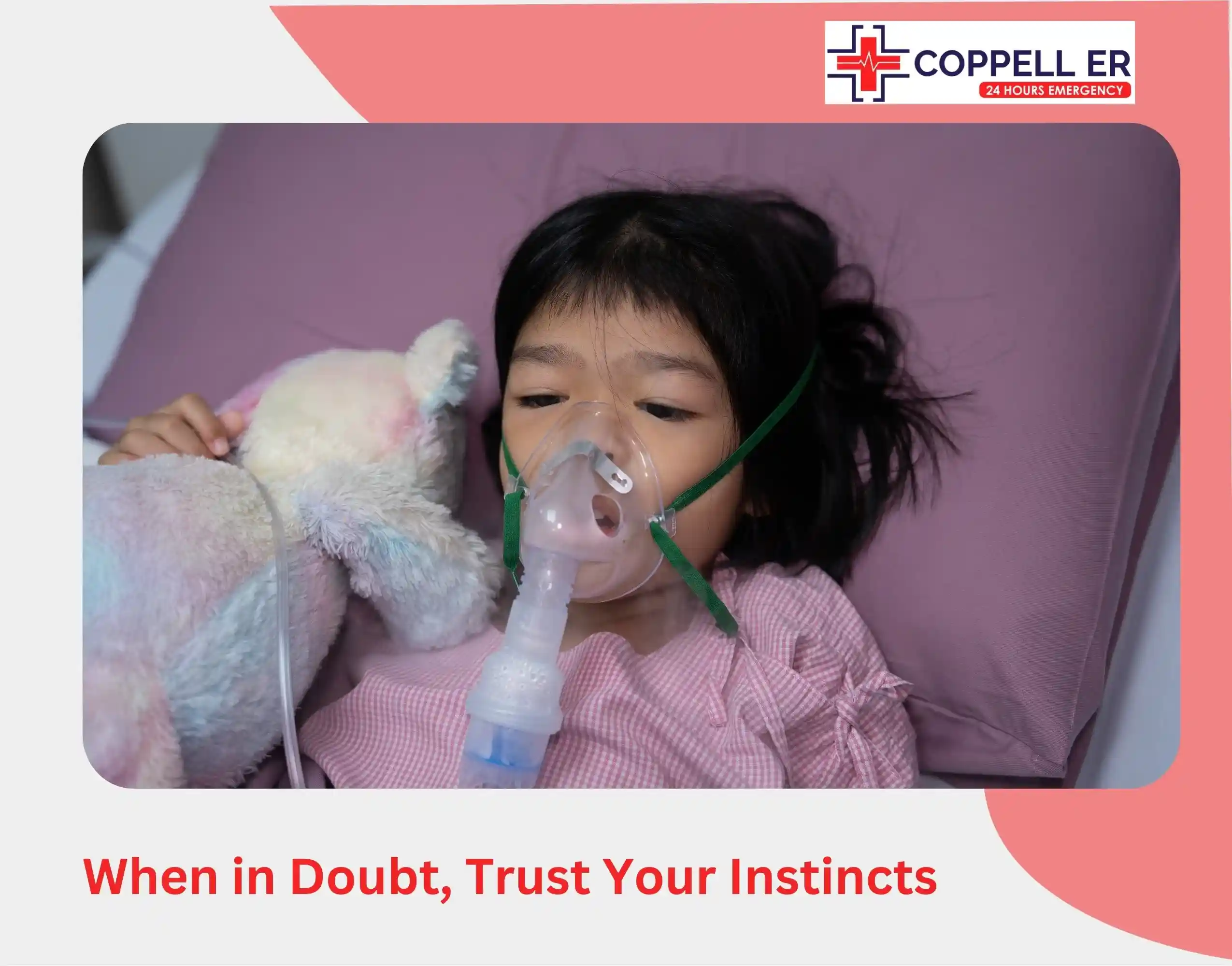
The first signs of RSV in babies are easy to dismiss as a normal cold. That’s exactly what makes the virus dangerous for infants. If your baby is breathing differently, feeding less, or seems unusually tired, get medical advice early. You don’t need to wait for a full list of red flags.
Coppell Emergency Room is equipped 24/7 to assess RSV symptoms, run on-site flu and respiratory testing, and stabilize infants who are struggling to breathe. Walk in anytime or call 469-763-3136.
[Get Directions to Coppell Emergency Room]
FAQs
1. What is the very first sign of RSV in babies?
A runny or stuffy nose is usually the earliest symptom, often followed closely by a decrease in feeding. Because babies breathe through their noses while eating, even mild congestion disrupts their ability to feed normally. This feeding decline is often the first sign that distinguishes RSV from ordinary congestion.
2. Do babies always get a fever with RSV?
No. Many infants never develop a fever during RSV. When present, it’s usually low-grade. High fever may signal a complication like pneumonia.
3. How quickly can RSV get worse?
RSV can progress from mild cold symptoms to serious breathing difficulty within 24 to 48 hours, sometimes faster in newborns and premature infants. Days 3 through 5 of illness tend to be the peak, when lower airway involvement is most likely.
4. How do I know if my baby’s breathing is abnormal?
Normal newborn breathing is 30 to 60 breaths per minute. Count breaths for a full minute while the baby is calm. Warning signs include visible chest retractions (skin pulling between ribs), nasal flaring, grunting, and any pauses in breathing longer than 10 seconds.
5. When Should I Take My Baby to the ER for Breathing Problems?
Take your baby to the ER immediately if you notice labored breathing, blue or gray lips, refusal to eat, fewer than 3 wet diapers in 24 hours, extreme sleepiness, or any pauses in breathing. You don’t need to see all of these signs. Any single breathing red flag is enough.