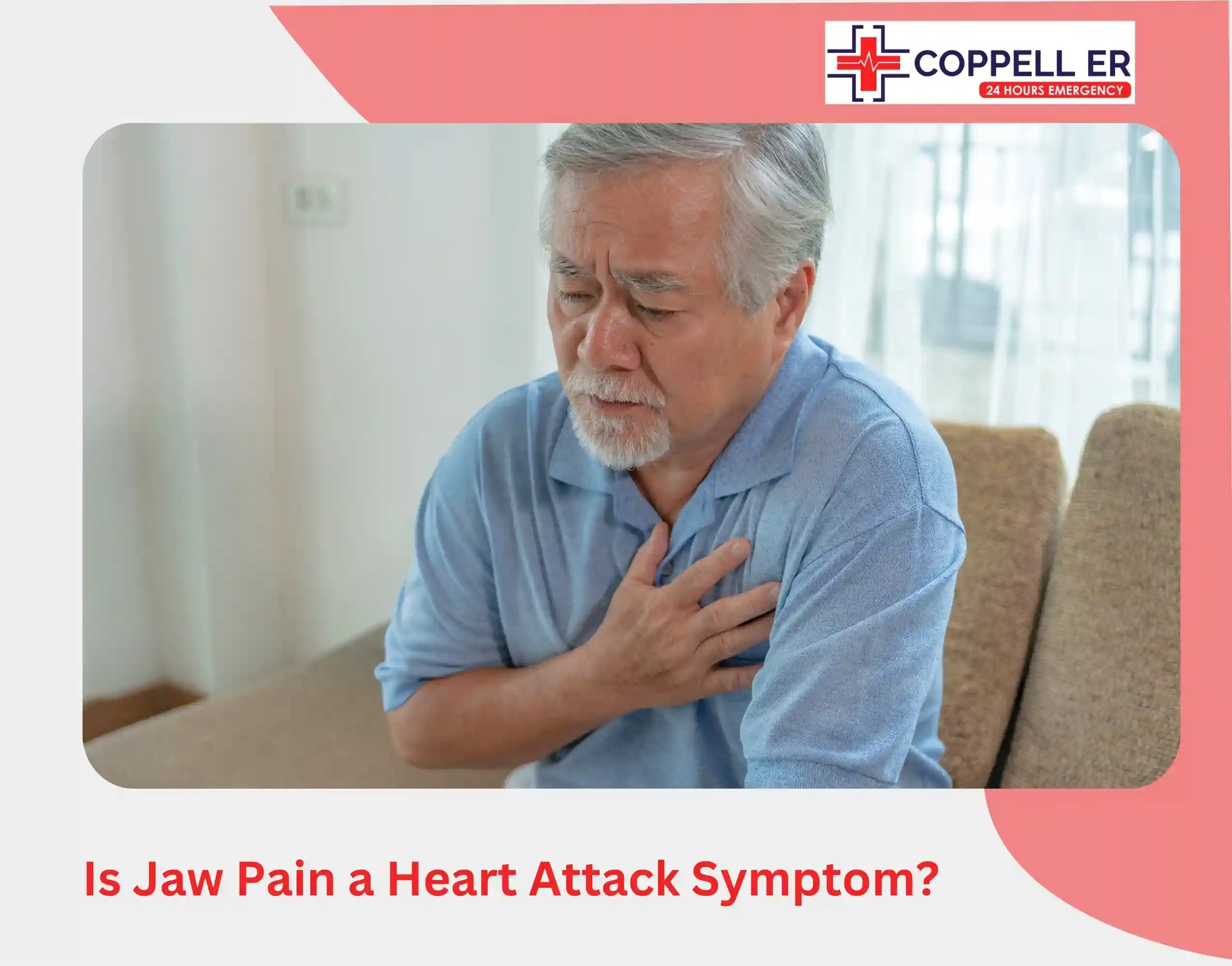
Yes, jaw pain can be a heart attack symptom, and it’s one of the most under-recognized warning signs. Cardiac jaw pain is diffuse, hard to pinpoint, often described as a deep ache or pressure, and usually appears alongside other symptoms like chest pressure, shortness of breath, nausea, or sweating. It can affect either side of the jaw and sometimes the teeth or upper neck.
Up to 4% of heart attacks present with jaw pain as the only or main symptom, according to clinical data, and this is far more common in women. Up to 40% of women having a heart attack experience no chest pain at all. Jaw pain that comes on with exertion, doesn’t change with chewing or jaw movement, or is paired with any heart attack symptoms, is a 911 emergency.
| 📌 The Critical Statistic Most People Don’t Know
Women wait an average of 54 hours to seek treatment for heart attack symptoms – compared to 16 hours for men. Atypical symptoms like jaw pain are a major reason. “Time is muscle” – every minute of delay kills more heart tissue. |
1. Why a Heart Attack Causes Jaw Pain
It seems strange that a problem in your chest could cause pain in your face. The explanation lies in how your nervous system maps pain.
Referred Pain Explained
Your heart and the structures of your jaw, neck, and arms share nerve pathways through the same regions of your spinal cord. When the heart is starved of oxygen, which is what’s happening during a heart attack, it sends distress signals through the vagus nerve and spinal nerves to your brain. The brain isn’t great at pinpointing where these signals originated, so it can interpret the pain as coming from the jaw, teeth, neck, shoulder, or arm rather than the chest.
This phenomenon is called “referred pain.” It’s a recognized clinical pattern, not a coincidence. According to specialists in facial pain at Texas A&M College of Dentistry, the manifestation of a cardiac event can be felt in the jaw, teeth, and neck, on either side, not just the left, especially in women.
Where Cardiac Jaw Pain Is Felt
- Lower jaw (most common)
- Either the left or the right side, or both
- Teeth (some people describe it as a toothache)
- Upper neck and throat area
- Sometimes the ears or temples
- Often diffuse, hard to point to a specific spot
2. What Cardiac Jaw Pain Feels Like
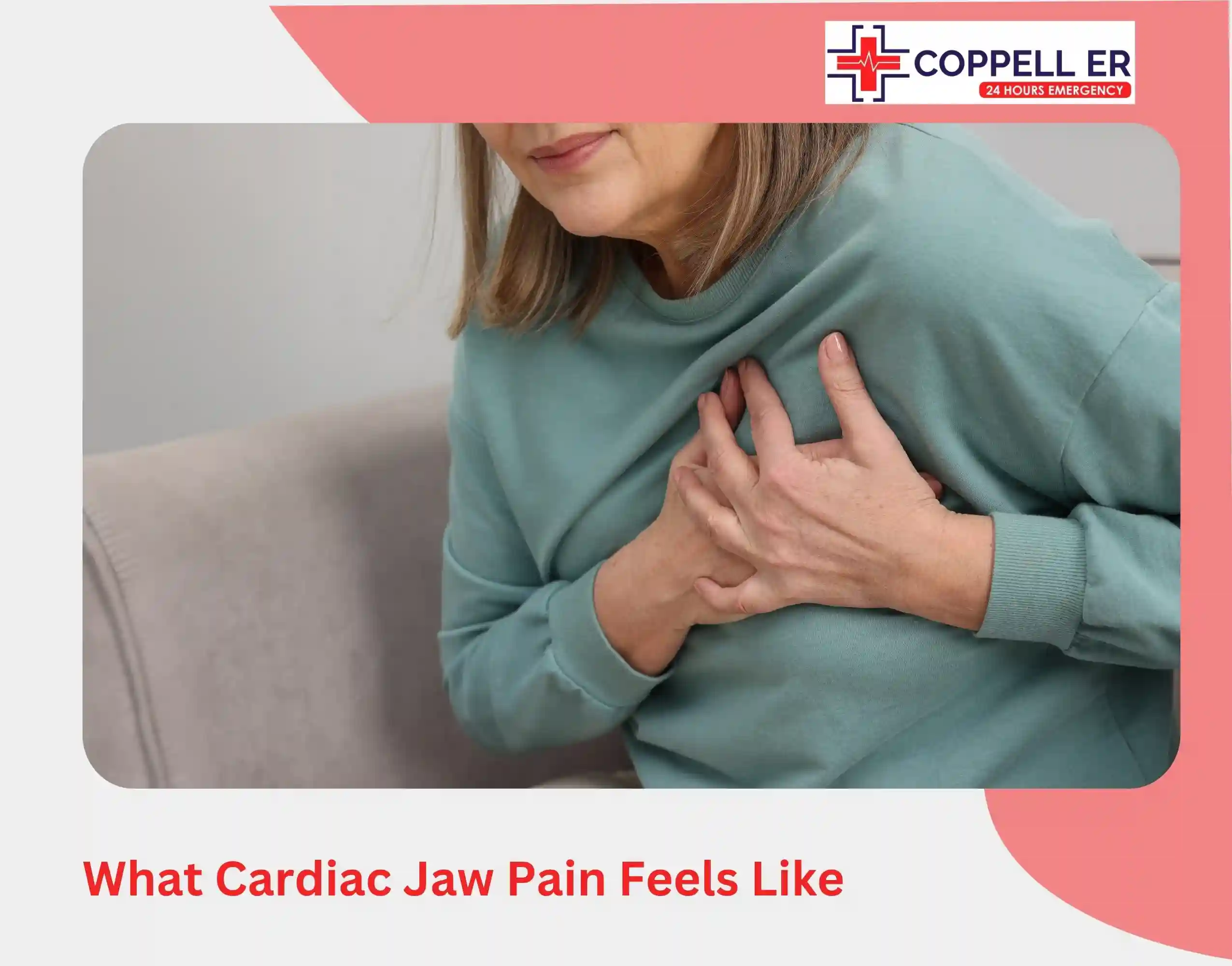
Heart-related jaw pain has a recognizable character that’s different from dental, TMJ, or muscle pain.
The Pain Itself
- Dull, aching, or pressure-like, not sharp or stabbing
- Diffuse and difficult to pinpoint, “my whole jaw aches”
- Sometimes feels like a deep toothache without an obvious tooth source
- Can be a pulsating or throbbing sensation rather than a steady ache
- Does NOT change with chewing, opening the mouth, or pressing on the jaw
- May come and go in waves over many minutes (similar to angina)
- Sometimes severe enough to wake a person from sleep
Symptoms That Travel With It
Cardiac jaw pain almost always travels with other warning signs. Look for:
- Chest pressure, tightness, fullness, or burning
- Shortness of breath
- Sweating, especially cold or clammy
- Nausea, vomiting, or feeling like indigestion
- Lightheadedness or dizziness
- Pain radiating to the arm, shoulder, neck, or back
- Unusual or extreme fatigue
- Sense of impending doom
- Flushing or perspiration
Timing and Triggers
- Often triggered by physical exertion (climbing stairs, walking up a hill, carrying things)
- Can be triggered by emotional stress
- May occur at rest (more concerning, suggests unstable angina or active heart attack)
- Does NOT respond to dental treatments, ibuprofen, or jaw rest
- May improve with rest if it’s angina, but won’t fully resolve if it’s a heart attack
3. What Dental, TMJ, and Other Common Jaw Pain Feels Like
Most jaw pain is NOT a heart attack. The vast majority comes from dental, joint, muscle, or nerve causes. Knowing what these feel like helps you recognize when something is different.
TMJ Disorder (Temporomandibular Joint Dysfunction)
Inflammation or dysfunction of the jaw joint. Hallmarks:
- Worse with chewing, talking, or yawning
- Clicking, popping, or grating sounds in the joint
- Tender to press in front of the ear
- Limited jaw opening or jaw locking
- Often accompanies teeth grinding or clenching
- Localized to one or both joints, easier to pinpoint than cardiac pain
Tooth and Dental Causes
Cavities, abscesses, cracked teeth, gum disease, and impacted wisdom teeth can all cause jaw pain. Hallmarks:
- Localized to a specific tooth or area
- Sharp pain triggered by hot, cold, or sweet foods
- Worse with chewing on that side
- May be accompanied by visible swelling, fever, or bad taste (abscess)
- Often disturbs sleep, but unlike cardiac pain, it has a clear local cause
Sinus Infection
Sinusitis can cause referred pain in the upper jaw and teeth. Hallmarks:
- Pressure or pain around the eyes, cheeks, or forehead
- Nasal congestion, postnasal drip
- Worse when bending forward
- Pain involves the upper teeth more than the lower teeth
- Often follows a recent cold
Muscle Strain (Bruxism)
Clenching or grinding teeth, often during sleep, strains the masseter muscles. Hallmarks:
- Pain in the cheek muscles and temples
- Worse in the morning
- Tension in the jaw muscles, sometimes with headache
- Tender to press on the cheek muscles
Trigeminal Neuralgia
A specific nerve disorder causing sudden electric-shock-like facial pain. Distinct from cardiac jaw pain, it’s sharp, sudden, and brief rather than dull and persistent.
4. Cardiac Jaw Pain vs Dental/TMJ Jaw Pain – Side by Side
| Feature | Cardiac Jaw Pain | Dental / TMJ Jaw Pain |
| Quality | Dull, diffuse ache or pressure; may pulsate | Sharp, localized, often throbbing |
| Location | Hard to pinpoint; can affect either side, teeth, or neck | Specific tooth, side, or jaw joint |
| Changes with jaw movement? | No — pain stays the same | Yes — worse with chewing, opening, or pressing |
| Triggered by exertion? | Often — climbing stairs, exercise, stress | No — unrelated to physical activity |
| Other symptoms? | Chest pressure, SOB, sweating, nausea, fatigue | None — or mouth-specific (swelling, fever, bad taste) |
| Triggers from food/temperature? | No | Yes — hot, cold, sweet (dental causes) |
| Response to OTC pain medication | Minimal or none | Usually responsive |
| Visible swelling? | None | May be present (abscess, infection) |
| Onset | Sudden, often with no clear cause | Often gradual; tied to dental issue or clenching |
5. Why Jaw Pain Matters More for Women
This section needs to be read by every woman reading this article and shared. Women’s heart attacks present differently from men’s, and the consequences of missing the signs are severe.
The Numbers
- Up to 40% of women having heart attacks have no chest pain at all
- Up to 70% of women report unusual fatigue in the weeks before a heart attack
- Heart disease is the #1 killer of women in the United States, yet only 44% recognize this
- Women wait an average of 54 hours before seeking emergency care, compared to 16 hours for men
- Women are more likely than men to experience jaw pain as a heart attack symptom
The Atypical Symptoms Women Should Know
If you’re a woman experiencing any of these, alone or in combination, a heart attack must be considered:
- Jaw, neck, or upper back pain (between the shoulder blades)
- Unusual fatigue, sometimes building over days or weeks
- Shortness of breath without an obvious cause
- Nausea, vomiting, or what feels like severe indigestion
- Cold sweat without exertion
- Lightheadedness or dizziness
- A vague sense that “something is wrong”
- Pain in either arm, not just the left
Why Women Delay
Studies have identified consistent patterns:
- Symptoms get attributed to flu, reflux, stress, or anxiety
- Women don’t want to “overreact” or “bother anyone”
- Symptoms are dismissed as caregiving stress or hormonal changes
- Healthcare providers themselves may underdiagnose female heart attacks
- Many women simply don’t know heart disease is their #1 health threat
Trust Your Instincts
Cardiologists who specialize in women’s heart health are unified in their advice: if something feels off, even if you can’t name what, get evaluated. Women in particular benefit from going to the ER and being told “you’re fine” rather than waiting at home and being wrong about whether you’re fine.
| 🚨 Don’t Wait Hours Wondering
Coppell ER is open 24/7 and can rule out a heart attack in about an hour with EKG, blood work, and imaging. No appointment needed. Walk in or call 469-763-3136. 720 N Denton Tap Rd, Coppell. |
6. Risk Factors That Raise Concern
Jaw pain in someone with low cardiac risk is usually dental or musculoskeletal. The same jaw pain in someone with cardiac risk factors deserves emergency evaluation. Risk factors include:
- Age 45+ for men, 55+ for women
- Personal history of heart disease, heart attack, or stents
- Family history of early heart disease (parent or sibling under 55)
- Diabetes (a major risk factor, diabetics often have atypical symptoms)
- High blood pressure
- High cholesterol
- Smoking, current or recent
- Obesity, especially abdominal
- Sedentary lifestyle
- History of pre-eclampsia, gestational diabetes, or early menopause (women)
- Autoimmune diseases like lupus or rheumatoid arthritis
- Chronic kidney disease
- High stress, severe sleep deprivation, or recent emotional shock
7. Other Non-Cardiac Causes Worth Mentioning
Some jaw pain causes aren’t cardiac, dental, or TMJ. A few worth knowing:
Ear Infection
Inner or middle ear infections can cause referred pain to the jaw, especially in children. Often comes with fever, hearing changes, or fluid drainage.
Salivary Gland Issues
Infection or stones in the parotid or submandibular glands cause swelling and pain near the jaw, often worsening before meals when saliva flow increases.
Trigeminal Neuralgia
A distinct nerve disorder. Causes sudden, electric-shock-like pain attacks lasting seconds. Triggered by light touch, chewing, or even a breeze on the face. Treatable, but requires neurology evaluation.
Giant Cell Arteritis (Temporal Arteritis)
Inflammation of the arteries near the temples. Usually affects people over 50. Causes jaw pain when chewing (called “jaw claudication”), scalp tenderness, severe headaches, and visual changes. This is an emergency, untreated, it can cause permanent blindness.
Throat or Tonsil Infection
Strep throat or peritonsillar abscess can cause referred jaw and ear pain. Comes with sore throat, fever, and swollen lymph nodes.
8. The Quick Self-Check
Use this when you have time. Do not use this as a substitute for emergency evaluation when warning signs are present.
Ask Yourself:
Does your jaw pain change with chewing, talking, or pressing on the jaw?
- YES → likely dental or TMJ
- NO → cardiac cause not ruled out
Does the pain affect a specific tooth or jaw area you can point to?
- YES → likely dental
- NO, it’s diffuse → cardiac cause not ruled out
Did it start with exertion, stress, or for no clear reason?
- YES → cardiac cause not ruled out
- NO, it’s been gradual and tied to dental issues → likely dental
Do you have any other symptoms, chest pressure, shortness of breath, sweating, nausea, fatigue, or dizziness?
- YES → call 911 immediately
- NO → if everything points to dental/TMJ, you can see a dentist; if anything is uncertain, go to the ER
Are you in a high-risk group (over 45/55, diabetic, hypertensive, smoker, family history)?
- YES → lower your threshold significantly, go to the ER
- NO → less urgent but still worth evaluation if pain persists
The Golden Rule
When in doubt, come in. The ER can rule out a heart attack with an EKG, blood work, and imaging in about an hour. The cost of a false alarm is minimal. The cost of a missed heart attack is irreversible.
9. Emergency Signs – Call 911 Immediately
Call 911 now if jaw pain comes with:
- Chest pressure, tightness, fullness, or burning
- Shortness of breath, with or without chest discomfort
- Cold sweat or sudden clamminess
- Nausea, vomiting, or sudden severe indigestion
- Lightheadedness, dizziness, or fainting
- Pain spreading to the neck, back, shoulders, or arms
- Rapid, irregular, or pounding heartbeat
- Extreme fatigue or weakness
- Sense of impending doom
- Confusion or difficulty thinking clearly
- Jaw pain that started with physical exertion
- Jaw pain severe enough to wake you from sleep, in the absence of dental causes
Do Not
- Do NOT drive yourself if you suspect a heart attack, paramedics can treat you en route
- Do NOT wait to see your dentist if cardiac symptoms are present
- Do NOT take more than one regular adult aspirin (chew 325mg if available and not allergic, then call 911)
- Do NOT dismiss the symptoms because you’re “too young” or “too healthy”
- Do NOT wait for it to “go away on its own”
10. What Coppell ER Does for Suspected Cardiac Jaw Pain
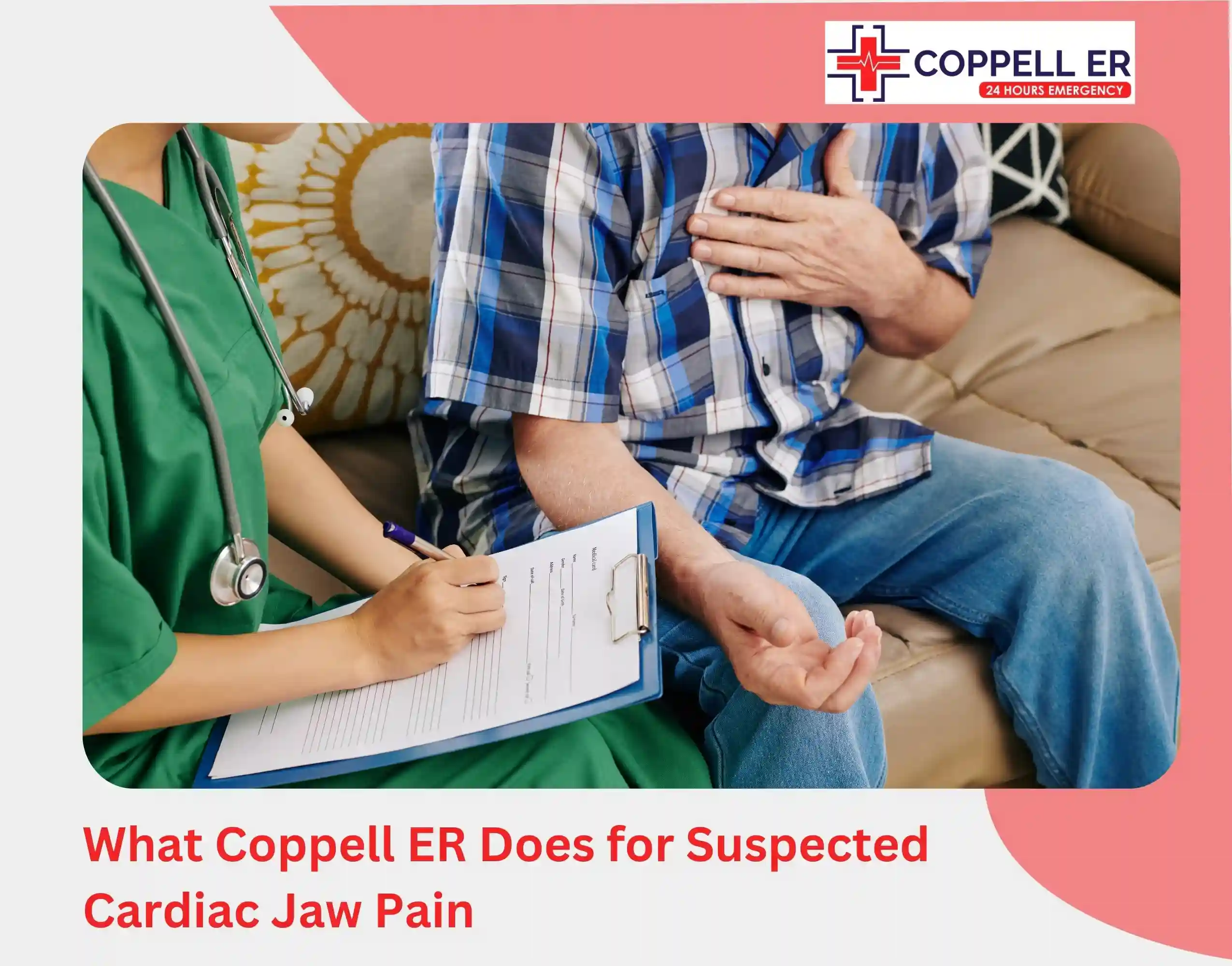
Jaw pain that could be cardiac needs a fast, comprehensive heart workup. Coppell ER offers the full diagnostic capability of a hospital emergency room without the wait.
Diagnostics Available On-Site, 24/7
- 12-lead EKG performed within minutes of arrival
- Cardiac markers (troponin) with rapid blood work
- Echocardiogram for heart structure and function
- Chest X-ray and CT scan when needed
- Continuous cardiac monitoring
- Comprehensive blood work, including lipid panels and inflammatory markers
- Imaging for dental abscess, sinus infection, or other non-cardiac causes if cardiac is ruled out
Treatment We Provide On-Site
- Oxygen, aspirin, nitroglycerin, and other initial heart attack care
- IV medications for blood pressure, heart rate, and pain control
- Anticoagulation when indicated
- Stabilization for transfer to cardiac catheterization if a heart attack is confirmed
- Rapid coordination with cardiology specialists
- Treatment for non-cardiac causes (dental abscess drainage, sinus infection antibiotics, pain management)
Why Coppell ER
- Open 24/7, heart attacks don’t follow business hours
- No appointment, walk straight to an exam room
- Minimal-to-zero wait times
- Board-certified ER physicians on every shift
- Hospital-grade equipment in a private-practice setting
- An in-house billing team and a no-surprise-billing policy
- Most commercial insurance plans are accepted (Medicare, Medicaid, and Tri-Care are not accepted)
11. Frequently Asked Questions
Q: Can jaw pain alone be a heart attack?
Rarely, but yes. Up to 4% of heart attack patients have jaw pain as their only or main symptom. This is much more common in women and people with diabetes. Isolated jaw pain without other symptoms is unusual for a heart attack, but not impossible. If you have cardiac risk factors and persistent jaw pain you can’t explain, get evaluated.
Q: Which side of the jaw hurts in a heart attack?
Either side, or both. The traditional teaching that heart pain only affects the left side is outdated. Cardiologists and oral medicine specialists confirm that cardiac jaw pain can present on the left, right, or both sides, particularly in women. The location alone is not a reliable indicator.
Q: What does heart attack jaw pain feel like?
It’s typically described as a dull, diffuse ache or pressure, sometimes pulsating, occasionally severe enough to wake someone from sleep. People often say “my whole jaw hurts” rather than pointing to a specific spot. It can resemble a deep toothache without an obvious tooth source. Unlike dental pain, it does not change when chewing or pressing on the jaw.
Q: How is jaw pain different in women’s heart attacks?
Women are more likely than men to experience jaw pain during a heart attack, and more likely to have jaw pain without chest pain. Up to 40% of women having heart attacks have no chest pain at all. Women’s symptoms also often include extreme fatigue, nausea, and shortness of breath. Recognizing this pattern is critical because women wait an average of 54 hours to seek care, compared to 16 hours for men.
Q: How long does cardiac jaw pain last?
It depends. Angina-type jaw pain may come and go in episodes of several minutes, especially with exertion. Heart attack pain typically persists for 15 minutes or longer and doesn’t resolve without medical intervention. Pain lasting only seconds, triggered by jaw movement, is much more likely to be dental or TMJ.
Q: Can stress or anxiety cause jaw pain that mimics a heart attack?
Yes. Stress can trigger teeth clenching and jaw muscle tension, causing real pain. Panic attacks can produce a constellation of symptoms, jaw tension, chest tightness, and shortness of breath, that mimic cardiac events. But panic is a diagnosis of exclusion. A first-time episode of jaw pain with concerning features should always be medically evaluated.
Q: Should I go to a dentist or the ER for jaw pain?
Dentist: jaw pain clearly tied to a tooth, worsened by chewing, with visible swelling or fever from a likely abscess, or coming from TMJ. ER: jaw pain with any cardiac symptoms (chest pressure, shortness of breath, sweating, nausea), jaw pain that started with exertion, or jaw pain in someone with significant cardiac risk factors.
Q: I just had dental work and my jaw hurts – could that still be a heart attack?
Recent dental work makes muscle and inflammatory pain very likely, but it doesn’t rule out a separate cardiac event. If pain comes with chest pressure, shortness of breath, sweating, or other cardiac symptoms, get evaluated regardless of recent dental procedures.
Q: Can a tooth abscess cause symptoms that look like a heart attack?
A severe dental abscess can cause facial swelling, fever, and significant pain, but it doesn’t typically cause chest pressure, shortness of breath, sweating, or nausea. The presence of those symptoms alongside jaw pain points away from a purely dental cause.
Q: What tests will the ER do for jaw pain?
Standard cardiac workup: EKG, troponin blood test, chest X-ray, full vital signs, and physical exam. Depending on findings: echocardiogram, CT scan, or additional blood tests. If cardiac causes are ruled out, evaluation for dental, sinus, or other causes follows. Most patients get clear answers within an hour of arrival.
| Don’t Wait It Out
Call Coppell ER: 469-763-3136 • Walk in: 720 N Denton Tap Rd, Coppell, TX 75019 • Open 24/7 • No appointment, no wait. If symptoms are severe — call 911 first. |