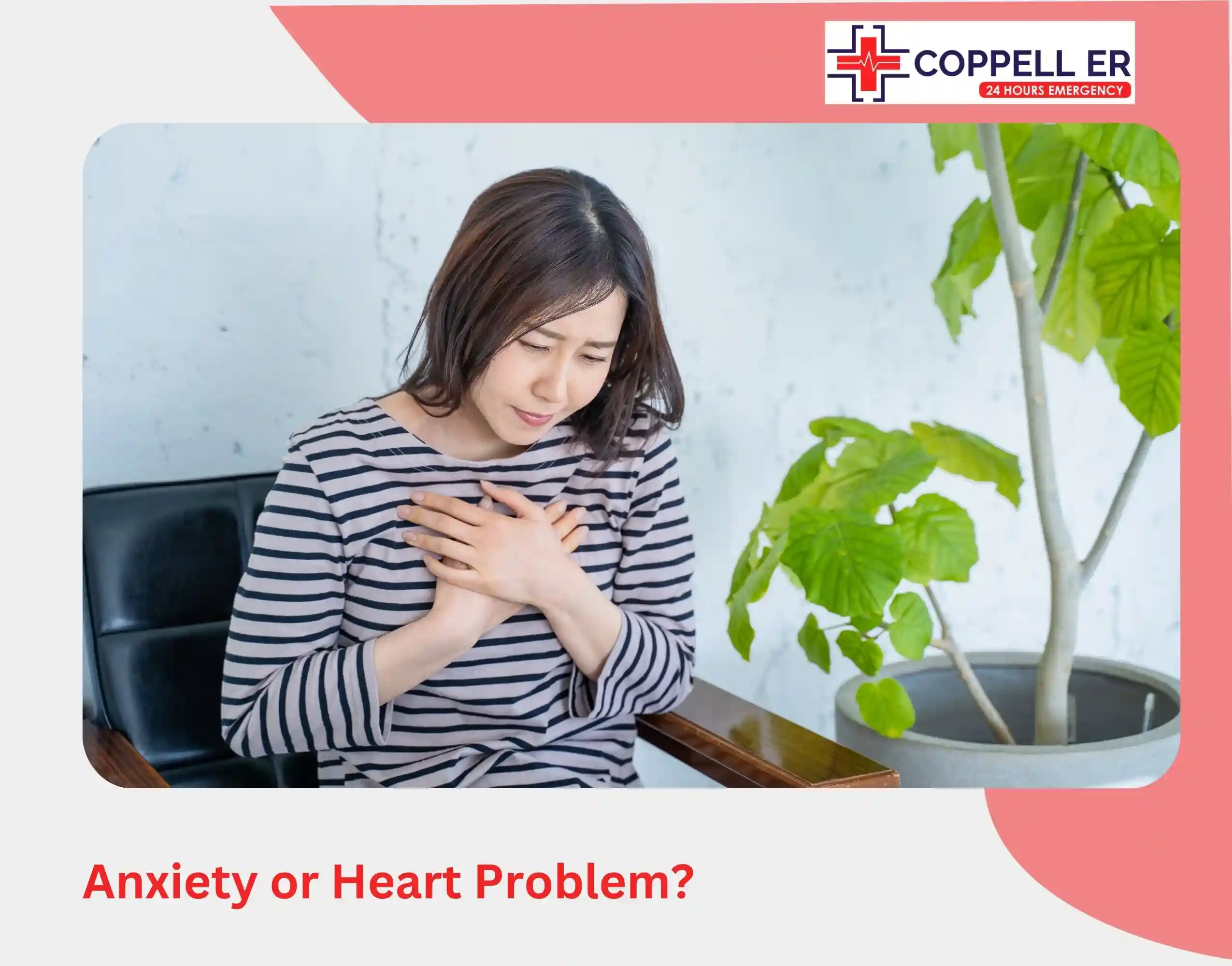
Chest tightness from anxiety typically feels sharp or stabbing, stays in one spot, peaks within 10 minutes, and is tied to emotional stress or a triggering thought. Chest tightness from a heart problem typically feels like heavy pressure or squeezing, can spread to the arm, jaw, neck, or back, builds gradually over minutes, often appears with exertion, and comes with other symptoms like sweating, nausea, or shortness of breath that anxiety alone rarely produces.
Here’s the important truth even cardiologists tell their patients: you can’t reliably sort this out at home. Approximately 25% of ER visits for chest pain turn out to be panic disorder, and 30 to 40% of patients with non-cardiac chest pain have anxiety as the cause. That means most chest tightness ISN’T cardiac. But the consequences of being wrong about that, assuming “it’s just anxiety” when it isn’t, can be fatal. The universal expert rule: when in doubt, get checked.
| 📌 What the Experts Actually Say
From cardiologists at NewYork-Presbyterian, Houston Methodist, UW Medicine, Banner Health, and Mayo Clinic, the consistent message is the same: panic attacks and heart attacks can closely resemble each other, even doctors sometimes need tests to sort it out, and when uncertain, seek immediate care. A normal EKG and blood work take about an hour and virtually rule out an acute heart attack. |
1. Why Anxiety or Heart Problems Feel So Similar
This isn’t your imagination. Anxiety, chest tightness, and cardiac chest tightness share genuine biological overlap, which is why even physicians often can’t distinguish them without testing.
The Common Pathway: Adrenaline
When you’re anxious, your body releases adrenaline and cortisol, the fight-or-flight hormones. These causes:
- Faster heart rate
- Constriction of blood vessels
- Increased blood pressure
- Tightening of the chest wall muscles
- Rapid shallow breathing (hyperventilation)
- Heightened awareness of body sensations
Cardiac events produce many of the same physical effects: the heart works harder, breathing speeds up, and the body becomes physically stressed. The sensations can be nearly identical.
The Anxiety-Heart Feedback Loop
This is the cruel twist. When you feel chest tightness, your brain interprets it as a threat, which triggers more anxiety, which releases more adrenaline, which intensifies the chest tightness. UW Medicine cardiologists describe this as a fear-intensifying feedback loop that can take a small initial sensation and amplify it into a full panic attack within minutes.
Statistics That Put It in Perspective
- About 25% of ER chest pain patients are eventually diagnosed with panic disorder
- 30 to 40% of non-cardiac chest pain is caused by anxiety
- Nearly half of patients who come to the ER for chest pain learn they don’t have a heart problem
- 75% of panic attacks include chest tightness as a symptom
- Panic disorder is most often diagnosed in women, but it can affect anyone
These numbers should be reassuring AND a reminder: the workup is what tells you. Symptoms alone don’t.
2. What Anxiety Chest Tightness Actually Feels Like
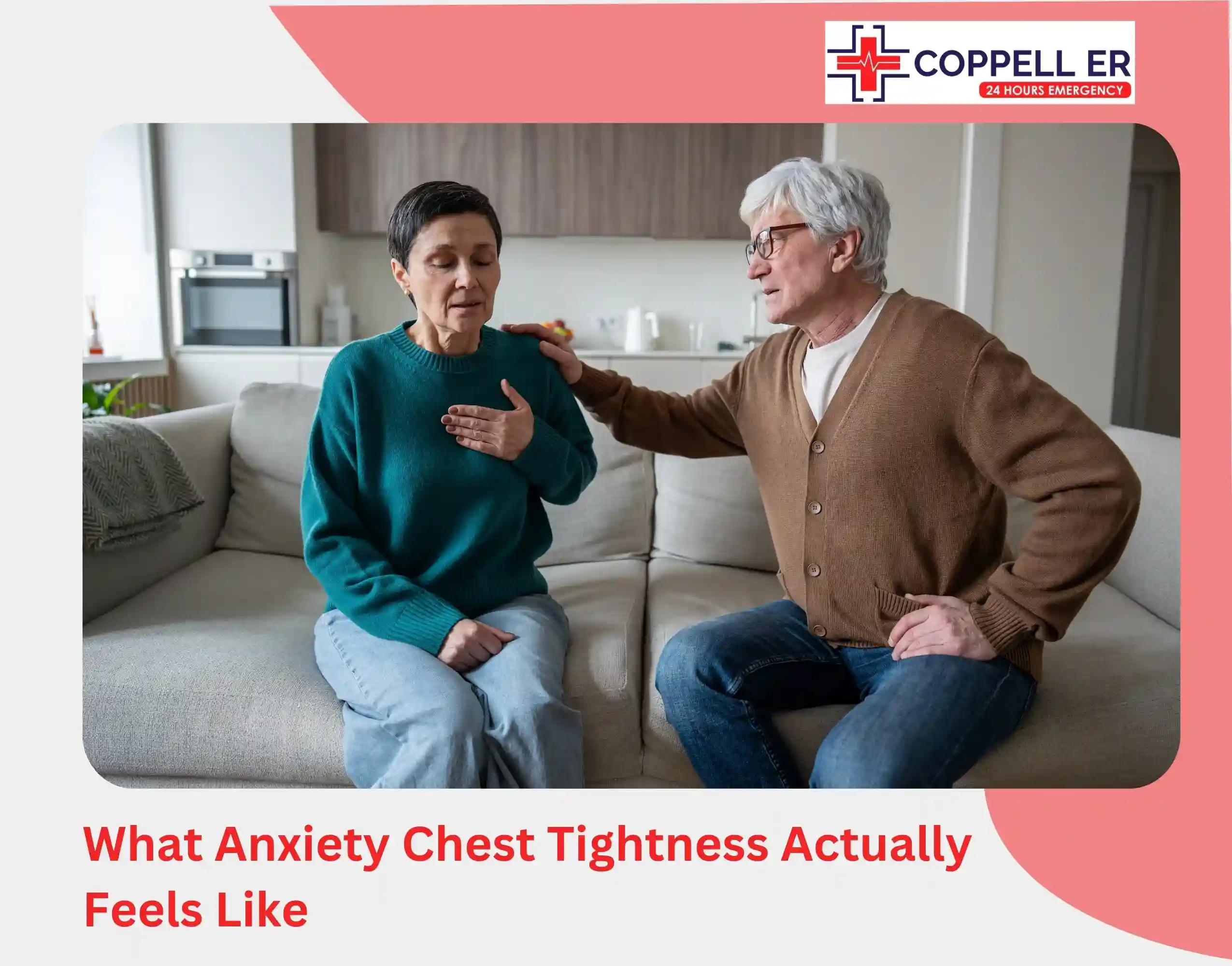
Anxiety and panic produce real, physical chest tightness, not imagined sensations. Here’s what’s typically going on.
Typical Anxiety Chest Tightness
- Sharp, stabbing, or pricking sensation
- Often localized to one spot in the chest
- Stays in the chest, does NOT spread to the arm, jaw, or back
- Can also feel like a heavy weight or a squeeze
- Often paired with rapid breathing or feeling like you can’t take a deep breath
- Tingling around the lips, hands, or feet (from hyperventilation)
- Lightheadedness or dizziness
- Trembling, sweating, hot flashes or chills
- Racing heart, palpitations
- Intense fear, sense of doom, or feeling detached from reality
Panic Attacks Specifically
Panic attacks are a specific type of anxiety with a recognizable pattern:
- Sudden onset, often peaking within 10 to 20 minutes
- Most symptoms resolve within 30 minutes
- Often triggered by stress, but can occur “out of the blue”
- Frequently includes a sense of catastrophe, fear of dying, going crazy, or losing control
- Can recur in clusters or as part of a panic disorder
Chronic Anxiety Chest Tightness
Unlike acute panic attacks, chronic anxiety can produce daily, low-grade chest tightness. It builds gradually with stress and can last hours. Often paired with chronic muscle tension, sleep problems, irritability, and persistent worry.
What Triggers Anxiety: Chest Tightness
- Specific worries or stressors (work, finances, relationships, health)
- Crowded or enclosed spaces
- Public speaking or social situations
- Caffeine, nicotine, or other stimulants
- Withdrawal from alcohol or sedatives
- Sometimes, nothing is identifiable at all
3. What Cardiac Chest Tightness Actually Feels Like
Cardiac chest tightness has its own recognizable patterns. These are the features doctors look for.
Typical Cardiac Chest Tightness
- Heavy pressure, squeezing, fullness, or burning
- Feels like “an elephant sitting on my chest” or a weight pressing down
- Often diffuse, hard to pinpoint a single spot
- Frequently spreads to the left arm, both arms, jaw, neck, shoulder, or back
- Builds gradually over minutes, not seconds
- Persists for more than 10-15 minutes if it’s a heart attack
- Does NOT change with breathing, position, or pressing on the chest
Symptoms That Travel With It
Cardiac chest tightness rarely appears alone. Look for:
- Cold sweat or sudden clamminess
- Nausea or vomiting
- Severe shortness of breath
- Unusual fatigue (especially in women)
- Lightheadedness or actual fainting
- Pain radiating to the jaw, arm, or back
- Sense of impending doom
Triggers and Timing
- Often triggered by physical exertion (climbing stairs, walking, lifting)
- Can also be triggered by emotional stress or cold air
- Stable angina: predictable, related to exertion, relieved by rest in 5 minutes
- Unstable angina or heart attack: unpredictable, can occur at rest, lasts longer
- Heart attack pain may come and go for hours before becoming continuous
The Exertion Test
One of the most useful distinctions: anxiety chest tightness typically does NOT get worse with exertion (the body’s adrenaline response is already maxed out). Cardiac chest tightness commonly DOES get worse with exertion, because exertion increases the heart’s oxygen demand.
If you can climb a flight of stairs without your chest tightness getting worse, that argues against (but doesn’t completely rule out) a cardiac cause. If walking briskly makes it noticeably worse — get evaluated.
| 🚨 Worsened by Exertion? Spreading to Arm or Jaw? Lasting Over 15 Minutes?
These are not anxiety patterns. Call 911 or come to Coppell ER. EKG, troponin, and cardiac imaging on-site, 24/7. 720 N Denton Tap Rd. Call 469-763-3136. |
4. Anxiety vs Cardiac Chest Tightness – Side by Side
This table summarizes the typical features. Remember: no single feature is diagnostic, and exceptions exist for both sides.
| Feature | Anxiety / Panic Attack | Cardiac Event |
| Quality | Sharp, stabbing, or sudden tightness | Heavy pressure, squeezing, fullness |
| Location | Localized, stays in chest | Vague, spreads to arm, jaw, neck, back |
| Onset | Sudden, often triggered by stress or thought | Gradual, builds over minutes |
| Duration | Peaks in 10 minutes, resolves in 30 | Persistent, doesn’t fully resolve without treatment |
| Triggered by exertion? | Usually no — sometimes better with movement | Often yes — worse with stairs, walking, lifting |
| Relieved by rest? | Eases gradually after stress passes | Stable angina improves with rest; heart attack does not |
| Other symptoms | Fear, tingling lips/hands, hyperventilation, trembling | Cold sweat, nausea, radiating pain, severe SOB |
| Helped by calming/breathing? | Often yes — symptoms ease with slow breathing | No — symptoms persist regardless |
| Worse at rest vs activity | Often worse at rest or quiet moments | Often worse with activity (angina); heart attack any time |
| 📌 The Honest Limitation
These patterns work most of the time. But heart attacks can be atypical — especially in women, diabetics, and adults over 65. And severe panic attacks can feel exactly like a heart attack to the person experiencing them. If pattern matching feels unclear, that itself is the answer: get evaluated. |
5. Other Causes of Chest Tightness Worth Knowing
Chest tightness isn’t only anxiety or heart disease. Some other common causes worth ruling out:
GERD (Acid Reflux)
Stomach acid backing up into the esophagus causes burning chest tightness, often confused with cardiac pain. Clues: worse after meals, when lying down, or bending over; sour taste in the mouth; relieved by antacids. Sometimes occurs without classic heartburn.
Musculoskeletal Pain
Strained chest wall muscles, costochondritis (rib cartilage inflammation), or rib injuries cause sharp, localized chest tightness. Hallmark: pain is reproducible by pressing on the chest, and worse with specific movements or deep breathing.
Asthma
Bronchospasm narrows the airways, causing chest tightness, wheezing, and shortness of breath. Often triggered by allergens, cold air, exercise, or respiratory infections. Relieved by rescue inhalers.
Pulmonary Embolism
A blood clot in the lungs can cause sudden chest tightness with severe shortness of breath, sharp pain that’s worse with breathing, rapid heart rate, and sometimes coughing up blood. Risk factors include recent surgery, prolonged immobility, hormone therapy, and pregnancy. This is an emergency.
Esophageal Spasm
Sudden, intense contractions of the esophagus muscles cause chest tightness so similar to a heart attack that even doctors can’t reliably distinguish them without testing. Often triggered by hot or cold food.
Pericarditis
Inflammation of the sac surrounding the heart. Causes sharp chest tightness that’s worse lying down and improved by sitting up and leaning forward. Often follows a viral infection.
The point: chest tightness has many possible sources. Anxiety is one, cardiac causes are another, but several other treatable conditions belong on the list. A proper workup considers all of them.
6. Why “It’s Just Anxiety” Should Come From a Doctor – Not You
Anxiety is what doctors call a “diagnosis of exclusion.” That means it’s the diagnosis you reach after ruling out organic causes – not the first assumption you make. There are very specific reasons for this clinical principle.
The Risks of Self-Diagnosing Anxiety
- People with cardiac risk factors sometimes have BOTH anxiety AND coronary disease
- Stress can trigger heart attacks in people with underlying disease – anxiety doesn’t make you immune
- Women in particular often have their heart attacks dismissed as anxiety, leading to dangerous treatment delays
- Symptoms that have always been “just panic” can sometimes hide a new cardiac event
- “Stress cardiomyopathy” (broken heart syndrome) is a real condition – extreme stress can transiently weaken the heart
When Anxiety Is the Right Diagnosis
Anxiety becomes the appropriate explanation when:
- Cardiac causes have been formally ruled out by a doctor with an EKG, blood work, and clinical assessment
- Symptoms fit a recognizable panic or anxiety pattern
- There’s a clear emotional trigger or context
- Episodes recur with the same character, and the person has been previously evaluated
- Symptoms respond to anxiety treatment (breathing, therapy, sometimes medication)
The Cardiologist Rule for Chronic Anxiety Patients
Even if you’ve been diagnosed with panic disorder and had cardiac workups before, cardiologists at NewYork-Presbyterian and elsewhere emphasize: if the character of your attacks changes – frequency, severity, location, or new symptoms appearing – get re-evaluated. “Same as always” can be reassuring. “Different than before” is a red flag.
7. Risk Factors That Should Lower Your Threshold for the ER
Anxiety in someone with no cardiac risk factors is overwhelmingly likely to be anxiety. The same symptoms in someone with cardiac risk factors deserve more aggressive evaluation.
- Age 45+ for men, 55+ for women
- Personal history of heart disease, heart attack, or stents
- Family history of early heart disease (parent or sibling under 55)
- Diabetes, a major risk factor, often with atypical symptoms
- High blood pressure
- High cholesterol
- Smoking, current or recent
- Obesity, especially abdominal
- Sedentary lifestyle
- Postmenopausal women
- History of pre-eclampsia or gestational diabetes
- Autoimmune diseases like lupus or rheumatoid arthritis
- Chronic kidney disease
- Recreational stimulant use (cocaine, amphetamines)
- First-time chest tightness episode at any age
8. The 60-Second Self-Check
If you’re not in an obvious emergency situation, here’s a quick mental triage. Do not use this to talk yourself out of going to the ER if you’re worried.
Ask Yourself:
Is the tightness spreading to your arm, jaw, neck, or back?
- YES → cardiac suspicion – go to the ER
- NO → cardiac less likely (but not ruled out)
Did the tightness start during physical exertion?
- YES → cardiac suspicion – go to the ER
- NO, started at rest with stress or anxiety → anxiety is more likely
Does slow breathing or calming reduce the tightness?
- YES → anxiety is more likely
- NO → cardiac cause not ruled out
Has it been more than 15 minutes and not getting better?
- YES → go to the ER
- NO, peaked and easing → likely anxiety, but follow up if it recurs
Are you sweating heavily, nauseated, or feeling like vomiting?
- YES → cardiac suspicion – go to the ER
- NO → cardiac less likely
Do you have any cardiac risk factors (diabetes, high BP, smoking, family history, age over 45/55)?
- YES → lower threshold significantly – go to the ER
- NO → cardiac causes are statistically less likely
Is this the first time you’ve ever had a symptom like this?
- YES → go to the ER for initial workup, regardless of likely cause
- NO, has happened before and been evaluated → if the same character, can be managed at home; if different from before, re-evaluate
The Universal Doctor Rule
When in doubt, get checked. Houston Methodist’s cardiologists: “Don’t ignore any symptoms, even if you think it might just be stress. It’s better to be on the safe side.” UW Medicine: “There are no single defining characteristics that will tell you if you’re having a heart attack; it’s always better to be safe rather than sorry when your heart is involved.” Banner Health: “If you’re not sure, don’t try to sort it out on your own.”
A normal ER visit takes about an hour and rules out the worst case. The cost of being wrong about “it’s just anxiety” is much higher.
9. What the ER Does for Chest Tightness
Knowing what to expect makes going in less intimidating.
First 10 Minutes
- Vital signs (heart rate, blood pressure, oxygen, temperature)
- 12-lead EKG to detect signs of a heart attack or arrhythmia
- Continuous cardiac monitoring
- Brief history and review of risk factors
First Hour
- Blood work, including troponin (heart damage marker)
- D-dimer if pulmonary embolism is being considered
- Chest X-ray to evaluate heart size and lungs
- Sometimes an echocardiogram for heart structure and function
- Possible CT angiography for suspected pulmonary embolism or aortic issues
If Tests Are Normal
Most commonly, the workup comes back reassuring. The ER physician will typically:
- Confirm no acute cardiac event with normal EKG and troponin
- Discuss possible non-cardiac causes (anxiety, GERD, musculoskeletal)
- Recommend follow-up with primary care or cardiology for stress testing if indicated
- Provide counseling on triggers and warning signs
- Refer to mental health resources if anxiety is the suspected cause
A normal ER visit isn’t a waste, it’s the gold standard for ruling out the dangerous possibilities and getting reassurance you can actually trust.
If Anxiety Is the Cause
Acknowledging chronic anxiety as a medical condition is important and treatable. Treatment options include:
- Cognitive behavioral therapy (CBT), gold standard for panic disorder
- Breathing techniques and grounding exercises
- SSRIs or SNRIs for ongoing anxiety
- Benzodiazepines for acute episodes (used short-term)
- Lifestyle changes: regular exercise, reduced caffeine, better sleep
- Mindfulness, meditation, or yoga
10. Why Coppell ER for Chest Tightness
Chest tightness needs a fast, thorough cardiac workup. Coppell ER offers full hospital-grade emergency capability, without the wait.
Full Diagnostic Capability On-Site, 24/7
- 12-lead EKG within minutes of arrival
- Cardiac markers (troponin) with rapid lab results
- Echocardiogram for heart structure and function
- Chest X-ray, CT scan, and CT angiography when needed
- Continuous cardiac monitoring
- Comprehensive lab work
- Imaging for other causes (GERD, gallbladder, musculoskeletal)
Treatment Available
- Oxygen, aspirin, nitroglycerin, and other initial cardiac care
- IV medications for blood pressure, heart rate, and pain control
- Anti-anxiety medications when anxiety is the confirmed cause
- Coordination with cardiology specialists when needed
- Referral to outpatient mental health services for chronic anxiety
Why Patients Choose Coppell ER
- Open 24/7, chest tightness doesn’t follow business hours
- No appointment, walk straight to an exam room
- Minimal-to-zero wait times, critical when minutes matter
- Board-certified ER physicians on every shift
- Hospital-grade equipment in a private-practice setting
- An in-house billing team and a no-surprise-billing policy
- Most commercial insurance plans are accepted (Medicare, Medicaid, and Tri-Care are not accepted)
| Not Sure if It’s Anxiety or Your Heart?
That’s exactly what the ER is for. Coppell ER can rule out a heart attack in about an hour. Open 24/7. Walk in or call 469-763-3136. 720 N Denton Tap Rd, Coppell, TX. |
11. Frequently Asked Questions
Q: Can anxiety really cause chest tightness?
Yes. Anxiety and panic attacks produce real, physical chest tightness through adrenaline surge, chest wall muscle tension, hyperventilation, and tachycardia. About 75% of panic attacks include chest tightness as a symptom. The sensation is genuine — it’s not imagined.
Q: How long does anxiety chest tightness last?
Panic attack chest tightness typically peaks within 10 to 20 minutes and largely resolves within 30 minutes. Chronic generalized anxiety can produce low-level tightness lasting hours. Cardiac chest tightness, in contrast, usually persists more than 15 minutes and doesn’t fully resolve without treatment.
Q: Should I go to the ER if I think it’s anxiety?
If this is your first time having this kind of symptom, yes — go to the ER for evaluation. Anxiety is a diagnosis of exclusion, meaning doctors only confirm it after ruling out cardiac and other organic causes. If you’ve had similar episodes before and been thoroughly evaluated, you can usually manage them at home — unless the character changes.
Q: Can chronic anxiety damage my heart?
Acute panic attacks alone are unlikely to damage a healthy heart. But chronic, severe, untreated anxiety can contribute to long-term cardiovascular risk by raising blood pressure, increasing heart rate, releasing stress hormones, and contributing to other unhealthy behaviors. There’s also stress cardiomyopathy (“broken heart syndrome”), where intense acute stress can transiently weaken the heart muscle.
Q: What’s the fastest way to tell if it’s anxiety or my heart?
Honestly, you can’t — not reliably. The most useful single distinction is response to slow breathing and time: anxiety tightness usually eases within 10-15 minutes with calming techniques, while cardiac tightness typically doesn’t. Other clues: anxiety stays in the chest, cardiac spreads; anxiety often starts at rest with stress, cardiac often starts with exertion. But these patterns aren’t absolute.
Q: Can a panic attack cause a heart attack?
A panic attack alone is unlikely to cause a heart attack in an otherwise healthy person. But in people with underlying cardiac risk factors, severe stress can sometimes trigger a cardiac event. The takeaway: don’t assume immunity because “it’s just anxiety” — especially if you have risk factors.
Q: I’ve had panic attacks for years. Why should I go to the ER for chest tightness?
If the character of your symptoms changes — more frequent, more severe, different location, new accompanying symptoms — even chronic panic disorder patients need re-evaluation. New cardiac events can occur in people with established anxiety. Cardiologists are explicit: “same as always” is reassuring; “different from before” is a red flag.
Q: What if I go to the ER and it really is just anxiety — will I feel embarrassed?
ER doctors absolutely don’t think this way. They see thousands of patients per year for chest symptoms, and ruling out cardiac causes is exactly what the ER is built for. About a quarter of chest pain patients turn out to have panic disorder — you’re far from alone. The standard medical response is reassurance and referral, not judgment.
Q: Are women more likely to have anxiety chest tightness?
Panic disorder is diagnosed more often in women. But women also have heart attacks that are more frequently misdiagnosed as anxiety. The combination is dangerous: women with cardiac symptoms wait an average of 54 hours to seek emergency care, partly because their symptoms get dismissed as stress or anxiety. Women should not have a lower threshold for evaluation — they should have a lower threshold for taking symptoms seriously.
Q: Can I take aspirin if I’m not sure whether it’s anxiety or heart?
If you suspect a heart attack and aren’t allergic to aspirin, chewing one regular adult aspirin (325mg) while calling 911 can help. It won’t harm you if it turns out to be anxiety. But don’t delay calling for help to look for aspirin.
The Bottom Line
Anxiety chest tightness is real, common, and treatable. It accounts for a quarter to a third of chest tightness cases that end up in the ER. The fact that you’re worried doesn’t mean it’s serious — and the patterns described in this article often do point reliably to anxiety vs cardiac causes.
But the fundamental clinical rule, repeated by every major cardiology and emergency medicine source, is the same: you can’t reliably sort this out by yourself, and the cost of being wrong is too high. First-time symptoms, changing symptoms, exertion-triggered symptoms, symptoms with cardiac warning signs, or symptoms in higher-risk patients — all of these need evaluation, not self-diagnosis.
Coppell ER can rule out cardiac causes with EKG, blood work, and imaging in about an hour. If it turns out to be anxiety, that’s actually good news — and you can leave with a clear plan for what to do next.
| When You’re Not Sure, the ER Is the Answer
Call Coppell ER: 469-763-3136 • Walk in: 720 N Denton Tap Rd, Coppell, TX 75019 • Open 24/7 • EKG, troponin labs, and ER physicians on-site. If symptoms are severe — call 911 first. |