A salmonella infection is one of the most common ways a meal turns into days of misery. Salmonella is a leading cause of foodborne illness in the United States, behind roughly 1.35 million non-typhoidal cases a year, with new outbreaks tied to eggs, produce, and poultry tracked into 2026.
Most people recover on their own, but the infection has a threshold where dehydration or a high fever turns it into an emergency requiring ER care.
What Are the Symptoms of a Salmonella Infection?
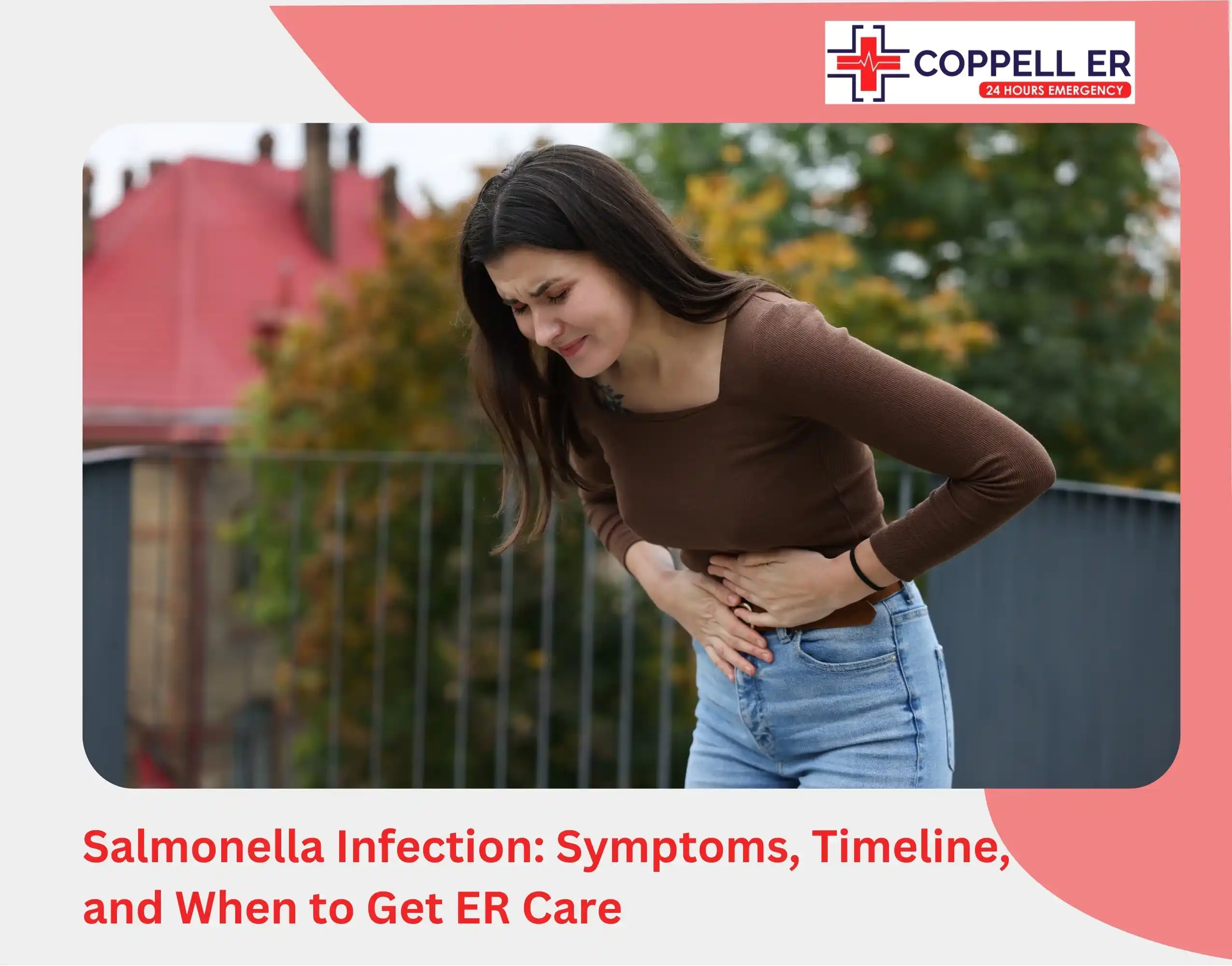
The symptoms of a salmonella infection are diarrhea, fever, and stomach cramps, usually starting 6 hours to 6 days after eating contaminated food. The illness is so common that food poisoning symptoms like these are often mistaken at first for a passing stomach bug.
Watch for this cluster:
- Diarrhea, sometimes watery and occasionally bloody
- Fever and chills
- Stomach cramps and abdominal pain
- Nausea and vomiting
- Headache and a general wrung-out feeling
- Early signs of dehydration as fluid loss adds up
Most cases bring strong but manageable food poisoning symptoms. The detail that matters for later: heavy bloody diarrhea, a high fever, or relentless abdominal pain is not the routine course and signals that the infection needs a closer look.
How Long Does Salmonella Last?
A salmonella infection usually lasts 4 to 7 days, and most healthy people recover without any specific treatment. So how long does salmonella last when you account for the lingering effects? The diarrhea alone can run up to 10 days, and bowel habits may take longer to feel normal.
| Stage | Timing | What is happening |
| Exposure to onset | 6 hours to 6 days | Bacteria multiply in the gut; commonly 12 to 36 hours to symptoms |
| Acute phase | First 2 to 3 days | Peak diarrhea, fever, and cramps, and the highest dehydration risk |
| Improvement | 4 to 7 days | Fever settles and energy returns for most people |
| Lingering diarrhea | Up to 10 days | Loose stool can persist after other symptoms fade |
| Still shedding | Weeks after recovery | You can pass the bacteria on, so hygiene still matters |
If symptoms push past a week, or fluids will not stay down, how long does salmonella last stops being the right question and getting checked becomes the priority.
How You Get Salmonella and How to Lower Your Risk
Salmonella spreads through food and water carrying the bacteria, most often raw or undercooked poultry, eggs, and meat, or unpasteurized milk, along with contaminated produce and contact with animals like reptiles. The bacteria come in many serotypes, and Salmonella Typhimurium and Salmonella Newport are two of the strains behind a large share of US outbreaks the CDC monitors.
Lowering your risk comes down to kitchen habits. Cook poultry and eggs thoroughly, keep raw meat away from ready-to-eat food, wash hands and produce well, refrigerate leftovers promptly, and wash up after handling pets. Not every gut upset is an infection either, since food intolerance can mimic the same bloating and cramps without any bacteria involved.
Who Is Most at Risk for Severe Salmonella?
Most healthy adults weather a salmonella infection in under a week. The risk of severe illness concentrates in a few groups, where dehydration and complications move faster and hit harder.
| Group | Why the risk is higher |
| Infants and young children | Dehydrate quickly and cannot describe how they feel; watch abdominal pain in children closely |
| Older adults | Faster fluid loss and a higher chance the infection spreads beyond the gut |
| Weakened immune systems | More likely to develop bloodstream infection |
| Pregnant people | Rare but real risk the infection reaches the bloodstream, so symptoms warrant prompt care |
For these groups, the usual wait-and-hydrate approach gives way to earlier medical attention. In some cases the bacteria enter the bloodstream, which is the complication that turns a routine infection serious.
How Is a Salmonella Infection Treated?
Salmonella treatment is mostly supportive: replacing the fluids and electrolytes lost to diarrhea and vomiting while the body clears the infection. Antibiotics are reserved for severe cases, high-risk patients, or when the infection spreads to the bloodstream, not routine ones, where they offer little benefit.
A few rules make home salmonella treatment work:
- Sip an oral rehydration solution or water steadily, in small amounts
- Skip anti-diarrheal medicines if you have a high fever or bloody stool, since they can prolong the illness
- Ease back to bland foods as the stomach settles
- Rest, and track your fluids in versus out
At the ER, salmonella treatment moves faster. When vomiting blocks oral fluids, intravenous rehydration restores what you have lost, and on-site lab testing can confirm the bacteria and flag an electrolyte problem before it affects the heart. Cases that reach the bloodstream need IV antibiotics and admission, so the role of a freestanding ER is to stabilize and coordinate that next step quickly.
When Should You Go to the ER for Salmonella?
Go to the ER for a salmonella infection when fluid loss outpaces what you can drink, when diarrhea turns heavily bloody, or when a high fever and severe pain set in. At that point home care is no longer enough.
Manage at home when symptoms are mild, you are keeping fluids down, there is no blood, and you are an otherwise healthy adult. Rest and steady rehydration carry most people through.
Call your doctor when symptoms pass a week, you see streaks of blood, fever is moderate, or you belong to a higher-risk group. This is the point to get tested rather than keep waiting.
Go to the ER now when you have signs of serious dehydration (dizziness, little or no urination, a racing heart, confusion), heavy bloody diarrhea, a high fever with severe abdominal pain, or you are very young, older, pregnant, or immunocompromised and fading fast. Severe, localized pain can also point to something other than food poisoning, such as appendicitis, which is its own reason to be seen.
A freestanding ER runs labs on site and starts IV fluids for dehydration without a long lobby wait, which is the difference when you are losing more than you can take in.
Stopping Food Poisoning From Going Too Far at Coppell ER
When a salmonella infection crosses into dehydration you cannot keep up with, speed protects you. The board-certified physicians at our 24/7 emergency room in Coppell start IV rehydration the moment fluids stop staying down, run labs on site, and watch for complications. Most cases settle at home, and we will tell you honestly when that is the safer call.
Frequently Asked Questions
1. Is salmonella contagious?
Salmonella spreads mainly through contaminated food, but it can pass person to person through the fecal-oral route when handwashing is poor. You can shed the bacteria for weeks after you feel better, so hygiene matters during recovery.
2. How is salmonella different from a stomach bug?
Salmonella is a bacterial infection from contaminated food, while most stomach bugs are viral. Salmonella tends to bring a higher, longer fever and can cause bloody diarrhea, which viral bugs usually do not.
3. Can a salmonella infection go away on its own?
Yes. Most healthy people recover in 4 to 7 days with rest and fluids and no specific treatment. The exceptions are high-risk groups and severe cases, which need medical care.
4. Is salmonella dangerous during pregnancy?
It can be. The infection rarely reaches the bloodstream and, in pregnancy, that carries a small risk to the baby. Symptoms during pregnancy warrant prompt care, and unusual abdominal pain during pregnancy should always be checked.
5. When is salmonella an emergency?
Salmonella is an emergency with signs of serious dehydration, heavy bloody diarrhea, a high fever with severe pain, or in anyone very young, older, pregnant, or immunocompromised who is declining quickly.