
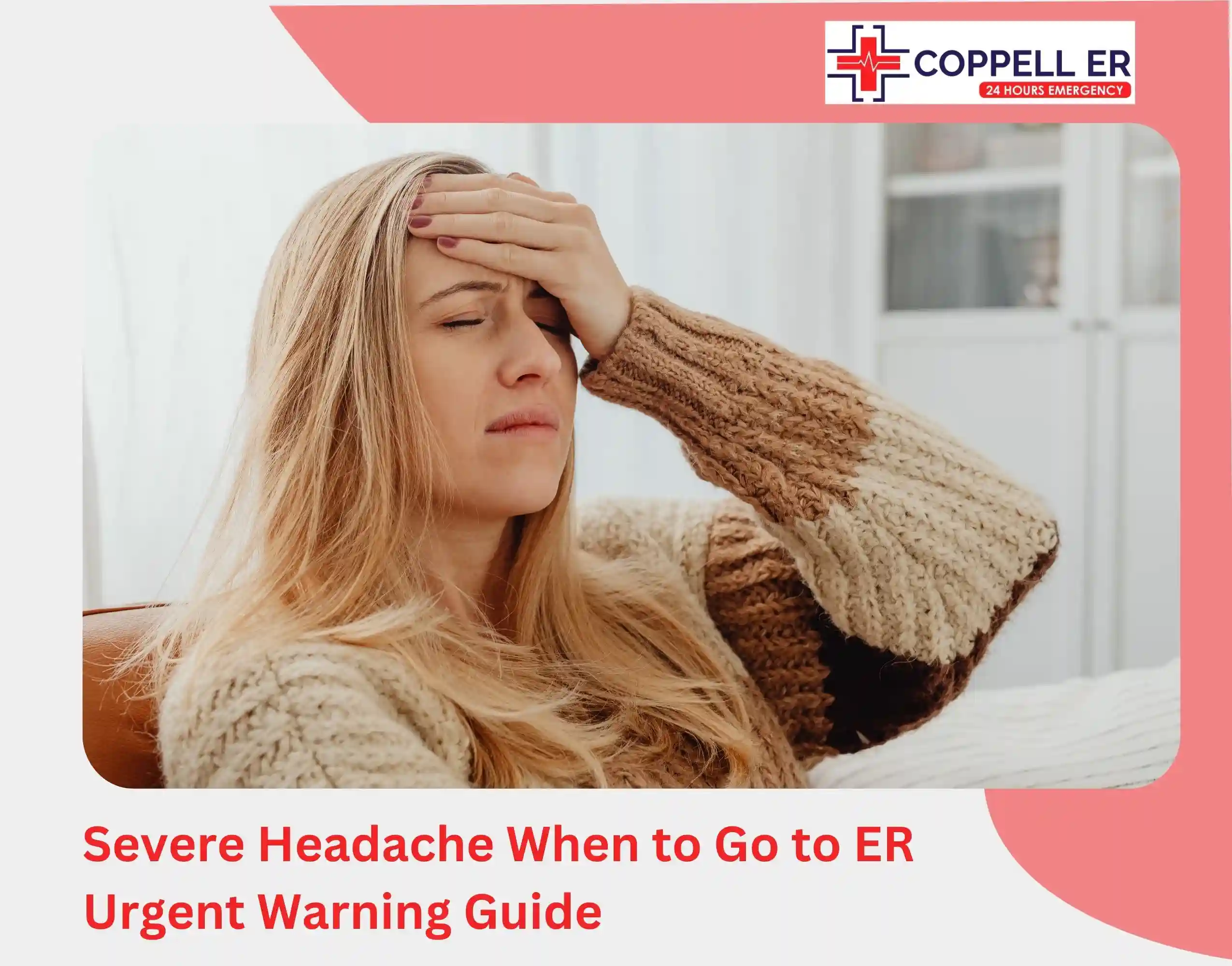
Go to the ER for any headache that comes on suddenly and peaks within 60 seconds (“thunderclap headache”), feels like the worst headache of your life, comes with fever and stiff neck, is paired with weakness, numbness, slurred speech, vision changes, confusion, or seizures, follows a head injury, or develops differently from any headache you’ve had before. Severe headaches in adults over 50 with no prior headache history, in pregnant or postpartum women, or in patients with cancer, HIV, or weakened immune systems also warrant ER evaluation.
Most severe headaches are migraines or tension headaches, painful, miserable, but not emergencies. The trick is recognizing the rare but dangerous ones quickly: subarachnoid hemorrhage, stroke, meningitis, brain tumor, or giant cell arteritis. These have specific patterns that distinguish them from typical headaches, and ER physicians use a standard checklist to spot them.
| 📌 The Single Most Important Rule
A sudden severe headache that reaches maximum intensity within 60 seconds, what doctors call a “thunderclap headache”, is a medical emergency until proven otherwise. The most common cause is a subarachnoid hemorrhage (bleeding around the brain), often from a ruptured aneurysm. Call 911 immediately. CT scan plus possible spinal tap within hours is the standard workup. |
1. Primary vs Secondary Headaches, The Foundational Distinction

Doctors classify all headaches into two groups. Understanding which group your headache falls into is the first step in deciding whether you need an ER visit.
Primary Headaches
The headache itself IS the disease, there’s no underlying medical condition causing it. The brain’s pain pathways are misfiring, but no dangerous process is at work. These are far more common.
Types include:
- Migraine, throbbing, often one-sided, with nausea, light/sound sensitivity
- Tension headache, band-like pressure around the head
- Cluster headache, severe one-sided pain around the eye, with tearing and nasal congestion
Primary headaches are usually painful but not dangerous. They generally don’t require ER visits unless they’re significantly different from your usual pattern or fail to respond to home treatment.
Secondary Headaches
The headache is a symptom of an underlying medical condition, sometimes a dangerous one. These are less common but contain almost all the headaches that need emergency care.
Dangerous causes include:
- Subarachnoid hemorrhage (bleeding around the brain)
- Stroke (both ischemic and hemorrhagic)
- Meningitis (infection of brain coverings)
- Brain tumor
- Giant cell arteritis (inflammation of arteries)
- Severe hypertensive emergency
- Increased intracranial pressure
- Carbon monoxide poisoning
- Brain aneurysm (leaking or ruptured)
- Cerebral venous sinus thrombosis
- Eclampsia in pregnancy
The job of the ER is to identify whether you have a secondary headache with a dangerous cause, and to act fast when you do.
2. Thunderclap Headache, The One You Cannot Ignore
This is the headache the ER staff drops everything for. A thunderclap headache has a specific, defined pattern recognized in every emergency medicine textbook.
The Clinical Definition
- Sudden severe head pain with abrupt onset
- Pain reaches maximum intensity in less than 60 seconds
- Pain lasts at least 5 minutes
- Pain is unlike any headache you’ve had before
The defining feature isn’t how bad the pain is, it’s how fast it peaks. A headache that hits maximum severity within a minute is fundamentally different from one that builds over an hour.
How Patients Describe It
- “The worst headache of my life”
- “Like being hit in the back of the head with a bat”
- “It exploded, there was no buildup”
- “Sudden, like a clap of thunder”
- “I dropped to my knees”
Why It’s a Medical Emergency
Thunderclap headache is the textbook presentation of subarachnoid hemorrhage, bleeding into the space surrounding the brain, usually from a ruptured aneurysm. About 1 in 4 patients with thunderclap headache turn out to have a serious underlying cause:
- Subarachnoid hemorrhage (most common dangerous cause)
- Reversible cerebral vasoconstriction syndrome (RCVS), second most common
- Cerebral venous sinus thrombosis
- Brain aneurysm (leaking before full rupture)
- Pituitary apoplexy (bleeding into the pituitary gland)
- Carotid or vertebral artery dissection
- Acute hypertensive crisis
- Spontaneous intracranial hypotension
Even when no cause is found, every first-time thunderclap headache demands ER evaluation. CT scan is the first test, and may be followed by lumbar puncture (spinal tap), MRI, and angiography.
The Subarachnoid Hemorrhage “Sentinel” Headache
About 20% of patients with a full subarachnoid hemorrhage report having had a similar but milder “sentinel headache” days to weeks before. These small leaks before a major bleed are commonly dismissed as migraine or sinus headaches. If you’ve had a new, severe, sudden-onset headache different from your usual pattern, even if it resolved, get evaluated.
| 🚨 “Worst Headache of My Life” or Sudden Severe Onset?
Treat as a medical emergency. Call 911. Coppell ER has CT, MRI, and full neurological workup on-site 24/7. 720 N Denton Tap Rd. Phone: 469-763-3136. Time matters when there’s bleeding around the brain. |
3. The SNOOP Red Flags, A Headache Specialist’s Checklist
Headache specialists use a mnemonic called “SNOOP” to flag warning signs of secondary (dangerous) headaches. If any of these apply to your headache, ER evaluation is appropriate.
S, Systemic Symptoms
- Fever
- Weight loss
- Night sweats
- Stiff neck
- Rash
- Active cancer, HIV, or immunosuppression
N, Neurological Symptoms or Signs
- Weakness or numbness on one side
- Slurred speech or trouble finding words
- Vision changes, double vision, blind spots, loss of vision
- Loss of balance or coordination
- Confusion or altered mental status
- Seizure
- Loss of consciousness, even briefly
O, Onset (Sudden / Thunderclap)
- Headache that reaches peak intensity within 60 seconds
- “Worst headache of my life”
- Headache that woke you from sleep
O, Older Age (Over 50)
- A new type of headache after age 50 needs evaluation
- First-ever severe headache in older adults, concern for stroke, tumor, or giant cell arteritis
P, Pattern Change
- A different type of headache than you usually get
- Headaches becoming more frequent, severe, or different in character
- Headache that doesn’t respond to your usual treatments
- Progressive worsening over days or weeks
Additional Red Flags Some Specialists Add (SNOOP10)
- Positional, worse lying down, worse sitting up, or worse with Valsalva (coughing, straining, sex)
- Papilledema, swelling of the optic nerve (visible to a doctor with eye examination)
- Painful eye, severe eye pain with the headache
- Posttraumatic, headache after a fall, car accident, or any head injury
- Pregnancy or postpartum, important due to eclampsia and stroke risk
| 📌 Using SNOOP
If even ONE SNOOP feature applies to your headache, ER evaluation is appropriate. None of these features alone diagnoses a serious cause, but they tell the ER physician that further investigation (imaging, labs, sometimes spinal tap) is warranted. |
4. Vascular Causes, When Blood Vessels Are the Problem
Subarachnoid Hemorrhage (SAH)
Bleeding into the space surrounding the brain, usually from a ruptured aneurysm. The most common dangerous cause of thunderclap headache. Untreated, SAH has a mortality rate of about 50%.
Symptoms:
- Sudden severe headache reaching peak in seconds to a minute
- “Worst headache of my life”
- Nausea and vomiting
- Stiff neck
- Brief loss of consciousness in some cases
- Light sensitivity
- Sometimes seizure or focal neurological signs
Stroke (Ischemic and Hemorrhagic)
Brain strokes can cause headache, especially hemorrhagic strokes (bleeding) which often produce severe headaches. Ischemic strokes (clots) may not have headache as a primary symptom, but a stroke patient with headache is a true emergency.
Warning signs paired with headache:
- Face drooping
- Arm weakness or numbness
- Slurred speech or trouble finding words
- Vision changes
- Balance problems
- Confusion
Reversible Cerebral Vasoconstriction Syndrome (RCVS)
Sudden constriction of brain blood vessels causing recurrent thunderclap headaches over days to weeks. Often triggered by:
- Postpartum period
- Certain medications (vasoconstrictors, some antidepressants)
- Recreational drugs (cocaine, amphetamines, marijuana)
- Sexual activity or exertion
- Migraine medications (triptans) overuse
Can lead to stroke if untreated. Diagnosed with CT angiography or MR angiography. Usually resolves over weeks with avoidance of triggers.
Carotid or Vertebral Artery Dissection
A tear in the wall of a major artery in the neck. Causes severe neck pain and headache (often unilateral, often back of the head), sometimes with stroke-like symptoms. Can be triggered by neck trauma, sudden movements, sports injuries, or even minor strain. The most common stroke cause in adults under 45.
Cerebral Venous Sinus Thrombosis
A blood clot in one of the brain’s venous sinuses. Causes progressive severe headache, sometimes with vision changes, seizures, or weakness. More common in women, especially with oral contraceptive use, pregnancy/postpartum, and certain clotting disorders.
Hypertensive Emergency
Blood pressure over 180/120 with symptoms is a true emergency. Severe headache, blurred vision, chest pain, shortness of breath, and confusion are warning signs. Untreated hypertensive emergencies cause stroke, heart attack, and organ damage.
5. Infectious Causes, Meningitis and Encephalitis
Infections of the brain or its coverings can be rapidly fatal without treatment. The hallmark combination is severe headache plus fever plus altered mental status.
Bacterial Meningitis
Inflammation of the membranes surrounding the brain and spinal cord, caused by bacteria. Without treatment, can kill within hours. Classic symptoms:
- Severe headache
- Fever (often high)
- Stiff neck (can’t touch chin to chest)
- Sensitivity to light (photophobia)
- Nausea and vomiting
- Confusion or altered mental status
- Sometimes a purplish skin rash (meningococcal meningitis)
Treatment with IV antibiotics and supportive care must start within hours. Anyone with this symptom combination needs immediate ER evaluation, often with lumbar puncture for diagnosis.
Viral Meningitis
Similar symptoms to bacterial meningitis but usually less severe and self-limiting. Still requires ER evaluation to distinguish from bacterial cases.
Encephalitis
Inflammation of the brain itself, usually viral. Causes severe headache, fever, confusion, behavior changes, seizures, and focal neurological symptoms. Herpes simplex encephalitis is a particular threat, treatable with antiviral medication if caught early.
Brain Abscess
A pocket of pus in the brain, usually from a spread infection (sinus, dental, ear, or bloodstream). Causes progressive headache, sometimes fever, focal neurological symptoms, and can mimic a tumor on imaging.
6. Other Serious Causes of Severe Headache
Brain Tumor
Tumors can cause progressive headaches that develop over weeks to months. Concerning features:
- Progressive worsening over time
- Worse in the morning or on waking
- Worse with coughing, sneezing, or straining
- Paired with vomiting
- New-onset seizures
- Personality changes, memory problems, or focal weakness
- Vision changes
Most headaches are not from brain tumors, but the pattern above warrants imaging evaluation.
Giant Cell Arteritis (Temporal Arteritis)
Inflammation of medium and large arteries, particularly affecting branches of the carotid artery. Almost exclusively in adults over 50. Untreated, causes permanent vision loss in many patients. Symptoms:
- New severe headache, often at the temples
- Scalp tenderness, combing hair hurts
- Jaw pain when chewing
- Vision changes (warning of impending blindness)
- Fatigue, fever, weight loss, muscle aches
Diagnosed with blood tests (ESR, CRP) and biopsy. Treatment with high-dose steroids should begin immediately when suspected.
Idiopathic Intracranial Hypertension (IIH)
Increased pressure inside the skull without an identifiable cause. Most common in women of childbearing age, especially with obesity. Symptoms:
- Daily severe headache
- Worse with Valsalva (coughing, straining)
- Vision changes, temporary or permanent vision loss
- Pulsatile tinnitus (whooshing sound in ears with heartbeat)
- Papilledema on eye exam
Carbon Monoxide Poisoning
CO exposure causes severe headache, dizziness, weakness, nausea, confusion, and can be fatal. Suspect when:
- Headache started indoors, especially at home or in a vehicle
- Multiple people in the same building have similar symptoms
- Pets are also acting sick
- Symptoms improve when you leave the building
Get out immediately and call 911. Death from CO exposure is fast and silent.
Eclampsia (Pregnancy/Postpartum)
Severe pregnancy complication of preeclampsia. Symptoms:
- Severe headache
- Vision changes
- Swelling (face, hands, feet)
- Upper abdominal pain
- Severely elevated blood pressure
- Seizures (eclampsia is the seizure-stage)
Life-threatening for mother and baby. Any severe headache in pregnancy after 20 weeks or in the first 6 weeks postpartum warrants immediate ER evaluation.
Severe Sinus Infection
Most sinus headaches are benign and treatable with rest and decongestants. But severe sinus infections can rarely cause complications, orbital cellulitis, cavernous sinus thrombosis, or brain abscess. Warning signs include severe headache with high fever, vision changes, eye swelling, or facial swelling.
7. Migraine, When Even Your Familiar Pattern Is an ER Trip
Most migraines don’t need ER care. Your headache specialist or primary care doctor is the right resource for typical migraine management. But certain migraine situations do warrant emergency evaluation.
Go to the ER for a Migraine When:
- The headache lasts longer than 72 hours despite your usual treatments (status migrainosus)
- You’re vomiting and can’t keep down fluids or oral medications (risk of dehydration)
- The pain is dramatically worse than your usual migraine
- New neurological symptoms appear that aren’t part of your usual aura
- Aura lasts longer than 60 minutes
- First-time migraine in someone over 50
- Migraine with a stiff neck and fever (rule out meningitis)
- Migraine after recent head injury
- “This headache is different from my usual”
Status Migrainosus, The Migraine That Won’t Quit
Migraine pain lasting more than 72 hours despite treatment is called status migrainosus. It can lead to dehydration, electrolyte imbalances, and rarely stroke. ER treatment typically involves IV fluids, IV anti-migraine medications, and anti-nausea treatment, usually more effective than oral medications taken at home.
What ER Does for Severe Migraine
- IV fluids for dehydration
- IV anti-migraine medications (ketorolac, sumatriptan, magnesium, others)
- IV anti-nausea medications
- Sometimes IV steroids to break the cycle
- If features suggest a secondary cause: imaging, blood work, possible lumbar puncture
8. Tension and Cluster Headaches
Tension Headache
The most common headache type. Feels like a tight band squeezing the head, often with neck and shoulder muscle tension. Usually responds to over-the-counter pain medication, rest, and hydration. Rarely an emergency.
Tension headache becomes an ER trip when:
- Pain is dramatically worse than usual
- Paired with any SNOOP red flag features
- First severe headache after age 50
- Pattern has changed significantly
Cluster Headache
Excruciating one-sided pain around or behind one eye, lasting 15 minutes to 3 hours. Called “suicide headaches” because of the intensity. Often comes in cycles with attacks several times per day for weeks or months.
Cluster headaches usually have a recognizable pattern in patients with established diagnosis. They become ER trips when:
- First-time cluster-like headache (need to rule out secondary causes)
- Pain is dramatically different from usual cluster attacks
- Neurological symptoms appear
- Vision changes during the attack
- First-time severe one-sided headache in adults over 50 (rule out GCA)
9. Who Should Take Severe Headache More Seriously

These factors lower the threshold for ER evaluation:
- Age over 50 with new severe headache or new headache type
- Personal history of cancer (especially with new headache pattern)
- HIV or other immunocompromise
- Anticoagulant use (blood thinners), even minor head injury matters
- Pregnancy after 20 weeks or postpartum
- Recent head injury
- High blood pressure history
- Atrial fibrillation
- History of stroke or TIA
- Family history of brain aneurysm
- Diabetes
- Smoking
- Recreational drug use (cocaine, amphetamines)
- Recent neck injury or chiropractic manipulation
- Connective tissue disorders (Marfan, Ehlers-Danlos)
- Sickle cell disease
10. ER vs Urgent Care vs Doctor vs Home, Decision Guide
| Go to ER NOW | Urgent Care or Same-Day Doctor | Manage at Home |
| Thunderclap headache (peak in <60 seconds) | Migraine unresponsive to home treatment | Typical migraine responding to usual treatment |
| “Worst headache of my life” | Severe sinus headache with congestion | Tension headache from stress |
| Severe headache + fever + stiff neck | Headache with mild fever, no neck stiffness | Mild headache from caffeine withdrawal |
| Headache + neurological symptoms | Headache with mild nausea but no warning signs | Headache from poor sleep or dehydration |
| Headache after head injury | Headache pattern change for evaluation | Familiar headache pattern |
| Severe headache in pregnancy | First-time tension headache | Headache responding to OTC medication |
| First severe headache after age 50 | Cluster headache (with known diagnosis) | Brief mild headache, no other symptoms |
| Status migrainosus (>72 hours) | Headache with mild vision changes that fully resolve | Recovered from typical migraine |
11. Why Coppell ER for Severe Headache

Severe headaches need fast, comprehensive evaluation. The dangerous causes, subarachnoid hemorrhage, stroke, meningitis, brain tumor, have narrow treatment windows. Coppell ER offers full hospital-grade emergency capability 24/7.
Diagnostic Tools On-Site
- CT scan within minutes of arrival
- CT angiography for aneurysm or dissection evaluation
- MRI when needed for more detailed imaging
- Lumbar puncture (spinal tap) when subarachnoid hemorrhage or meningitis is suspected
- Comprehensive blood work, including ESR and CRP for giant cell arteritis
- EKG and cardiac monitoring
- Eye examination including fundoscopy for papilledema
- Pulse oximetry and carbon monoxide testing when CO poisoning suspected
Treatments Available
- IV fluids for dehydration
- IV anti-migraine and pain medications
- IV anti-nausea medications
- IV antibiotics for suspected meningitis
- Blood pressure management for hypertensive emergencies
- Antiplatelet therapy and stroke care
- High-dose steroids for suspected giant cell arteritis
- Stabilization and rapid transfer to neurosurgery when needed
Why Coppell ER
- Open 24/7, severe headaches don’t follow business hours
- No appointment, walk straight to an exam room
- Minimal-to-zero wait times, critical when minutes matter
- Board-certified ER physicians on every shift
- Hospital-grade equipment in a private-practice setting
- In-house billing team and no-surprise-billing policy
- Most commercial insurance plans accepted (Medicare, Medicaid, and Tri-Care are not accepted)
| Severe Headache That Won’t Quit, or Just Feels Wrong?
Don’t wait it out. Coppell ER can rule out the dangerous causes in about an hour. Open 24/7 at 720 N Denton Tap Rd, Coppell, TX. Walk in or call 469-763-3136. For thunderclap headaches, call 911 first. |
Frequently Asked Questions
Q: How do I know if my headache is a thunderclap headache?
A thunderclap headache reaches maximum severity within 60 seconds of starting, it explodes rather than builds. Patients often describe it as the worst headache of their life or like being suddenly hit in the back of the head. The defining feature is the speed of onset, not just the intensity. Any first-time thunderclap headache warrants ER evaluation.
Q: Can a regular bad migraine be confused with a stroke or aneurysm?
Yes, especially for first-time severe migraines or migraines with new neurological features (aura that’s different from usual, lasts longer, or involves new symptoms). Even experienced migraineurs can have a stroke or other serious cause. “Same as always” is reassuring; “different than before” is a red flag.
Q: What does a meningitis headache feel like?
Severe constant headache often accompanied by fever, stiff neck (inability to touch chin to chest), sensitivity to light, nausea/vomiting, and sometimes confusion. The combination of headache + fever + stiff neck is the classic warning sign. Bacterial meningitis can kill within hours, go to the ER immediately.
Q: I had a sudden severe headache that went away, should I still go to the ER?
Yes. Some patients with subarachnoid hemorrhage have a “sentinel headache”, a smaller bleed days to weeks before a major rupture. About 20% of patients who have a full SAH report having had a similar headache before. A first-time thunderclap headache that resolved still needs evaluation.
Q: Should I drive myself to the ER for a severe headache?
If the headache is severe enough to cause concerning symptoms, vision changes, weakness, confusion, vomiting, don’t drive yourself. Call 911 or have someone drive you. The risk of losing consciousness or having a seizure while driving is real. If you’re having a typical bad migraine without warning signs, driving yourself may be reasonable.
Q: Can dehydration really cause a severe headache?
Yes. Dehydration is a common headache trigger, particularly in hot weather, after exercise, or after vomiting/diarrhea. Most dehydration headaches improve with fluid replacement. But severe headaches in dehydrated patients, especially with confusion or other symptoms, may need IV fluids and evaluation to rule out other causes.
Q: Are headaches during pregnancy dangerous?
Most are not, but pregnancy-related headaches can signal serious conditions. After 20 weeks of pregnancy or in the first 6 weeks postpartum, severe headache with vision changes, swelling, or upper abdominal pain may indicate preeclampsia or eclampsia. Pregnancy also raises stroke and cerebral venous thrombosis risk. Severe headaches in pregnancy warrant prompt evaluation.
Q: What tests will the ER do for a severe headache?
Standard workup includes: detailed neurological exam, blood pressure check, blood work, and usually a CT scan to rule out bleeding. If subarachnoid hemorrhage or meningitis is suspected and CT is negative, a lumbar puncture (spinal tap) may be needed. MRI, CT angiography, or other imaging may follow depending on findings. Most patients have answers within an hour or two.
Q: Can carbon monoxide really cause a severe headache?
Yes, and it’s often missed. CO poisoning causes severe headache, dizziness, weakness, confusion, and nausea. Suspect CO when headache started indoors (especially with a furnace, fireplace, or vehicle exhaust), multiple people in the same building have similar symptoms, or symptoms improve when you leave the building. Get out immediately and call 911. CO is colorless and odorless, only testing detects it.
Q: My headache is severe but I have a long migraine history, do I still need the ER?
If the headache fits your usual migraine pattern and responds to your usual treatments, no. If it’s different from your usual migraines, dramatically worse, has new neurological features, doesn’t respond to treatment, or has any SNOOP warning signs, yes. The phrase “this headache is different” from a migraine patient is a recognized clinical red flag.
Q: How long should I wait before going to the ER for a severe headache?
Don’t wait if you have a thunderclap headache, headache with fever and stiff neck, headache with neurological symptoms, or headache after head injury, go immediately. For severe but otherwise typical migraines, try your usual rescue treatments first and go to the ER if they fail within a few hours, you can’t keep medications down, or the pain lasts more than 72 hours.
The Bottom Line
Most severe headaches aren’t emergencies. Migraines, tension headaches, and cluster headaches cause real suffering but don’t usually need the ER. The dangerous causes, subarachnoid hemorrhage, meningitis, stroke, brain tumor, giant cell arteritis, are uncommon but life-threatening, and they announce themselves through specific patterns recognized in every emergency department.
The most important pattern: a sudden severe headache that peaks within 60 seconds and feels different from any headache you’ve had before. That’s a thunderclap headache, and it’s a 911 emergency until proven otherwise. The second most important pattern: severe headache plus any of the SNOOP red flags, Systemic symptoms, Neurological signs, sudden Onset, Older age, or Pattern change.
Coppell ER has CT, MRI, lumbar puncture capability, blood work, and ER physicians on-site 24/7. We can rule out the dangerous causes, and treat the migraines that aren’t responding to your usual care, typically within an hour. If you’re not sure whether a headache is serious, the cost of being wrong is far higher than the cost of being checked.
| When in Doubt About a Severe Headache
Call Coppell ER: 469-763-3136 • Walk in: 720 N Denton Tap Rd, Coppell, TX 75019 • Open 24/7 • CT, MRI, lumbar puncture, and ER physicians on-site. For thunderclap headache or stroke-like symptoms, call 911 first. |
Medical Disclaimer
This article is for general educational purposes and is not medical advice. Reading this content does not establish a doctor-patient relationship. Causes of severe headache vary widely by individual. For personal medical questions, consult a licensed healthcare provider. If you suspect a thunderclap headache, stroke, meningitis, or other emergency, call 911 immediately, do not rely on online articles to self-diagnose.
Sources: American Migraine Foundation, Thunderclap Headaches and Migraine in the ED; Cleveland Clinic, Thunderclap Headache; Mayo Clinic, Thunderclap Headaches; StatPearls/NCBI, Thunderclap Headache; American Stroke Association; Baptist Health, When to Go to the ER for Migraine; International Headache Society (SNOOP10 criteria).