
The meal you blame isn’t always the cause, and the vomiting isn’t always the danger. Good food poisoning treatment starts by confirming it really is food poisoning, then watching for what can follow it.
At Coppell ER, board-certified emergency physicians use onsite labs and CT to separate a bad meal from appendicitis, pancreatitis, or a gallbladder attack, while IV fluids and anti-nausea medication get you keeping water down again. Most patients have results within the hour, and no appointment is ever needed.
Call Now: (469) 763-3136
Hours: 24/7/365; walk-ins welcome
Walk-In: 720 N Denton Tap Rd, Coppell, TX 75019
Most food poisoning settles within a day or two with rest and fluids. It needs an emergency room when your body loses fluid faster than you can replace it, when blood shows up, or when the symptoms start pointing somewhere other than your last meal.
Any one of these signs is a reason to come in now, not in the morning.
The warning people misread most is a quiet one. The vomiting stops, so the worst feels over, yet you haven’t urinated since morning and standing makes the room tilt. That’s moderate dehydration, and an IV corrects in an hour what sipping can’t fix overnight.
Pregnancy, age over 65, a weakened immune system, or vomiting that won’t stop in an infant all lower the bar for coming in.

Appendicitis, pancreatitis, a gallbladder attack, a bowel obstruction, diabetic ketoacidosis, and in some adults a heart attack can all start out feeling like a bad meal. No single clue settles it. A few patterns shift the odds, though, and they’re worth noticing before you sleep it off.
| What you notice | Fits food poisoning or a stomach bug | Points toward something else |
|---|---|---|
| Which came first | Vomiting or diarrhea, then cramps | Pain, then vomiting hours later |
| Diarrhea | Present, often frequent and watery | Absent, or you can't pass gas |
| The pain itself | Crampy, moves around, eases after a bowel movement | Fixed in one place, worse when you walk or the car hits a bump |
| Everyone else | Others who ate the same food are sick too | You're the only one |
| Extra symptoms | Mild fever, chills, achiness | Fruity breath and heavy thirst, chest pressure, jaw or arm discomfort, a missed period |
| Day two | Easing | Getting worse |
In emergency department research, nearly everyone with appendicitis felt pain before vomiting, so when vomiting plainly came first, appendicitis became far less likely. The reverse proves nothing alone, which is why we test instead of guess.
A lipase level answers the pancreatitis question and a 12-lead EKG checks the heart. Blood sugar and ketones cover diabetes. A CT scan settles appendicitis or a blockage.
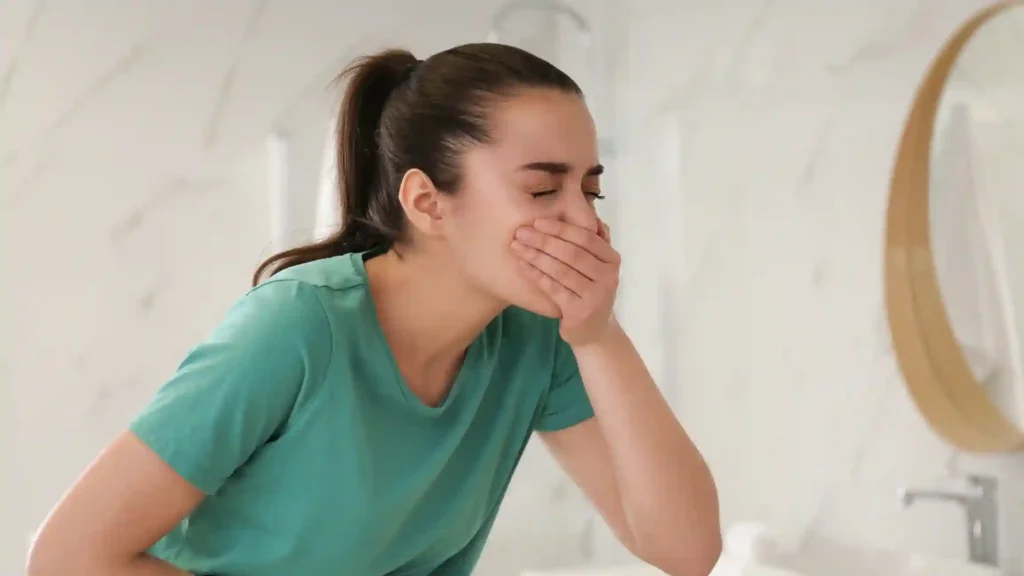
A few foodborne infections do their real damage after the vomiting and diarrhea fade. Knowing what to watch for in the week after you recover is part of food poisoning treatment, and it’s the part most people never hear about.
The kidney complication that trails E. coli. Some E. coli strains release a toxin that injures red blood cells and the kidneys. Up to 1 in 10 people diagnosed with these strains develop hemolytic uremic syndrome (HUS), usually about a week into the illness, often just as the diarrhea improves. Children under 5 and older adults face the highest risk. The signs pass for leftover exhaustion: peeing far less, pale cheeks or inner eyelids, unusual tiredness, unexplained bruising. A blood count, kidney panel, and urinalysis catch it early.
Dehydration that lags behind. Older adults feel thirst less, and water pills or some blood pressure medicines keep pulling fluid after the stomach settles. Kidney strain can build a day or two later without obvious thirst.
Listeria during pregnancy. It can appear days to weeks after exposure, sometimes as only fever and aches, and can reach the baby while the mother feels mildly unwell. Fever in pregnancy after deli meat or soft cheese deserves a same-day look.
If any of this appears, come in and mention last week’s illness. It changes which tests we run.
From the door to a diagnosis usually takes under an hour. The first stage of food poisoning treatment answers two questions at once: how dry you are, and whether this is really a foodborne illness or something that only looks like one.
If testing finds something that needs a surgeon or admission, we arrange the hospital transfer and send results ahead, so the receiving team never starts from zero.


Gastroenteritis treatment in an ER comes down to three jobs: replacing fluid faster than your stomach allows, stopping the vomiting cycle, and treating a specific cause only when testing confirms one.
IV for food poisoning works because it skips the stomach entirely. A few hours of IV fluids, with electrolytes matched to your labs, often turns a pale, shaky patient into someone ready to drink again. Anti-nausea medication through the same line breaks the sip-and-vomit loop.
We don’t reach for antibiotics on reflex. Most cases are viral or toxin-driven and won’t respond, and with some E. coli strains, antibiotics can raise the risk of kidney complications. When stool or blood results point to a bacterial infection that does need treatment, you get targeted antibiotics. The same caution applies to over-the-counter diarrhea medicine like loperamide when there’s fever or blood in the stool.
Need more time? Observation for up to 24 hours keeps fluids running and lets us repeat labs before you head home. For most patients with severe food poisoning or a hard-hitting stomach bug, one visit is enough.
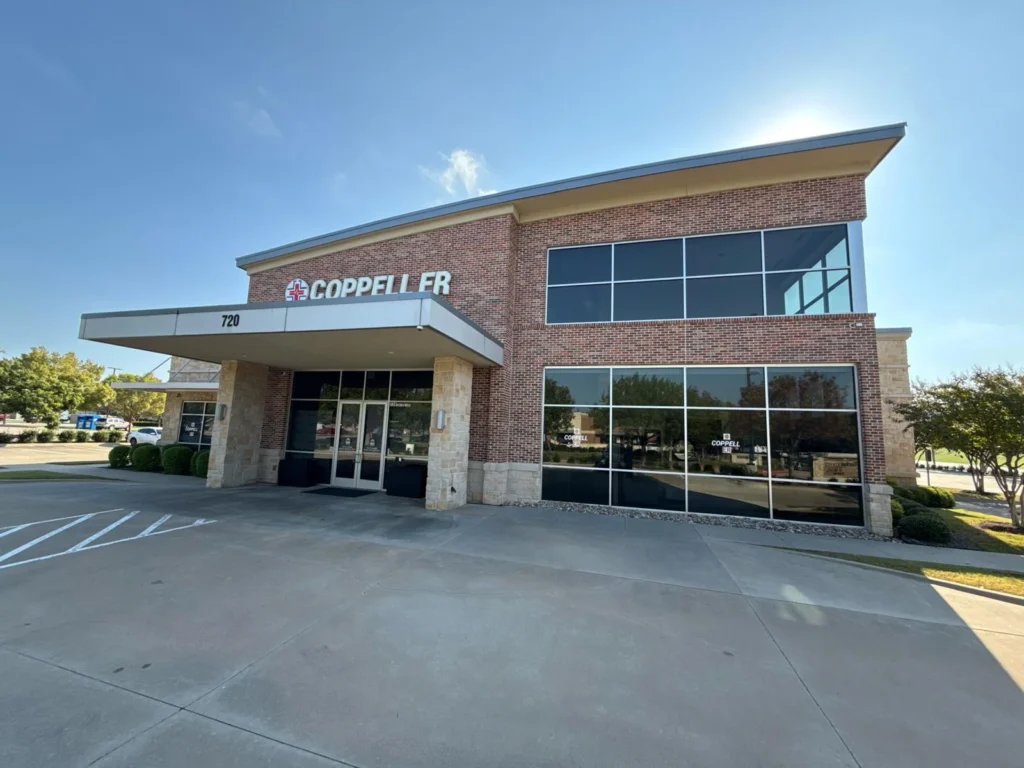
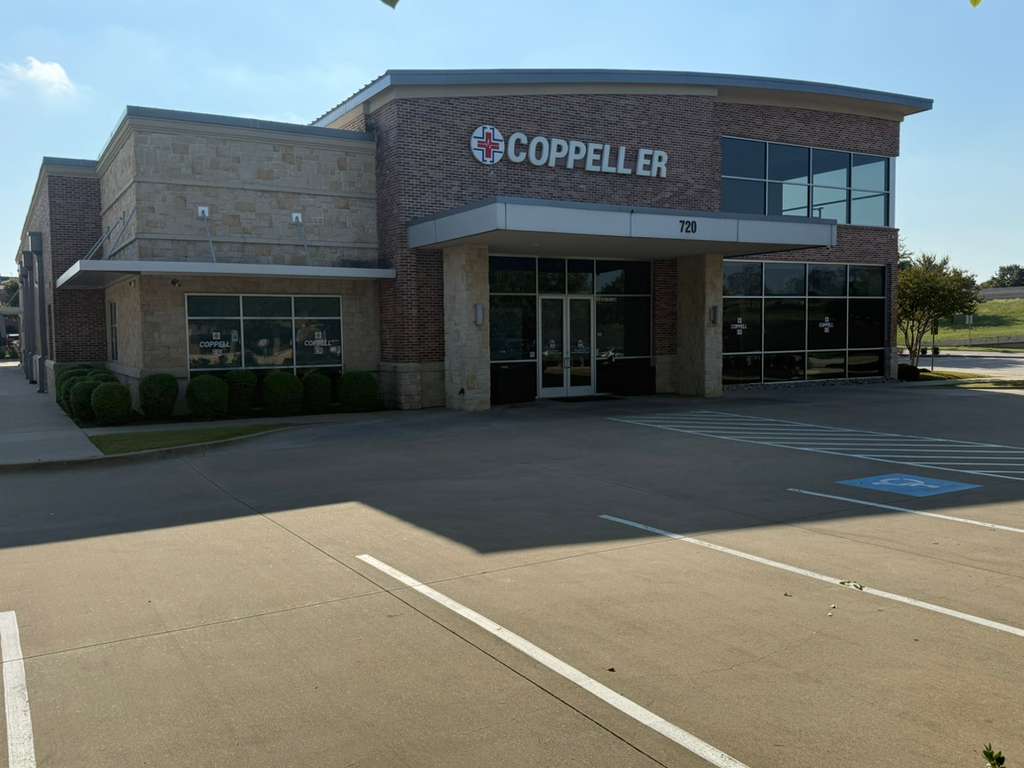
Looking for an emergency room for food poisoning in the middle of the night? Coppell ER sits on North Denton Tap Road and stays open every hour of every day, holidays included. We provide food poisoning treatment in Coppell and to neighbors in:
We’re also a short drive from DFW Airport. If your symptoms started after a trip abroad, tell us where you went. It changes which stool tests are worth running.
By the second day, most food poisoning is easing off. If yours isn’t, or you’re not sure the meal is really to blame, that uncertainty is reason enough to be seen. Severe food poisoning and its look-alikes are both easier to treat early.
Walk in anytime at 720 N Denton Tap Rd, or call ahead so we know you’re on the way. If you can, note what you ate and when the first symptom hit. It speeds up the workup.
Call Now: (469) 763-3136
Hours: 24/7/365; walk-ins welcome
Walk-In: 720 N Denton Tap Rd, Coppell, TX 75019
Yes. Anti-nausea medication through an IV is a routine part of gastroenteritis treatment and works within minutes, even when pills won’t stay down. It’s usually paired with fluids, since stopping the vomiting without replacing what you lost leaves you just as weak.
Some clinics can start an IV, but most can’t run a CT, check lipase, or keep you under observation if you’re slow to recover. For severe food poisoning, that gap often means a second trip. An ER can rehydrate you and rule out appendicitis or pancreatitis in one visit.
Most people notice a difference within 30 to 60 minutes. Dizziness eases, a racing heartbeat slows, and the nausea loosens its grip. Someone badly dehydrated may need several hours of fluids, sometimes with observation, before they can drink enough on their own.
Bring a child in if they’ve had no wet diaper or bathroom trip in six to eight hours, cry without tears, seem unusually sleepy or hard to wake, or can’t keep down even small sips. Infants under three months with fever or repeated vomiting should be seen right away.
Timing is the strongest clue. A bad meal tends to hit within hours, often sickening others who ate the same thing, while a virus builds over a day or two and moves through the household. Our guide to food poisoning versus stomach flu breaks down the differences. Treatment for dehydration is the same either way.
No appointment is needed. Walk in any hour, day or night, weekends and holidays included. We accept most major insurance plans and offer flexible payment plans through Sunbit. Not sure your symptoms need an ER? Call and talk it through with our team.
Need help?