
A concussion evaluation here rules out the emergency. It doesn’t clear you to go back to the field, the classroom, or the job, and treating those as the same thing is how second injuries happen.
If you or your child took a hit to the head, Coppell ER is a concussion emergency room built to answer the urgent question fast, with on-site CT imaging and a board-certified physician checking for bleeding or fracture while you’re still in the room. What comes after that is a different conversation, and we’ll tell you exactly who to have it with.
Call Now: 469-763-3136
Hours: 24/7/365
Walk-In: Coppell ER | 720 N Denton Tap Rd, Coppell, TX 75019
Signs of a concussion include headache, confusion, dizziness, nausea, and sensitivity to light or sound after a hit to the head or body. Not every concussion causes a loss of consciousness, most don’t. A head injury emergency room evaluation matters even when the person seems okay right after the hit.
Symptoms don’t always show up in the first few minutes. Headache, confusion, or mood changes can appear hours or even a day or two later, which is why “they seemed fine after” isn’t the same as “they’re fine.”


An ER visit for a head injury answers one question with certainty: is there bleeding, swelling, or a fracture that needs immediate treatment. CT imaging and a physician evaluation settle that question the same day, often within the hour. That’s the emergency, and it’s what a concussion emergency room is built to rule out fast.
What it doesn’t do is clear someone to go back to practice, return to the classroom, or head back to work. Recovery timelines, return-to-play protocols, and ongoing symptom management are a different process, usually guided by a primary care physician or a concussion specialist over days or weeks, not a single ER visit. Emergency room physicians aren’t the ones who issue that clearance, and any facility implying otherwise is skipping a step that matters.
We’re honest about that line because blurring it is exactly how a second injury happens before the first one has healed. A same-day evaluation and a return-to-play plan are two separate pieces of the same recovery, not one visit that covers both.
Two things make concussions easy to underestimate. The first is that symptoms can take hours or days to fully appear, so someone can look and feel normal right after the hit, pass a quick check, and go back to what they were doing. The second is second impact syndrome: a second concussion before the first one has fully healed carries a disproportionately higher risk of dangerous brain swelling, even when the second hit seems minor compared to the first.
Neither of these is a reason to panic. They’re reasons to treat “feeling fine so far” and “cleared to play” as two different statements, not one. An ER evaluation addresses the first question: whether something serious is happening right now, today, based on how the brain and body are responding. The return-to-play decision that follows belongs to a doctor tracking symptoms over time, not a single scan taken hours after the injury.


Age and medication matter as much as the hit itself. Patients over 65 and anyone on blood thinners face a higher risk of bleeding after even a minor head injury, so we adjust the threshold for imaging accordingly rather than applying one standard to every age group.
Every symptom gets tracked, not just the ones that brought you in. Memory, balance, and mood are checked alongside the obvious signs, because a concussion can affect any of them without affecting all of them, and a single missed area can change the picture.
Coordination when it’s needed. If imaging shows something beyond what we treat here, we stabilize and arrange direct transfer to a neurosurgical team, briefed on your case before you arrive there.
Honest handoff, not a vague instruction to see your doctor. We tell you specifically what was ruled out, what to watch for over the next several days, and who should manage the recovery timeline from here, whether that’s a pediatrician, a primary care physician, or a concussion specialist.

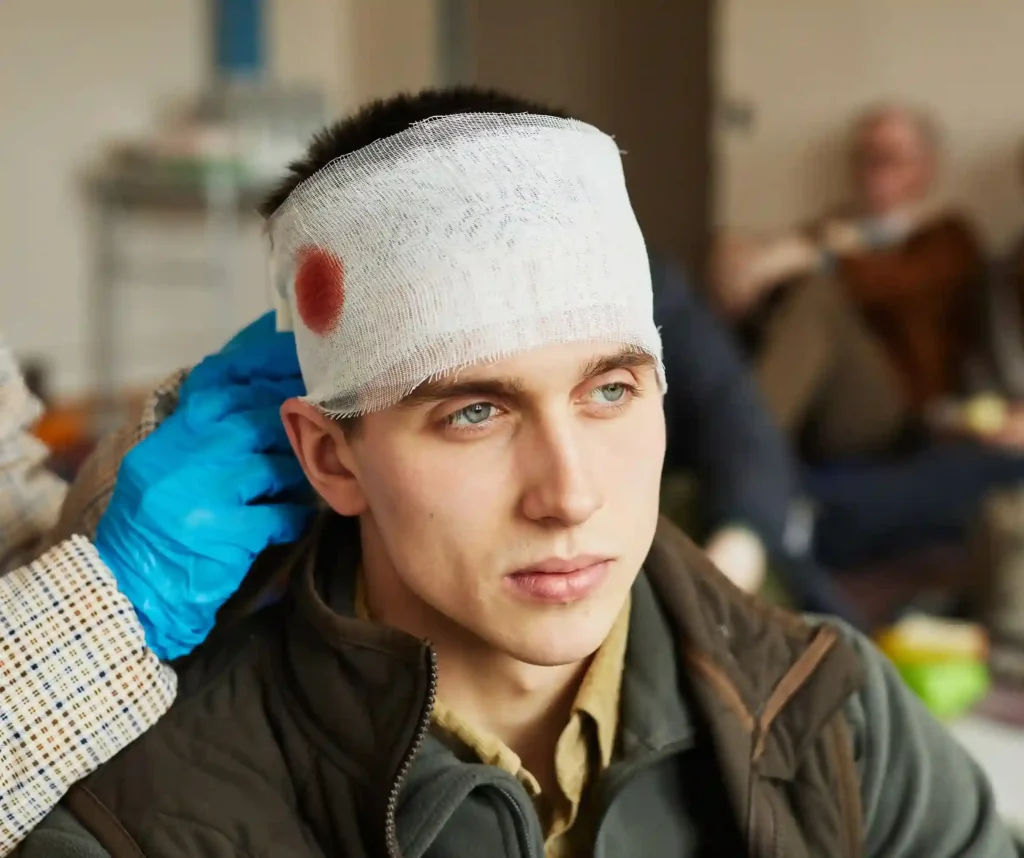
If you’re comparing where to go for a concussion emergency room in Coppell, here’s what sets Coppell ER apart:
For billing queries, contact our billing department at:
Phone: (817) 785-8000
Email: info@aimbillingsolutions.com
Searching for concussion care near me in Coppell? Coppell ER sits onN Denton Tap Road near the Sam Rayburn Tollway, minutes from Coppell, Irving, Carrollton, Grapevine, Las Colinas, and Valley Ranch, with parking right outside the door.
We’re open 24 hours a day, 7 days a week, including every holiday, with on-site imaging ready the moment you walk in. Whether your concussion care near me search is for yourself, your child, or a teammate you’re bringing in, no appointment or referral is needed to be seen.

A head injury that seems fine is still worth a same-day evaluation, especially before anyone heads back to practice, school, or work. The scan takes minutes; a missed bleed does not resolve on its own, and neither does the uncertainty of not knowing.
Coppell ER is open right now, every hour of every day, ready to rule out the emergency and tell you honestly what comes next, no matter what time the hit happened.
Call Now: 469-763-3136
Hours: 24/7/365
Walk-In: Coppell ER | 720 N Denton Tap Rd, Coppell, TX 75019
Headache, confusion, dizziness, nausea, and sensitivity to light or sound are the most common signs of a concussion. Loss of consciousness can happen but isn’t required for a diagnosis, most concussions occur without it.
Not every minor bump needs imaging, but any head injury with loss of consciousness, repeated vomiting, worsening headache, confusion, a seizure, or use of blood thinners should be evaluated with a CT scan the same day.
Not immediately. An ER visit rules out bleeding or fracture, but return-to-play and return-to-school decisions are made gradually over days or weeks by a primary care physician or concussion specialist, not cleared in a single ER visit.
It’s a rare but serious brain swelling reaction that can occur when someone sustains a second concussion before fully recovering from the first. It’s the main reason return-to-play decisions are made carefully and gradually, not the same day as an ER visit.
Urgent care can sometimes manage very minor symptoms, but any head injury with loss of consciousness, repeated vomiting, or worsening symptoms needs a concussion emergency room with on-site CT imaging, which most urgent care clinics don’t have.
That’s common and still counts. Headache, confusion, and mood changes can appear hours or even days after the initial hit. New or worsening symptoms at any point after a head injury are worth a same-day evaluation.
Yes. Walk in any hour without an appointment. We accept most major insurance plans for concussion emergency room visits and every other emergency we treat, and our team can help you understand your coverage before you leave.
Need help?