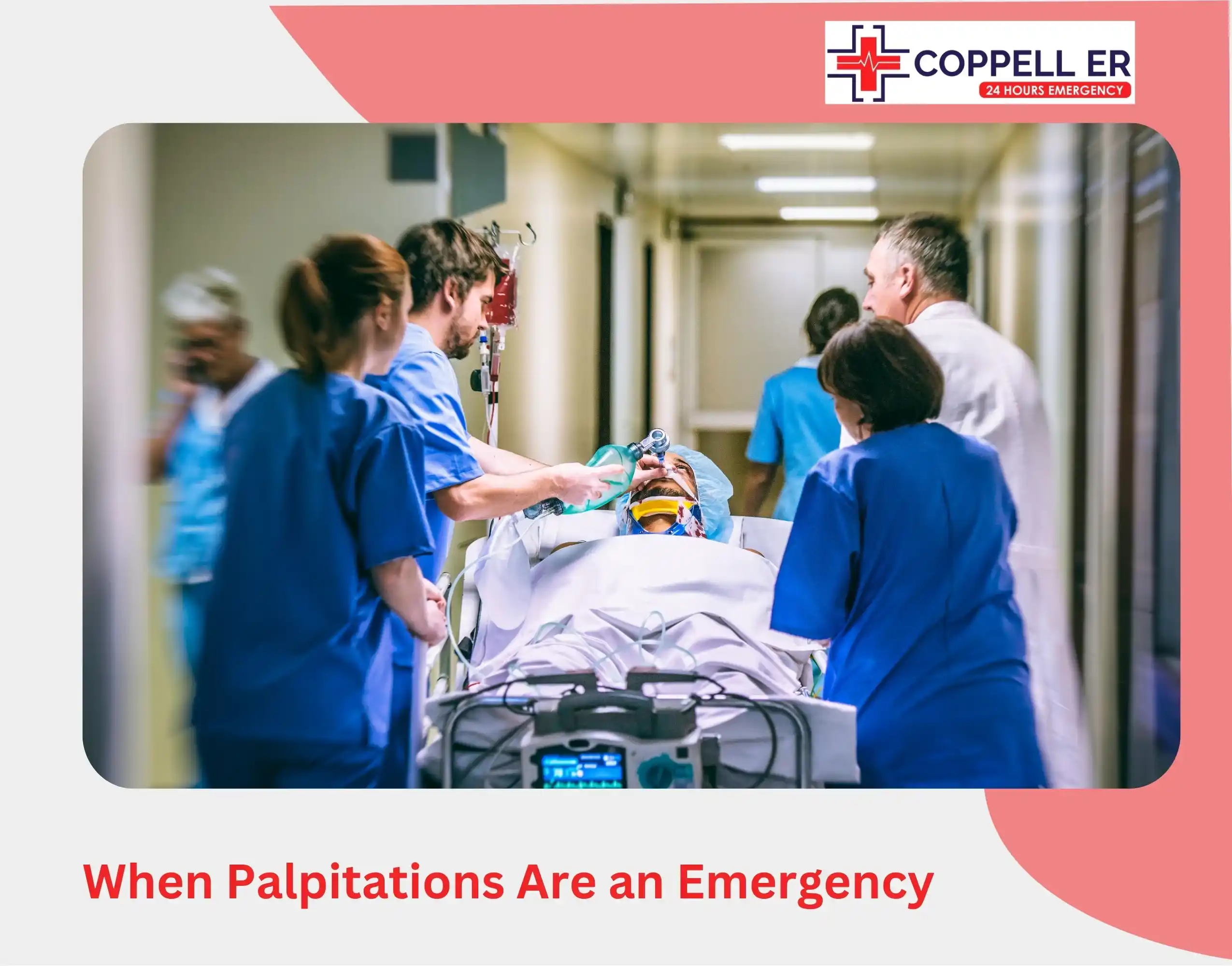
Go to the emergency room for heart palpitations when they’re paired with chest pain, fainting, severe shortness of breath, severe lightheadedness, or a heart rate over 120 beats per minute at rest that won’t slow down. Also, go to the ER for palpitations lasting more than 20 to 30 minutes, palpitations with an irregular pulse, or any palpitations in a person with known heart disease, an implanted defibrillator, or recent stimulant or alcohol use.
Most palpitations are not emergencies. Brief flutters, single skipped beats, fast heartbeats after caffeine or stress that resolve in seconds, these usually need follow-up with a primary care doctor, not the ER. The checklist below sorts out the difference quickly.
The ER Checklist – Go Now If Any Box Below Applies
If even one of these is true, stop reading and go to the ER. If you’re alone and in any way apply, call 911 instead of driving yourself.
| ✋ Call 911 or Go to the ER Immediately |
| ☐ Chest pain, pressure, tightness, or burning |
| ☐ Fainting (passed out) or near-fainting / about to faint |
| ☐ Severe shortness of breath – can’t speak in full sentences |
| ☐ Severe lightheadedness or dizziness |
| ☐ Heart rate over 120 bpm at rest that won’t slow down |
| ☐ Pulse feels irregular or chaotic (“like a fish flopping in your chest”) |
| ☐ Palpitations lasting more than 20-30 minutes |
| ☐ Pain spreading to the jaw, arm, neck, or back |
| ☐ Cold sweat, nausea, or vomiting with palpitations |
| ☐ Sudden severe weakness or confusion |
| ☐ Implanted cardiac device (pacemaker or ICD) firing or alarming |
| ☐ You have known heart disease, prior heart attack, or heart failure |
| ☐ Palpitations after a head injury or accident |
| ☐ A sense of impending doom that feels different from normal worry |
The Doctor Checklist – See Your Doctor Soon (Not the ER)
If you’ve ruled out the emergency list above, these signs still need evaluation, but not tonight in the ER.
| 📅 Schedule with Your Primary Care or Cardiologist |
| ☐ Brief palpitations happening more often than usual |
| ☐ Palpitations that wake you from sleep occasionally |
| ☐ Skipped beats you can feel daily, with no other symptoms |
| ☐ Palpitations that started after a medication change |
| ☐ Palpitations linked to specific foods or alcohol |
| ☐ Palpitations with mild lightheadedness that resolves quickly |
| ☐ Family history of arrhythmia or sudden cardiac death |
| ☐ New or worsening palpitations during pregnancy or perimenopause |
| ☐ Palpitations with known thyroid disease |
| ☐ Anxiety-related palpitations that are interfering with daily life |
The Stay-Home Checklist – Likely Benign
These patterns usually don’t require any urgent care, though it’s still smart to mention them at your next routine checkup.
| ✅ Probably Doesn’t Need Immediate Care |
| ☐ Brief flutter or skipped beat lasting seconds, resolving on its own |
| ☐ Heart racing after a strong coffee or energy drink |
| ☐ Heart pounding after intense exercise or running up stairs |
| ☐ Palpitations during a panic episode that resolve when calmed |
| ☐ Heart racing after a missed meal or dehydration |
| ☐ Occasional skipped beats with no other symptoms in an otherwise healthy person |
| ☐ Heart pounding after a fight, scare, or strong emotion |
What Heart Palpitations Actually Are
“Palpitations” is the medical term for any noticeable awareness of your heartbeat. Most people barely feel their hearts beating in daily life. When you do feel it, racing, pounding, fluttering, or skipping, that’s a palpitation.
Common Ways People Describe Them
- “My heart is racing”
- “It feels like a hiccup in my chest”
- “My heart is pounding so hard I can see my shirt move”
- “It feels like a fish flopping in my chest”
- “My heart is fluttering”
- “It skipped a beat” or “It paused”
Normal Heart Rate Numbers
- Resting heart rate: 60 to 100 beats per minute (bpm)
- Below 60 (bradycardia): can be normal in athletes; concerning if it causes lightheadedness or fainting
- Above 100 at rest (tachycardia): always worth investigating, especially if sustained
- Above 150 sustained: concerning regardless of cause
- Above 170 sustained: typically warrants ER evaluation
| 📌 How to Check Your Own Pulse
Place two fingers (not your thumb) on the inside of your wrist below the base of your thumb, or on the side of your neck just under the jaw. Count the beats for 30 seconds and double it. Note whether the rhythm feels regular (steady) or irregular (chaotic, like a drum solo). |
The Specific Arrhythmias Behind Palpitations
Not all palpitations are the same. Understanding the specific rhythm problem helps clarify which type sends people to the ER.
PVCs (Premature Ventricular Contractions)
Extra heartbeats from the lower chambers of the heart. Patients often describe these as a “hiccup” or a “skipped beat” followed by a pause and a forceful thump. PVCs are extremely common in healthy people. A few per day is normal. Frequent PVCs (especially many per minute) need evaluation but rarely require ER care unless paired with other symptoms.
PACs (Premature Atrial Contractions)
Same idea, but originating from the upper chambers. Also typically benign. Often triggered by caffeine, alcohol, stress, or fatigue.
Supraventricular Tachycardia (SVT)
Sudden rapid heartbeat starting in the upper chambers, often racing 150-250 bpm. People typically describe SVT as “heart racing out of nowhere” that starts and stops suddenly. SVT episodes can last minutes to hours and are highly treatable.
When to ER: SVT episode that lasts more than 20-30 minutes, doesn’t stop with rest, or is paired with chest pain, fainting, or breathing difficulty.
Atrial Fibrillation (AFib)
The most common arrhythmia in adults, particularly older adults. The upper chambers of the heart quiver instead of beating in rhythm, creating a fast, irregular pulse. AFib can come and go (paroxysmal) or be persistent.
AFib matters because it dramatically increases stroke risk, blood pools in the quivering upper chambers, and can form clots. Common symptoms include irregular pounding heartbeat, fatigue, shortness of breath, and reduced exercise tolerance.
When to ER: New-onset AFib, AFib episode lasting hours, AFib with chest pain or severe shortness of breath, AFib with very fast rate (over 110–120 at rest).
Ventricular Tachycardia (VT)
Rapid heartbeat originating from the lower chambers, typically 170+ bpm. VT lasting more than 30 seconds is called sustained VT and can be life-threatening. It can degenerate into ventricular fibrillation, a chaotic rhythm that causes cardiac arrest.
When to ER: Always, if VT is suspected. People with known heart disease are at higher risk. VT often requires medication or cardioversion (a controlled electrical shock that resets the rhythm).
Bradyarrhythmias (Slow Rhythms)
Heart rates under 60 can be normal in trained athletes. But if a slow heart rate causes lightheadedness, fainting, severe fatigue, or shortness of breath, evaluation is needed. Severe bradycardia sometimes requires a pacemaker.
Common Benign Causes of Palpitations
Before assuming the worst, it’s worth knowing how often palpitations come from completely treatable, non-cardiac sources.
Stimulants and Substances
- Caffeine (coffee, tea, energy drinks, soda, chocolate)
- Nicotine and vaping
- Alcohol, especially binge drinking (“holiday heart syndrome”)
- Decongestants like pseudoephedrine
- Some asthma inhalers (beta-agonists)
- Diet pills and weight-loss supplements
- Recreational stimulants (cocaine, amphetamines, methamphetamine)
Lifestyle Triggers
- Stress and anxiety
- Panic attacks
- Dehydration
- Lack of sleep
- Hard exercise
- Strong emotions (fear, anger, excitement)
- Large meals, especially high in carbs or sugar
Hormonal Causes
- Pregnancy
- Perimenopause and menopause
- Menstrual cycle changes
- Overactive thyroid (hyperthyroidism)
- Hot flashes
Medical Conditions
- Anemia
- Low blood sugar
- Electrolyte imbalances (low potassium or magnesium)
- Fever
- Dehydration from illness
- Side effects of various medications
Who Should Have a Lower Threshold for the ER
Some patients need to take palpitations more seriously than the average healthy adult. If any of these apply to you, lean toward going in rather than waiting it out.
- Prior heart attack or known coronary artery disease
- Heart failure or cardiomyopathy
- Valve disease
- Implanted pacemaker or defibrillator
- History of arrhythmia (AFib, SVT, VT)
- Family history of sudden cardiac death or unexplained drowning at young age
- Recent cardiac surgery
- Stroke history (AFib must be ruled out)
- Diabetes with cardiac complications
- Severe untreated sleep apnea
- Active cancer treatment (some chemotherapy drugs affect the heart)
- Severe thyroid disease (untreated)
- Long QT syndrome or other inherited rhythm disorders
What to Do During a Palpitation Episode
If you’re having palpitations right now and they’re not yet at the ER level, here’s what to do.
Step 1: Sit or Lie Down
Get to a safe spot. If you feel faint or lightheaded, lying down with your legs elevated helps blood return to your heart and brain. Do not stand or walk around if you feel woozy; you could fall.
Step 2: Check Your Pulse
Place two fingers on your wrist or neck. Count beats for 30 seconds and double the number. Note whether the rhythm feels regular or chaotic. Write down the rate if you can; this information helps the ER if you end up going.
Step 3: Try Slow, Deep Breathing
Breathe in slowly through your nose for 4 seconds, hold for 2, exhale slowly through pursed lips for 6 seconds. This activates the vagus nerve, which can slow some arrhythmias and reduce anxiety-driven palpitations.
Step 4: Try a Vagal Maneuver (If Trained To)
Bearing down (like you’re having a bowel movement), splashing cold water on your face, or coughing forcefully can sometimes break an SVT episode. Don’t try carotid sinus massage on yourself, that requires medical training.
Step 5: Hydrate
Drink a glass of water. Dehydration is a surprisingly common palpitation trigger.
Step 6: Stop Stimulants
No more coffee, energy drinks, nicotine, or alcohol while symptoms are active.
Step 7: Time the Episode
Note when symptoms started. If they last more than 20-30 minutes, or if any emergency signs appear, go to the ER.
| 🚨 Episode Lasting Over 30 Minutes or Getting Worse?
Coppell ER is open 24/7 with EKG, cardiac monitoring, blood work, and echocardiogram on-site. We can identify the rhythm and treat it — sometimes with medication, sometimes with safe controlled cardioversion. Walk in or call 469-763-3136. 720 N Denton Tap Rd. |
What the ER Does for Palpitations

Knowing what to expect can reduce the anxiety of going in. Here’s what happens when you arrive at Coppell ER for palpitations.
Immediate Assessment (First 5-10 Minutes)
- Vital signs (heart rate, blood pressure, oxygen, temperature)
- 12-lead EKG within minutes; this is the single most important test
- Cardiac monitoring on a continuous telemetry system
- Brief medical history and review of symptoms
Standard Workup
- Blood tests, troponin (heart damage marker), electrolytes, thyroid function, complete blood count
- Chest X-ray to evaluate heart size and lung status
- Sometimes, an echocardiogram is used to examine heart structure and function
- D-dimer if pulmonary embolism is being considered
If an Arrhythmia Is Active
- Medications to slow the rate (beta-blockers, calcium channel blockers)
- Medications to restore normal rhythm (antiarrhythmics)
- Adenosine for SVT (a short-acting medication that briefly resets the heart)
- Cardioversion if the rhythm is unstable, a brief controlled electrical shock under sedation
- Anticoagulation if AFib is confirmed and the stroke risk is high
If Tests Are Normal
This is actually the most common outcome; most palpitations either resolve before you arrive or aren’t dangerous enough to detect at that moment. The ER physician will typically:
- Confirm no acute danger and discharge you safely
- Recommend follow-up with a cardiologist or electrophysiologist
- Prescribe a Holter monitor (24-72 hour wearable EKG) or event recorder for longer monitoring
- Identify and counsel on potential triggers
- Provide instructions on what would warrant a return visit
Why Coppell ER for Palpitations

Coppell ER is a freestanding emergency room, not urgent care. The difference matters with palpitations because we have everything needed to evaluate cardiac rhythm problems on-site, 24/7.
Why Patients Choose Coppell ER
- Open 24/7, palpitations don’t follow office hours
- Walk straight to an exam room, most patients are seen within minutes
- Minimal-to-zero wait times
- Board-certified ER physicians on every shift
- EKG, troponin, echocardiogram, full lab work, and cardiac monitoring all on-site
- Can perform medication management and supervised cardioversion when indicated
- Hospital-grade equipment in a private-practice setting
- In-house billing team and a no-surprise-billing policy
- Most commercial insurance plans accepted (Medicare, Medicaid, and Tri-Care are not accepted)
ER vs Urgent Care for Palpitations
Urgent care can do an EKG. But if the EKG shows AFib, SVT, or another concerning rhythm, urgent care will send you to an ER for management. Going directly to a freestanding ER like Coppell ER skips that step entirely and gets you to definitive care faster.
Frequently Asked Questions
Q: Should I go to the ER for a single skipped heartbeat?
Probably not. Occasional skipped beats, usually PVCs or PACs, are extremely common in healthy people. They don’t typically need ER evaluation unless they happen frequently, last longer than seconds, or come with chest pain, fainting, or shortness of breath.
Q: How long should palpitations last before I go to the ER?
Sustained palpitations lasting more than 20-30 minutes generally warrant ER evaluation, even without other symptoms. Episodes lasting only seconds or a few minutes that resolve on their own usually don’t need ER care, but should be discussed with a doctor if they recur.
Q: At what heart rate should I go to the ER?
A sustained resting heart rate over 120 bpm that won’t slow down warrants ER evaluation. Above 150 sustained is more urgent. Rates above 170, especially with symptoms, typically need immediate emergency care. Your normal resting heart rate is usually 60-100 bpm.
Q: Can anxiety cause heart palpitations strong enough to feel like an emergency?
Yes, and that’s exactly why anxiety is a diagnosis of exclusion. Panic-related palpitations can feel terrifying, and the symptoms (racing heart, chest tightness, sweating, doom) overlap heavily with cardiac emergencies. ER physicians confirm anxiety only after ruling out heart problems. A first-time severe episode should always be evaluated.
Q: Are palpitations during pregnancy normal?
Some palpitations during pregnancy are common and benign, blood volume increases significantly, and the heart works harder. But pregnancy doesn’t make you immune to arrhythmias. Palpitations with chest pain, severe shortness of breath, dizziness, fainting, or sustained rapid rate need ER evaluation.
Q: Can dehydration cause heart palpitations?
Yes. Dehydration reduces blood volume, forcing the heart to beat faster to maintain circulation. This is a common, easily fixed cause of palpitations. Drink water and rest. If symptoms don’t resolve after rehydrating, get evaluated.
Q: Can I drive myself to the ER for palpitations?
If your only symptom is palpitations and you feel otherwise stable, yes. If you’re lightheaded, having chest pain, short of breath, sweating, or feeling faint, no. Call 911 or have someone drive you. Driving while symptomatic risks an accident.
Q: Will the ER find anything if my palpitations stop before I arrive?
Possibly not on the EKG at the moment of arrival, but that doesn’t mean the visit is wasted. The ER will check for signs of recent rhythm disturbance, evaluate blood work for electrolyte or cardiac damage markers, and arrange follow-up monitoring (like a Holter monitor) to catch episodes when they happen. Many people are referred to a cardiologist after their ER visit, even with a normal initial EKG.
Q: Will I get cardioverted (shocked) when I come in for palpitations?
Rarely. Cardioversion is reserved for unstable rhythms that aren’t responding to medication, or for selected AFib cases. The vast majority of palpitation visits are managed without it. When cardioversion is needed, patients are sedated so they don’t feel the shock.
| Need Answers Now?
Call Coppell ER: 469-763-3136 • Walk in: 720 N Denton Tap Rd, Coppell, TX 75019 • Open 24/7 • EKG, cardiac monitoring, and ER physicians on-site. If symptoms are severe — call 911 first. |