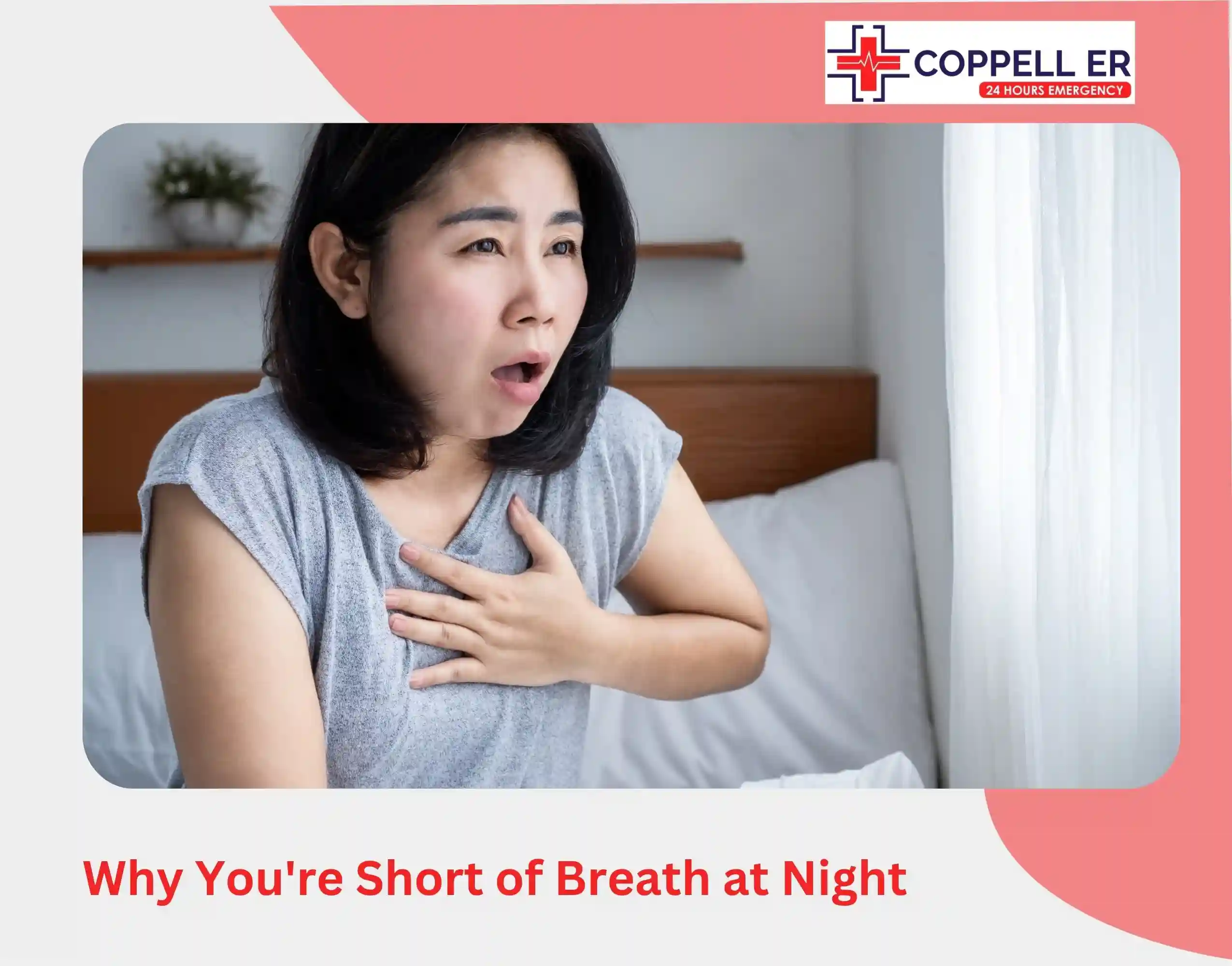
Shortness of breath at night is most often caused by heart failure, asthma, sleep apnea, COPD, GERD-related airway spasm, anxiety, or allergic reactions to bedroom triggers like dust mites or pet dander. The most serious of these is heart failure, which can cause a frightening symptom called paroxysmal nocturnal dyspnea (PND), sudden, severe shortness of breath that wakes you up 1 to 3 hours after falling asleep.
Waking up gasping for air is not normal. Even if it happens only occasionally, it deserves medical evaluation. Sudden severe shortness of breath that doesn’t improve when sitting up, chest pain, bluish lips, or coughing up pink frothy fluid means call 911, do not wait for morning.
| 📌 Key Medical Terms
Orthopnea = shortness of breath when lying flat, relieved by sitting up. Paroxysmal Nocturnal Dyspnea (PND) = sudden severe breathlessness that wakes you from sleep. Both are classic warning signs of heart failure and require evaluation. |
1. Why Nighttime Makes Breathing Harder
Your body works differently when you lie down to sleep. A few changes happen that can transform a problem you barely notice during the day into a frightening nighttime symptom.
Fluid Redistribution
When you stand or sit, gravity pulls fluid toward your legs. When you lie flat, that fluid redistributes, including back toward your lungs and heart. In a healthy person, this is no big deal. In someone with mild heart failure, it can flood the lungs enough to cause shortness of breath.
Increased Vagal Tone
Your parasympathetic nervous system becomes more active during sleep. For people with asthma, this means airways narrow naturally at night, making symptoms predictably worse in the early morning hours.
Reduced Airway Clearance
Mucus and postnasal drip drain less effectively when you’re horizontal. Acid reflux is also more likely when lying down, and reflux can trigger airway spasm.
Sleep-Stage Effects
During REM sleep, your breathing muscles temporarily go slack. People with sleep apnea, COPD, or neuromuscular conditions are most vulnerable during these periods.
The takeaway: nighttime shortness of breath isn’t random. It’s usually a sign that an underlying condition is being unmasked or made worse by the physiology of sleep.
2. Cardiac Causes – The Most Serious
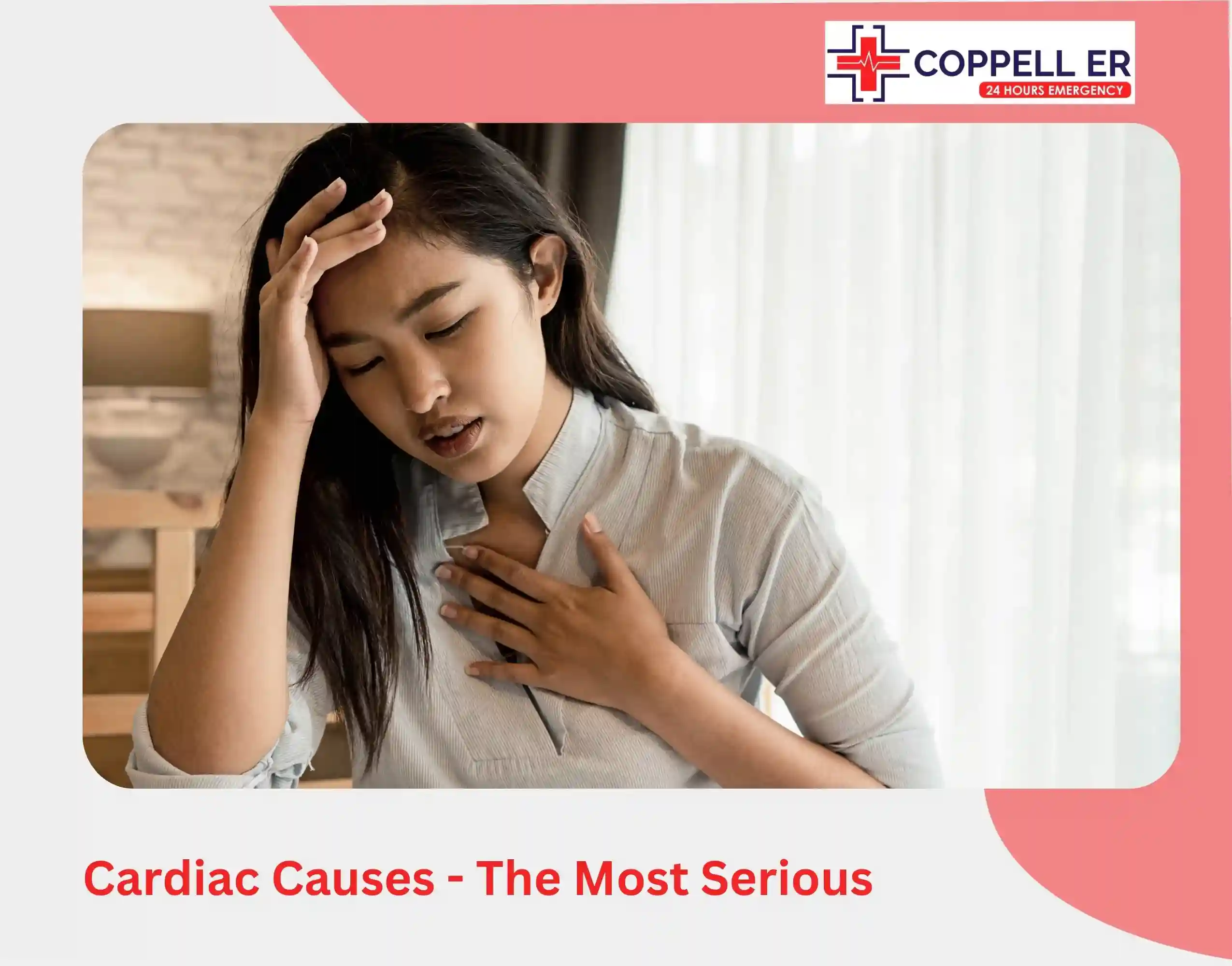
Heart-related causes of nighttime shortness of breath sit at the top of the worry list. They’re not the most common cause, but they’re the most dangerous to miss.
Congestive Heart Failure
In heart failure, the heart can’t pump blood efficiently. Fluid backs up, first into the lungs, then sometimes into the legs and abdomen. When you lie down, that lung fluid distributes differently and triggers breathlessness.
Classic heart failure warning signs:
- Shortness of breath when lying flat (orthopnea), needing 2+ pillows to sleep comfortably
- Waking up gasping 1-3 hours after falling asleep (paroxysmal nocturnal dyspnea)
- Swelling in legs, ankles, or feet
- Persistent cough, sometimes with pink frothy sputum
- Reduced exercise tolerance
- Fatigue out of proportion to activity
- Rapid weight gain (fluid retention)
Paroxysmal Nocturnal Dyspnea (PND)
PND deserves its own mention. It’s a specific, distinctive symptom, sudden severe breathlessness that jolts you from sleep, usually 1 to 3 hours after lying down. People typically sit bolt upright, walk to a window, or stand up to breathe. Relief comes after 15 to 30 minutes.
PND is most strongly associated with heart failure but can also occur with severe sleep apnea or COPD. It is almost never benign and always warrants medical evaluation.
Heart Attack and Acute Coronary Syndrome
Heart attacks don’t always present with classic chest pain. In women, older adults, and diabetics, shortness of breath is sometimes the only symptom, and it can come on at night. New, unexplained shortness of breath with chest pressure, jaw or arm pain, sweating, or nausea is a 911-level emergency.
Atrial Fibrillation
An irregular, often rapid heartbeat that can cause sudden shortness of breath, palpitations, and chest discomfort, sometimes most noticeable at night when you’re still and aware of your heartbeat. AFib raises the risk of stroke and needs evaluation.
| 🚨 Gasping for Air With Chest Pain, Pink Frothy Cough, or Bluish Lips?
Call 911 immediately. If you can safely reach us, Coppell ER is open 24/7 at 720 N Denton Tap Rd. Hospital-grade CT, EKG, echocardiogram, and cardiac markers on-site. Call 469-763-3136. |
3. Pulmonary Causes – Lung-Related Triggers
Many people who wake up short of breath have a lung condition, not a heart problem. Here are the most common lung-related causes.
Asthma
Asthma symptoms are notoriously worse at night. This is so consistent it has a name: nocturnal asthma. Airways naturally narrow in the early morning hours due to circadian rhythm changes in airway reactivity, hormone levels, and inflammation.
Suspect asthma if you have:
- Wheezing or whistling on exhale
- Coughing fits at night
- Chest tightness in the early morning hours
- Symptoms triggered by cold air, exercise, or allergens
- Improvement with rescue inhaler
Chronic Obstructive Pulmonary Disease (COPD)
COPD, usually caused by long-term smoking, can cause worsening shortness of breath when lying flat. COPD flare-ups (exacerbations) often present with sudden worsening of breathing and need emergency care.
Pulmonary Embolism (Blood Clot in the Lung)
A pulmonary embolism can cause sudden severe shortness of breath at any time, including at night. It’s a true emergency. Warning signs:
- Sudden onset of breathlessness
- Sharp chest pain, worse with deep breathing
- Rapid heartbeat
- Coughing up blood
- Leg pain or swelling (a clot may have traveled from your leg)
- Risk factors: recent surgery, long travel, hormone therapy, pregnancy, prior clots
Pneumonia
Lung infections often worsen at night when you’re horizontal. Symptoms include fever, productive cough, chest pain with breathing, and shortness of breath. Older adults and immunocompromised patients can develop pneumonia with surprisingly few symptoms.
Pleural Effusion
Fluid accumulation between the lung and chest wall. Common causes include heart failure, pneumonia, and cancer. Worse when lying down on the affected side. Diagnosed with chest imaging.
4. Sleep-Related Causes
Some causes of nighttime breathing problems are specific to sleep itself, they don’t happen any other time.
Obstructive Sleep Apnea (OSA)
The most common sleep-related breathing disorder. The throat muscles relax during sleep and block the airway. Breathing stops repeatedly throughout the night, often without the person being fully aware. Common warning signs:
- Loud snoring (a partner usually notices first)
- Witnessed pauses in breathing during sleep
- Waking up gasping or choking
- Excessive daytime sleepiness
- Morning headaches
- Dry mouth on waking
- Difficulty concentrating
OSA dramatically increases the risk of high blood pressure, heart disease, stroke, and atrial fibrillation. It’s also commonly missed. Anyone with these symptoms should be referred for a sleep study.
Central Sleep Apnea
Less common. Here the brain temporarily stops sending signals to the breathing muscles. Often associated with heart failure, stroke, or certain medications (opioids). Treatment differs from OSA.
Sleep Apnea vs PND – The Key Difference
Both can wake you up gasping. The clinical difference: with sleep apnea, breathing returns to normal almost immediately once you wake. With PND from heart failure, the breathlessness persists for 15 to 30 minutes after you sit up. Sleep apnea episodes also tend to happen multiple times per night; PND usually occurs once. A sleep study and cardiac evaluation can distinguish them definitively.
5. Reflux and GI Causes
Stomach acid is a more common cause of nighttime breathing trouble than most people realize.
GERD-Induced Bronchospasm
When stomach acid rises into the esophagus or back of the throat, easier when lying down, it can trigger spasm in the airways. This causes shortness of breath, coughing, choking, and sometimes wheezing. Many people don’t have classic heartburn, which makes the connection easy to miss.
Clues that reflux is the cause:
- Symptoms worse after late, large, fatty, or spicy meals
- Better when sleeping with the head elevated
- Sour taste, hoarseness, or throat clearing on waking
- Heartburn (sometimes – not always)
- Symptoms improve with acid-reducing medication
Treatment includes dietary changes, weight management if relevant, avoiding meals within 3 hours of bedtime, and proton pump inhibitors.
6. Anxiety, Panic, and Hyperventilation
Anxiety can absolutely cause real shortness of breath. The physical sensation is genuine, not imagined.
Panic Attacks
Panic attacks can wake you from sleep, called nocturnal panic attacks. Symptoms include:
- Sudden intense shortness of breath
- Rapid heartbeat
- Chest tightness
- Sense of doom or losing control
- Sweating, trembling, lightheadedness
- Tingling in hands or around the mouth
How to Tell Panic Apart From Cardiac or Pulmonary Causes
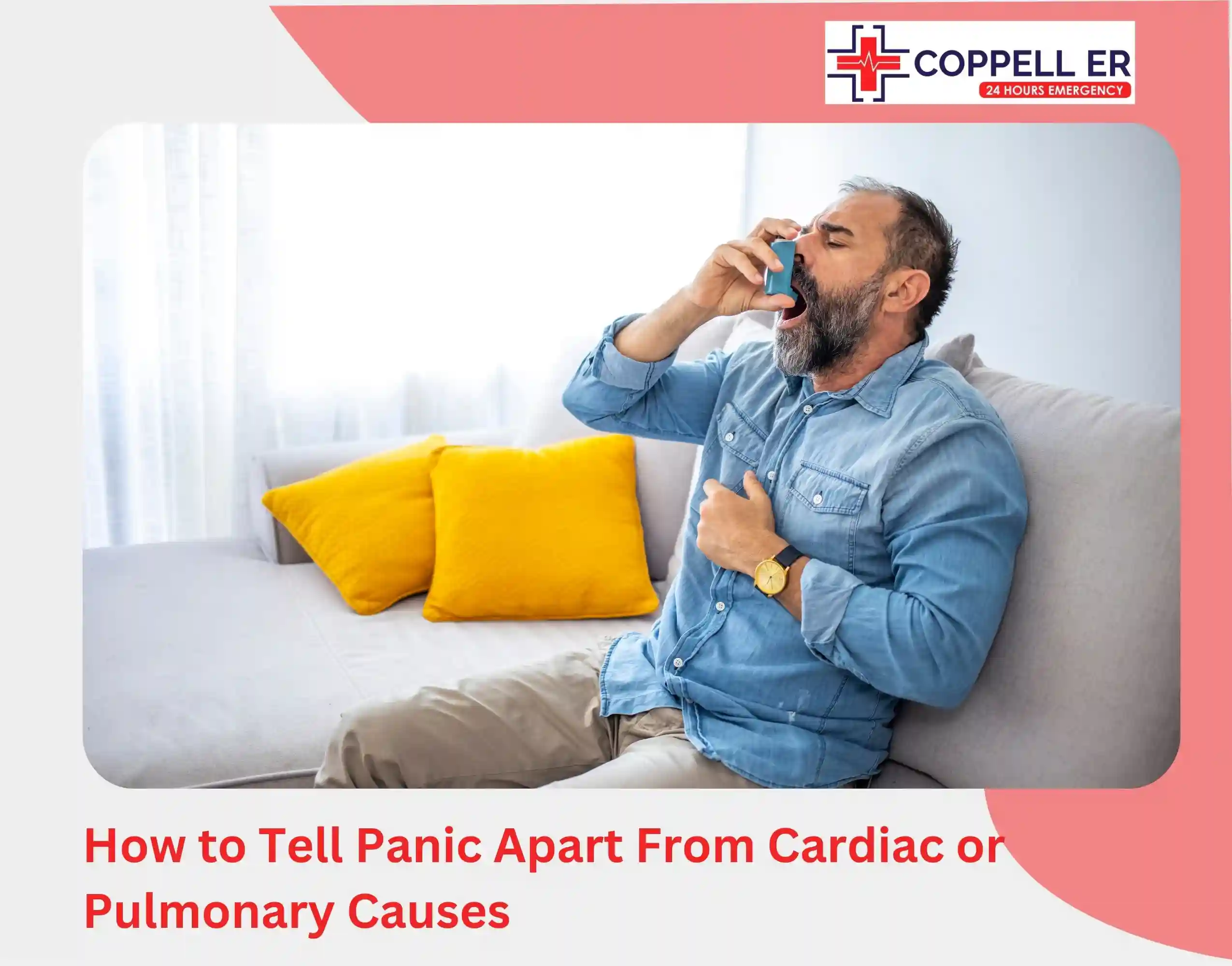
This is hard to do at home, and the safe rule is: if you can’t tell, get evaluated. That said, some differences:
- Panic attacks usually peak within 10 minutes and resolve in under an hour
- Cardiac causes often don’t fully resolve without medical intervention
- Panic is typically not relieved or worsened by changing position; PND from heart failure is dramatically relieved by sitting upright
- Panic often comes with intense emotional symptoms (sense of doom); heart attacks are more often a heavy pressure
7. Allergic and Environmental Causes
Sometimes the cause is hiding in plain sight, in your bedroom.
Dust Mites
Microscopic creatures that thrive in mattresses, pillows, and bedding. A leading trigger of nighttime asthma and allergic rhinitis. Symptoms include sneezing, congestion, postnasal drip, and worsening breathing overnight.
Pet Dander
Pets sleeping in the bedroom, or even just in the house, shed dander that triggers allergic airway inflammation. Symptoms often peak at night.
Mold
Bathroom, basement, and HVAC mold can release spores that trigger respiratory symptoms. Symptoms worse at home, better when traveling, are a classic clue.
Pollen and Outdoor Allergens
North Texas has notably high allergen counts. Cedar fever in winter, oak pollen in spring, ragweed and grasses in summer and fall. Symptoms typically come with sneezing, itchy eyes, and nasal congestion.
Indoor Air Quality
Dry air, dust, chemical fumes from cleaning products, and strong fragrances can all irritate airways and trigger nighttime symptoms.
Practical fixes:
- Wash bedding in hot water weekly
- Use dust-mite-proof mattress and pillow covers
- Keep pets out of the bedroom
- Run a HEPA air purifier
- Replace HVAC filters regularly
- Use a humidifier in dry conditions, dehumidifier in damp ones
8. How the Major Causes Differ
Use this table to compare patterns. It’s not a substitute for medical evaluation, only a tool to recognize which type of cause your symptoms most resemble.
| Heart Failure (PND) | Asthma | Sleep Apnea | |
| Timing | 1–3 hours after falling asleep | Early morning hours (3–5 AM) | Multiple times per night |
| Onset | Sudden, severe | Gradual, with cough and wheeze | Sudden gasping, may snore loudly |
| Relieved by sitting up? | Yes, dramatically | Partially | Returns to normal when awake |
| Other clues | Leg swelling, fatigue, weight gain | Wheezing, chest tightness, cough | Snoring, daytime fatigue, headaches |
| Duration of episode | 15–30 minutes or longer | Variable, may persist hours | Seconds once awake |
9. When Nighttime Shortness of Breath Is an Emergency
These symptoms mean don’t wait. Call 911 or come straight to the ER.
Call 911 Immediately If You Have:
- Severe shortness of breath that doesn’t improve with sitting up
- Chest pain or pressure
- Pink, frothy sputum coughed up from the lungs
- Bluish lips, fingertips, or face
- Confusion or extreme drowsiness
- Coughing up blood
- Sudden severe shortness of breath with a sense of impending doom
- Breathing trouble paired with arm, jaw, or back pain
- Suddenly can’t speak in full sentences because of breathlessness
- Severe wheezing with no improvement from rescue inhaler
Go to Coppell ER As Soon As Possible If You Have:
- Repeated episodes of waking up short of breath
- Needing more pillows than usual to sleep comfortably
- Leg or ankle swelling along with night breathlessness
- New shortness of breath in a previously healthy person
- Worsening shortness of breath despite using your usual medications
- Sleep apnea symptoms with associated fatigue, high blood pressure, or AFib
Worth Scheduling a Doctor’s Appointment Soon For:
- Snoring with witnessed pauses in breathing
- Allergic-pattern symptoms specific to your bedroom
- Reflux symptoms with mild nighttime breathing trouble
- Recurring panic attacks
10. What Coppell ER Does for Nighttime Shortness of Breath
Nighttime shortness of breath can be heart, lung, or something else, and you can’t always tell which. A freestanding emergency room like Coppell ER can rule out the dangerous causes in a single visit, often within an hour.
Diagnostic Tools On-Site, 24/7
- EKG and cardiac markers to rule out heart attack and AFib
- Echocardiogram (echo) for heart structure and function
- Chest X-ray and CT to assess the lungs
- Blood work including BNP (a heart failure marker), troponin, D-dimer (clot screening), and complete blood count
- Pulse oximetry and arterial blood gas measurements
- Rapid testing for flu, COVID-19, RSV
- Ultrasound for clot evaluation in the legs
On-Site Treatment
- Supplemental oxygen
- Nebulizer treatments for asthma and COPD
- IV diuretics for fluid overload from heart failure
- IV antibiotics for pneumonia
- Anticoagulation for confirmed blood clots
- Cardiac monitoring
- Stabilization and coordination with hospital admission when needed
Why Coppell ER
- Open 24/7 — most people develop these symptoms at night
- No appointment, walk straight to an exam room
- Minimal-to-zero wait times
- Board-certified ER physicians on every shift
- Hospital-grade equipment in a private-practice setting
- In-house billing team and no-surprise-billing policy
- Most commercial insurance plans accepted (Medicare, Medicaid, and Tri-Care are not accepted)
| Don’t Wait Until Morning
Nighttime breathing problems need answers tonight. Coppell ER is open 24/7 at 720 N Denton Tap Rd, Coppell, TX. Walk in or call 469-763-3136. |
11. Frequently Asked Questions
Q: Why do I wake up gasping for air?
The most common causes are sleep apnea (especially obstructive), heart failure with paroxysmal nocturnal dyspnea, asthma, GERD-induced airway spasm, anxiety, and nasal congestion. Any episode of waking up gasping deserves medical evaluation — even if it only happens once, and especially if it recurs.
Q: Is shortness of breath at night a sign of heart failure?
It can be. Heart failure causes two characteristic nighttime symptoms: orthopnea (shortness of breath lying flat, relieved by sitting up) and paroxysmal nocturnal dyspnea (sudden severe breathlessness 1–3 hours after falling asleep). Both warrant a cardiac workup including BNP testing and an echocardiogram.
Q: Why does shortness of breath improve when I sit up?
Sitting up uses gravity to pull lung fluid downward and away from the airways, and it reduces venous return to the heart. People with heart failure or fluid overload feel dramatically better sitting up — this is one of the most reliable signs of a cardiac cause.
Q: Can anxiety cause shortness of breath at night?
Yes. Nocturnal panic attacks can wake you with sudden breathlessness, chest tightness, racing heart, and a sense of doom. But anxiety is a diagnosis of exclusion — meaning doctors must rule out heart and lung causes first. A first-time episode of nighttime shortness of breath should always be medically evaluated.
Q: What’s the difference between sleep apnea and PND?
Sleep apnea causes repeated nighttime awakenings — sometimes dozens per night — that resolve almost immediately once you’re awake. PND causes one severe episode that persists 15 to 30 minutes after sitting up. Sleep apnea is usually associated with loud snoring and daytime sleepiness; PND is more associated with leg swelling, persistent fatigue, and other heart failure signs.
Q: Should I sleep with my head elevated if I’m short of breath at night?
Elevating your head can provide temporary relief for many causes — GERD, mild heart failure, postnasal drip, sleep apnea. But if you need elevation to breathe comfortably, that itself is a medical symptom (orthopnea) and warrants evaluation. Don’t simply work around it long-term.
Q: When should I go to the ER for shortness of breath at night?
Immediately if you have severe shortness of breath that doesn’t improve with sitting up, chest pain, pink frothy cough, bluish lips, confusion, coughing up blood, or breathing trouble paired with jaw, arm, or back pain. These signs can indicate heart attack, pulmonary embolism, severe heart failure, or asthma emergency.
Q: Can acid reflux really cause shortness of breath?
Yes. Stomach acid can rise into the throat and airway — especially when lying down — and trigger airway spasm, cough, and shortness of breath. Many GERD patients don’t have classic heartburn, which is why this connection is often missed. Treatment with acid-reducing medication and sleeping with the head elevated typically resolves it.
Q: How do I tell if my nighttime breathing problem is heart, lung, or something else?
You usually can’t reliably tell at home — and that’s the entire problem with this symptom. The patterns in this article are guides, not diagnoses. Heart, lung, sleep apnea, GERD, and anxiety can all present similarly. A proper workup with EKG, chest imaging, blood tests, and sometimes an echocardiogram or sleep study sorts it out.
The Bottom Line
Shortness of breath at night isn’t something to file under “weird thing that happened.” It can be the first sign of heart failure, sleep apnea, asthma, a blood clot, or a heart attack. It can also be reflux or anxiety — both treatable, but only after the dangerous causes have been ruled out.
If your episode tonight came with chest pain, didn’t improve when you sat up, made you cough up pink frothy fluid, or left you with bluish lips — that’s an emergency. Call 911 or come straight to Coppell ER. For repeated less-dramatic episodes, schedule a workup soon. Nighttime breathing problems get worse, not better, when ignored.
| Need Care Tonight?
Call Coppell ER: 469-763-3136 • Walk in: 720 N Denton Tap Rd, Coppell, TX 75019 • Open 24/7 • No appointment, no wait. |