A Vibrio vulnificus infection is rare, but it moves fast and it can kill. The bacteria live in warm coastal water and raw shellfish, and most years the Gulf Coast sees a cluster of serious cases, with 2025 setting records in Louisiana and Florida.
The stakes are real: about 1 in 5 people with this infection die, sometimes within a day or two of becoming ill. Knowing the two ways you catch it, and the warning signs, is what turns a deadly infection into a survivable one.
What Is Vibrio Vulnificus and Where Does It Come From?
Vibrio vulnificus is a bacterium that lives naturally in warm, brackish seawater, the kind found where rivers meet the ocean along the Gulf Coast. Most people get sick between May and October, when water temperatures are warmer. It does not spread from person to person, so you cannot catch a Vibrio vulnificus infection from someone who has one.
For inland Texans, the exposure usually happens elsewhere. A weekend on the coast, a plate of raw oysters, or a cut that met seawater can all plant the infection, with symptoms surfacing after you are back home. That gap between exposure and illness is exactly why the bacteria are easy to overlook, and why telling a doctor about recent coastal contact matters so much.
How Do You Get a Vibrio Vulnificus Infection?
There are two ways to get a Vibrio vulnificus infection, and they cause different problems. Eating raw or undercooked shellfish, especially oysters, is the most common route, but an open wound exposed to salt or brackish water is the other.
- Eating it. Raw or undercooked oysters and other shellfish carry the bacteria, which can cause seafood poisoning symptoms in the gut and, in vulnerable people, spread to the bloodstream.
- Through a wound. Seawater, brackish water, or even raw seafood drippings meeting an open cut, scrape, new tattoo, or piercing can cause a fast-moving wound infection.
One detail shapes everything that follows. The incubation period is short, and it can take only a few hours for the bacteria to spread from the gut to the blood. With Vibrio, time is not on your side.
What Are the Symptoms of Vibrio Vulnificus?
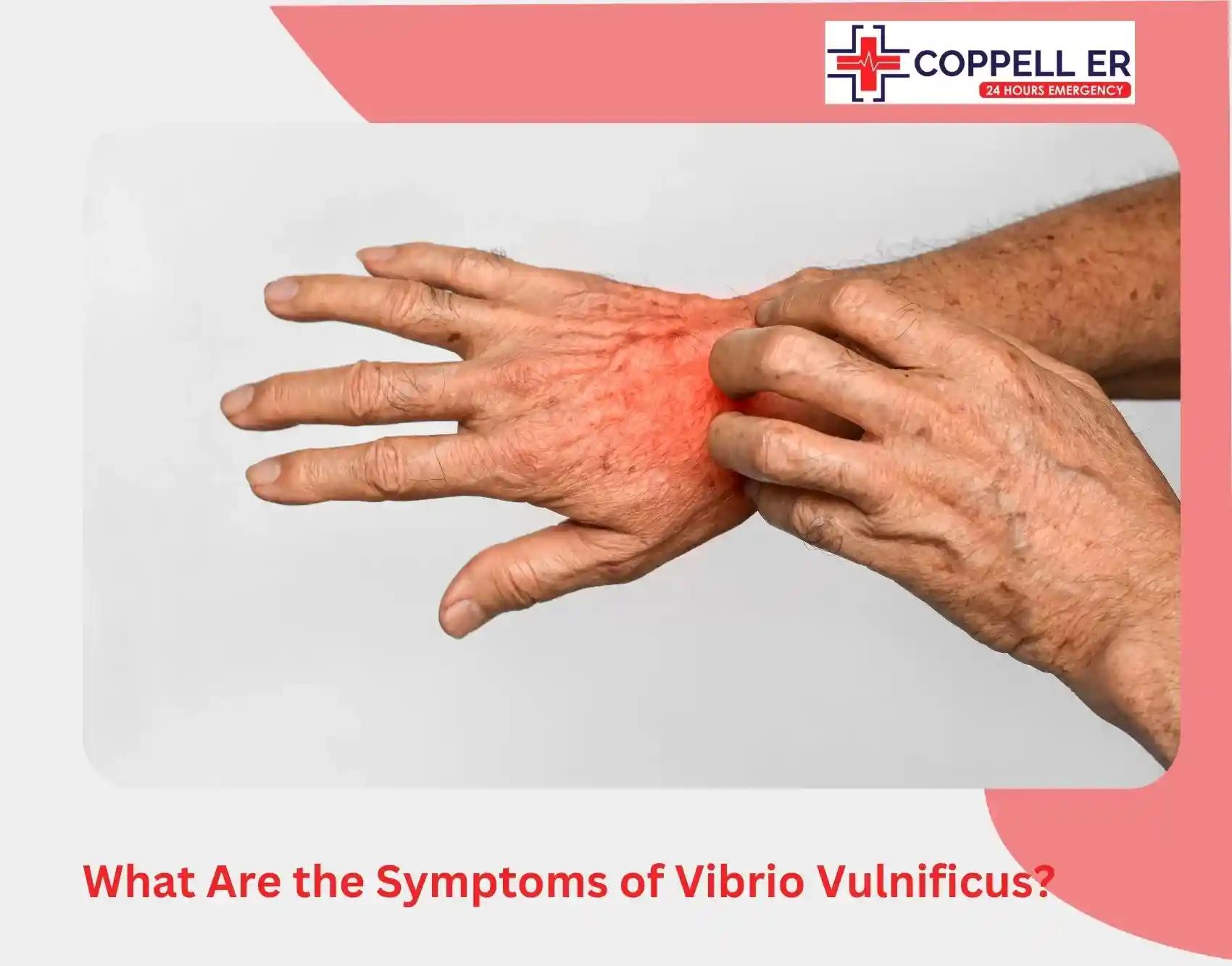
Vibrio vulnificus symptoms appear quickly, often within a day, and they track with how you were exposed. The bacteria can cause gut illness, a wound infection, or a bloodstream infection, and the bloodstream form is the most dangerous.
| Route | Common symptoms |
| Eating raw shellfish | Watery diarrhea, stomach cramps, nausea, vomiting, fever, and chills |
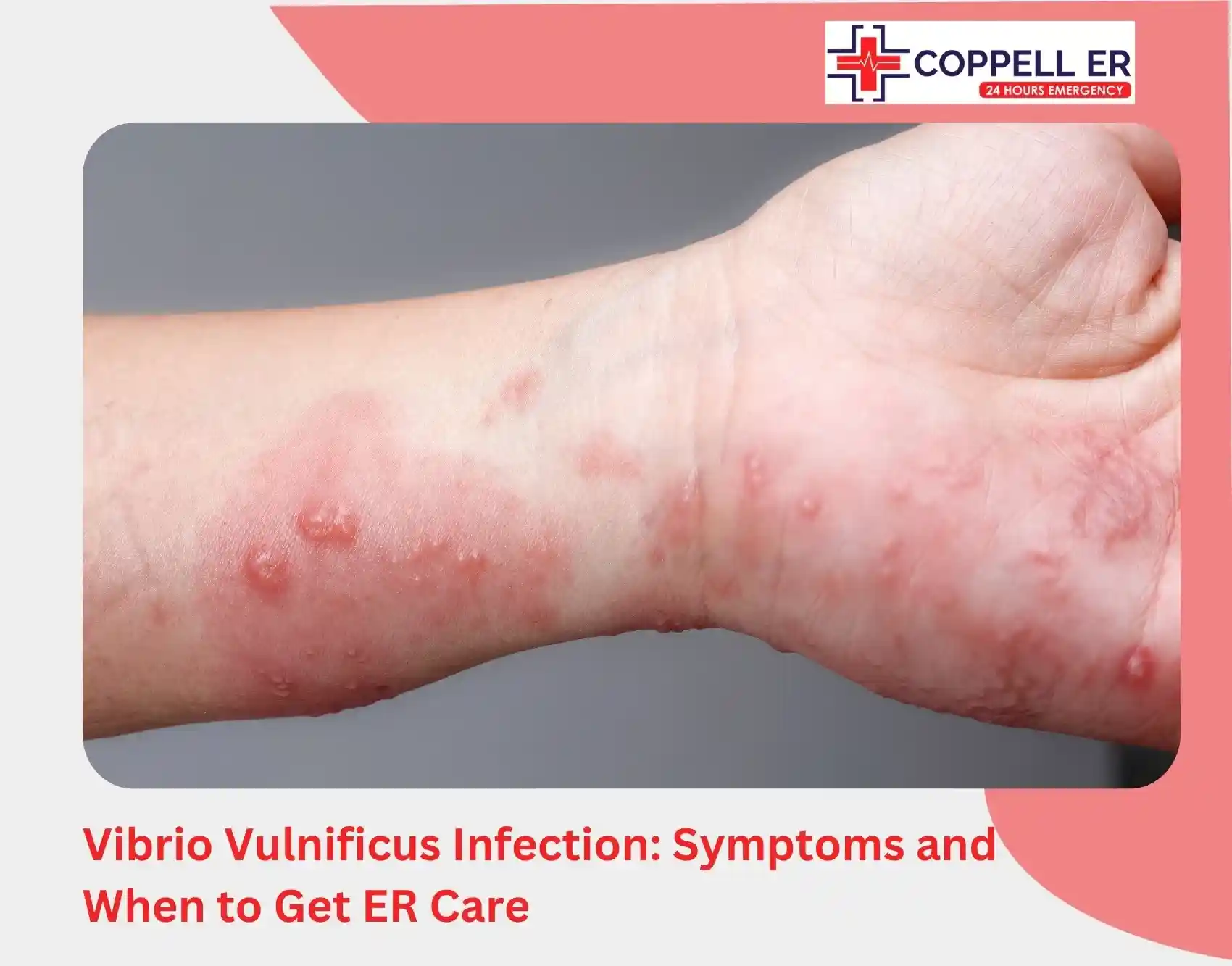
| Wound exposure | Fever, redness, pain, swelling, warmth, discoloration, and discharge at the wound |
| Bloodstream | Fever, chills, dangerously low blood pressure, and blistering skin lesions |
Mild gut symptoms can resemble ordinary food poisoning, the kind you might chalk up to a bad meal or abdominal pain from something you ate. What sets Vibrio apart is the speed and the company it keeps: a wound that worsens by the hour, or gut illness paired with fever and a plunging sense of wellness, especially after coastal exposure. That pattern is different from a passing bout of food intolerance and deserves a much closer look.
Flesh-Eating Bacteria: When a Wound Turns Dangerous
Vibrio vulnificus is sometimes called a flesh-eating bacteria because it can cause necrotizing fasciitis, a severe infection in which the tissue around a wound begins to die. It is not the most common cause of that condition, but when Vibrio is behind it, the progression is brutally fast.
Treat these flesh-eating bacteria symptoms as an emergency, especially after seawater exposure:
- Pain that spreads and intensifies far beyond the size of the wound
- Rapid swelling, warmth, and skin that turns red, purple, or dusky
- Fluid-filled blisters or large blistering lesions
- Skin breakdown or an open area that seems to grow
- Fever, chills, and a fast heartbeat
If a wound exposed to seawater turns rapidly painful, swollen, and discolored, go to a no-wait ER immediately. A Vibrio vulnificus infection can progress over the span of a few hours and can result in limb loss or life-threatening complications. This is not a wait-and-see situation, and the clock starts the moment those signs appear.
Who Is Most at Risk, and How to Protect Yourself
Healthy people usually get a milder illness, but some groups face a far higher chance of severe, life-threatening infection. The risk is greatest for people with weakened immune systems, particularly those with chronic liver disease, along with diabetes, cancer treatment, and other immune-lowering conditions.
A few habits sharply lower the risk:
- If you have a wound or fresh cut, stay out of salt and brackish water, or cover it with a waterproof bandage
- Wash wounds thoroughly with soap and clean water after any seawater contact
- Cook shellfish fully, and if you are in a high-risk group, skip raw oysters entirely
- Wear protective footwear in the water and handle raw seafood carefully
These steps matter most from late spring through fall, when the bacteria are most active in warm water.
How Is a Vibrio Vulnificus Infection Treated?
Vibrio vulnificus treatment is a race against time, built on urgent antibiotics and aggressive wound care. Many people with this infection become seriously ill and need intensive care or limb amputation, so the goal is to start treatment before the infection outruns it. Severe wound infections often require surgery to remove dead tissue, and bloodstream infections need intensive care.
At the ER, Vibrio vulnificus treatment starts the moment the infection is suspected. The team can run on-site lab testing to confirm the picture, start IV antibiotics and fluids without delay, and provide emergency room care for the wound.
Because the most severe cases need surgery and intensive care that go beyond a freestanding ER, the role here is to recognize it fast, begin antibiotics, stabilize the patient, and coordinate emergent transfer to a surgical hospital. With Vibrio, those early hours change outcomes.
When Should You Go to the ER for Vibrio?
Go to the ER for a Vibrio vulnificus infection at the first sign of a fast-worsening wound, blistering skin, or severe illness after coastal exposure. Because this infection moves in hours, the threshold to act is low, and the single most useful thing you can do is tell the team about recent seawater contact or raw seafood.
Manage at home only when you have mild gut symptoms, no wound involvement, no fever, and you are an otherwise healthy adult keeping fluids down. Even then, watch closely and act fast if things change.
Go to the ER now when a wound exposed to seawater becomes rapidly painful, swollen, red, or blistered, when you have a high fever with chills after raw shellfish, when blistering skin lesions appear, or when anyone with liver disease or a weakened immune system develops symptoms after exposure.
A freestanding emergency room can start antibiotics and labs on site without a wait, and our board-certified physicians can move quickly to stabilize and transfer if surgery is needed.
Always tell the provider where you have been. An inland clinician will not suspect Vibrio unless you mention the coast, the oysters, or the wound in the water. That one sentence can save a limb or a life.
Fast Recognition and Antibiotics at Coppell ER
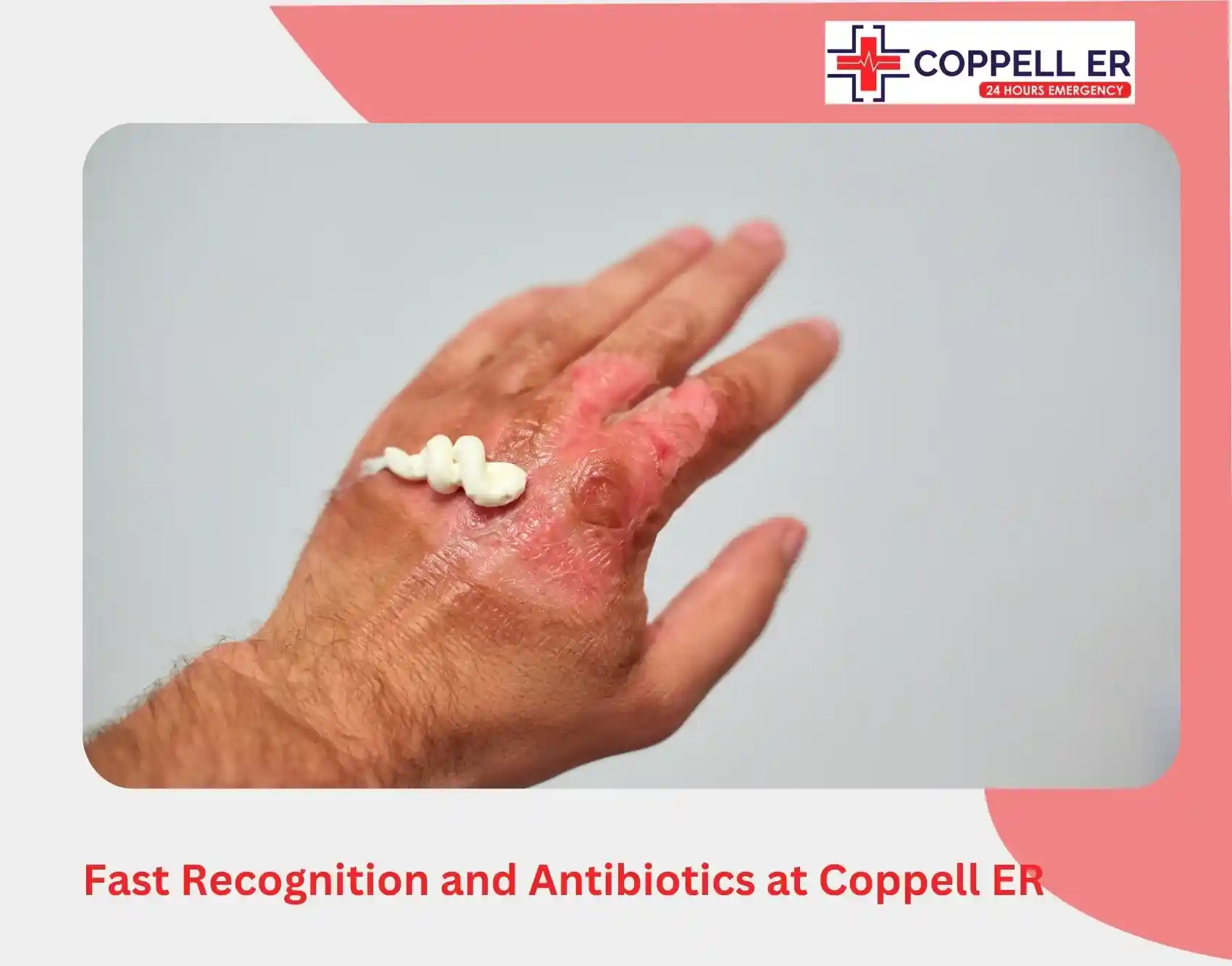
With Vibrio vulnificus, the difference between a close call and a tragedy is often measured in hours. The team at our 24/7 emergency room in Coppell recognizes the warning signs quickly, starts IV antibiotics and fluids right away, runs labs on site, and stabilizes severe cases while coordinating emergent transfer for surgery.
Most exposures never turn serious, and we will tell you honestly when that is the case. But when a wound or illness follows coastal water or raw seafood, do not wait it out. Come in, and tell us about the exposure.
Frequently Asked Questions
1. How fast does a Vibrio vulnificus infection progress?
Very fast. Symptoms often appear within a day, and the bacteria can spread from a wound or the gut into the bloodstream within hours. Severe cases can become life-threatening in a day or two.
2. How do you get Vibrio vulnificus?
Two ways: eating raw or undercooked shellfish, especially oysters, or exposing an open wound to warm salt or brackish water. It is not spread from person to person.
3. Who is most at risk for severe infection?
People with chronic liver disease face the highest risk, along with those who are immunocompromised or have diabetes or cancer. Healthy people usually develop a milder illness, though wound infections can still turn serious.
4. Is Vibrio vulnificus contagious?
No. You cannot catch it from another person. Infection comes only from contaminated seawater or raw seafood, which is why it is not spread through normal contact.
5. What does a Vibrio wound infection look like?
It starts as redness, swelling, warmth, and pain that worsen quickly, often with discoloration, discharge, and fluid-filled blisters. Rapid spread far beyond the wound is a red flag for a medical emergency.