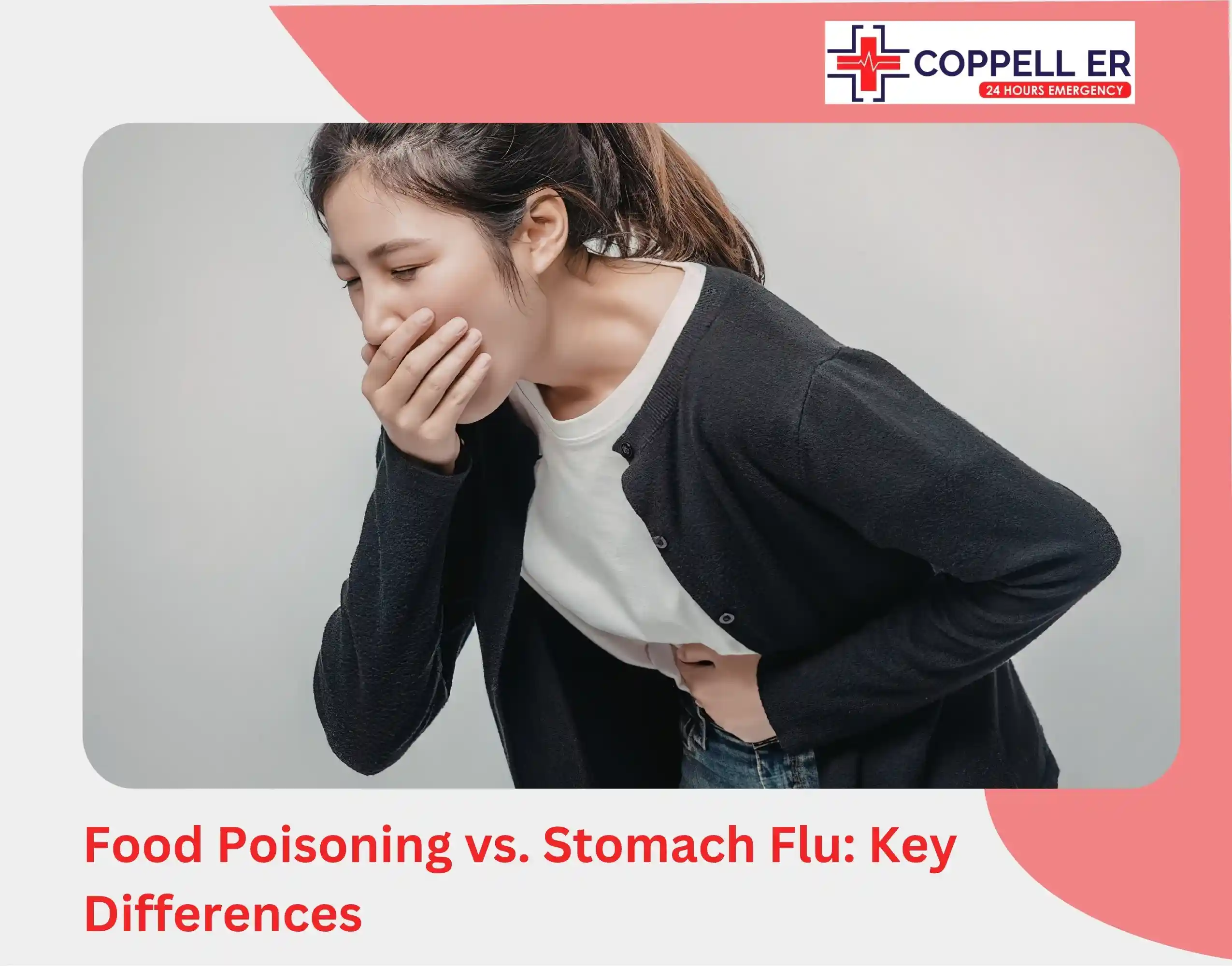
The fastest way to tell food poisoning vs stomach flu apart is timing and how symptoms progress. Food poisoning hits fast, within two to six hours, of eating contaminated food. The stomach flu comes from a contagious virus and builds slower, typically 12 to 48 hours after exposure.
Both cause vomiting and diarrhea, but food poisoning is tied to a specific meal, clears in one to three days, and rarely spreads person to person. The stomach flu spreads easily through contact, can linger for up to 10 days, and tends to bring fever and body aches along with the GI symptoms.
That distinction matters because it changes what you watch for, how long you will be sick, and whether the people around you are at risk. Most cases of food poisoning and stomach flu resolve at home with fluids and rest. But severe dehydration, bloody stool, or symptoms that will not require emergency care. Here is how to tell which one you are dealing with, how to treat it, and when to get help.
Food Poisoning vs Stomach Flu: Key Differences at a Glance
| ● Cause: Food poisoning results from bacteria, toxins, or parasites in contaminated food or water. The stomach flu (viral gastroenteritis) is caused by viruses, most commonly norovirus or rotavirus.
● How it spreads: Food poisoning traces back to a specific meal or drink. The stomach flu spreads person to person through direct contact, contaminated surfaces, and sometimes contaminated food handled by an infected person. ● Onset: Food poisoning symptoms appear within 30 minutes to 6 hours of eating contaminated food (up to 72 hours for some bacteria like Salmonella). Stomach flu symptoms develop 12 to 48 hours after viral exposure. ● Duration: Food poisoning typically resolves in 1 to 3 days. The stomach flu lasts 2 to 5 days on average, but can persist up to 10 days in young children and older adults. ● Telltale clue: If several people who shared the same meal all get sick within hours, it is almost certainly food poisoning. If one household member gets sick and others follow over the next few days, the stomach flu is more likely. |
What Causes Food Poisoning?
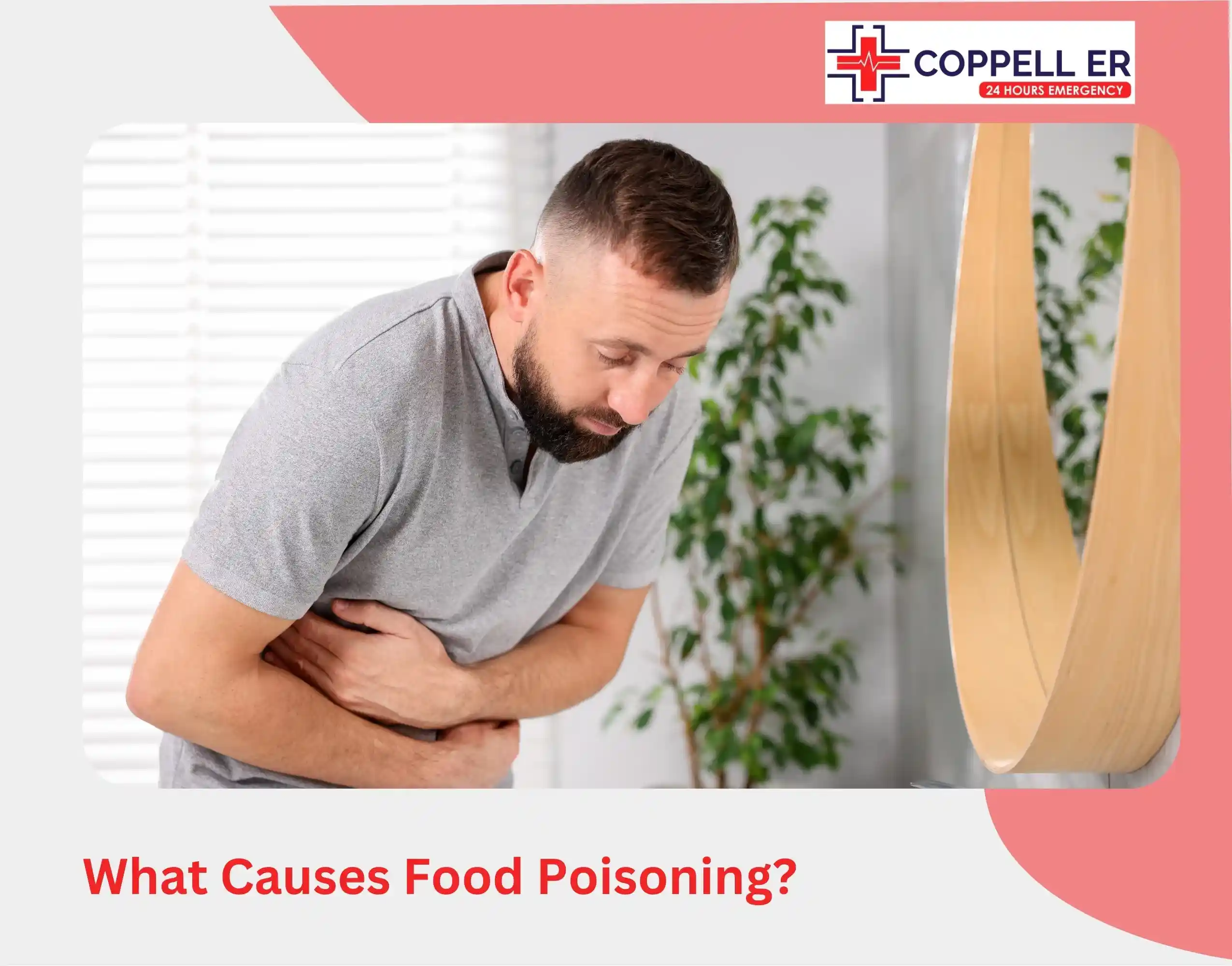
Food poisoning happens when you eat or drink something contaminated with harmful bacteria, viruses, toxins, or parasites. The contamination typically occurs during food preparation, storage, or handling. Undercooked meat, unwashed produce, improperly stored leftovers, unpasteurized dairy products, and contaminated water are the most common sources.
The bacteria behind most food poisoning cases in the U.S. include Salmonella, E. coli, Campylobacter, Clostridium perfringens, and Staphylococcus aureus (Staph). Each one behaves differently. Staph toxins, for example, can trigger vomiting within 30 minutes of eating contaminated food, while Salmonella may take 12 to 72 hours to produce symptoms. This is why food poisoning symptoms can show up anywhere from half an hour to three days after a meal, depending on the specific pathogen involved.
More than 48 million cases of foodborne illness occur in the U.S. each year, according to the CDC. Most resolve without medical treatment, but severe cases, particularly from E. coli or Listeria, can lead to hospitalization.
What Causes the Stomach Flu?
The stomach flu is not related to influenza. Its medical name is viral gastroenteritis, and it is caused by viruses that infect the lining of the stomach and intestines. The two most common culprits are norovirus and rotavirus.
Norovirus is the leading cause of stomach flu in adults and children. It is extremely contagious and spreads through direct contact with an infected person, contaminated surfaces, or contaminated food and water. It takes very few viral particles to cause infection, which is why norovirus tears through households, schools, daycare centers, and cruise ships so quickly. Rotavirus primarily affects infants and young children, though a vaccine has significantly reduced its prevalence.
The key difference from food poisoning is the route of transmission. While you can catch norovirus from contaminated food, you can also catch it simply by touching a doorknob or shaking hands with someone who is carrying the virus. Food poisoning, by contrast, almost always traces back to a specific food or drink.
Food Poisoning vs Stomach Flu: How Symptoms Compare
Both food poisoning and stomach flu attack the digestive system, and the symptom overlap is significant. But several differences can help you figure out which one you have.
Food Poisoning Symptoms
The hallmark food poisoning symptoms include sudden, intense nausea, vomiting, watery or bloody diarrhea, abdominal cramps, and sometimes fever. The onset is fast. If you were fine at dinner and violently ill by midnight, food poisoning is the likely cause. Bloody or mucousy stool is more common with food poisoning than with the stomach flu, especially in cases caused by E. coli or Campylobacter.
Another clue: if multiple people who ate the same meal all get sick around the same time, food poisoning is almost certainly the cause. The stomach flu does not work that way because its incubation period is longer and more variable.
Stomach Flu Symptoms
Stomach flu symptoms tend to build more gradually. You might feel generally unwell, tired, or mildly nauseous for several hours before the vomiting and diarrhea begin. Low-grade fever, chills, headache, and body aches are more common with the stomach flu than with food poisoning, because your body is fighting a systemic viral infection rather than reacting to a localized toxin.
Diarrhea from the stomach flu is typically watery rather than bloody. Vomiting tends to be more persistent with the stomach flu, sometimes lasting two to three days before tapering off.
Onset, Duration, and Contagiousness
These three factors are the most reliable way to distinguish food poisoning vs stomach flu in practice.
- Onset: Food poisoning typically strikes within 2 to 6 hours of eating contaminated food. Some types (like Salmonella) can take up to 72 hours. The stomach flu takes 12 to 48 hours after viral exposure to produce symptoms.
- Duration: Most food poisoning runs its course in 1 to 3 days. Staph food poisoning can clear within 24 hours. The stomach flu usually lasts 2 to 5 days but can persist for up to 10 days, especially in young children, older adults, and people with weakened immune systems.
- Contagiousness: Most types of food poisoning are not contagious from person to person. You get sick from the food, not from the person next to you. The stomach flu, on the other hand, is highly contagious. Norovirus can spread through direct contact, shared surfaces, and even airborne particles from vomit. An infected person remains contagious for at least two to three days after symptoms resolve.
How to Treat Food Poisoning and Stomach Flu at Home
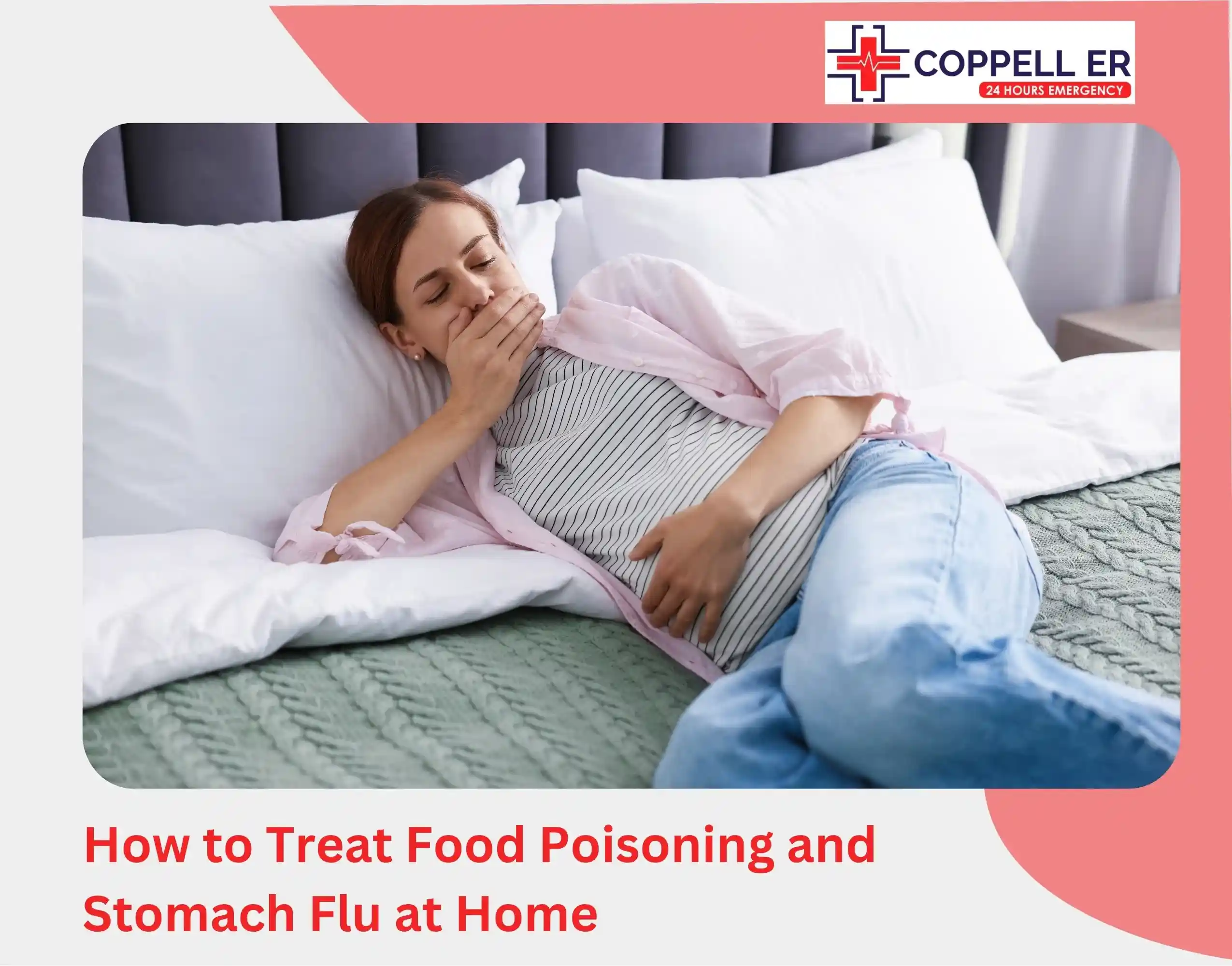
The treatment approach for both conditions is similar because the primary risk is the same: dehydration from fluid loss through vomiting and diarrhea.
Stay Hydrated
This is the single most important step. Take small, frequent sips of water, clear broth, or an oral rehydration solution like Pedialyte or a diluted sports drink. Avoid gulping large amounts at once, which can trigger more vomiting. If you can keep fluids down for an hour, gradually increase the amount. Signs of dehydration include dark urine, dry mouth, dizziness, and reduced urination. In children, watch for no tears when crying, a sunken soft spot on an infant’s head, and unusual drowsiness.
Rest Your Stomach, Then Eat Bland Foods
Wait until the vomiting subsides before eating. When you are ready, start with the BRAT diet: bananas, rice, applesauce, and toast. These foods are gentle on a recovering stomach and help firm up loose stools. Avoid dairy, fatty foods, caffeine, and alcohol until you are fully recovered. These can irritate the gut lining and slow healing.
Use Over-the-Counter Medications Carefully
Anti-nausea medications like ondansetron (Zofran, available by prescription) can help control vomiting. Over-the-counter options like bismuth subsalicylate may ease nausea and diarrhea in adults, but should not be given to children without a doctor’s guidance.
Avoid anti-diarrheal medications like loperamide (Imodium) unless your doctor recommends them. Diarrhea is your body’s way of flushing the pathogen out, and stopping it prematurely can prolong the illness, particularly with bacterial food poisoning.
What Is the Fastest Way to Recover from Food Poisoning?
Most food poisoning clears within 24 to 48 hours without specific treatment. You can speed recovery by staying aggressively hydrated, resting completely, and reintroducing bland foods as soon as you can tolerate them. Avoid solid food until vomiting has stopped for at least two hours.
For bacterial food poisoning that produces severe symptoms, a doctor may prescribe antibiotics, though this is only appropriate for certain types of infections (Salmonella, Listeria, or Campylobacter). Antibiotics do not help with viral or toxin-based food poisoning and can actually make some bacterial infections worse, so never take leftover antibiotics on your own.
If you suspect your food poisoning symptoms are from a specific restaurant meal or packaged food, save any remaining food if possible. This can help public health officials trace the source if an outbreak investigation is needed.
When to Visit the ER for Food Poisoning or Stomach Flu
Most cases of both conditions resolve at home. But some situations require professional medical care, and waiting too long can lead to serious complications.
Go to the ER if you or a family member experience:
- Signs of severe dehydration: no urination for 8+ hours, extreme thirst, dizziness or fainting, rapid heartbeat
- High or persistent fever that does not respond to medication
- Blood in vomit or stool
- Severe abdominal pain that is constant rather than cramping
- Inability to keep any fluids down for more than 12 hours
- Symptoms lasting longer than three days without improvement
- Confusion, muscle weakness, or blurred vision (possible signs of botulism)
- Symptoms in a newborn, infant, or elderly adult, or anyone with a compromised immune system
At Coppell ER, we provide IV fluid therapy to reverse dehydration quickly, laboratory testing to identify the specific pathogen causing your illness, anti-nausea medication administered intravenously for immediate relief, and pediatric care for children who cannot keep fluids down.
Not sure if your symptoms need the ER or can wait for a doctor’s visit? Our guide on freestanding ER vs urgent care can help you decide.
How to Prevent Food Poisoning and Stomach Flu
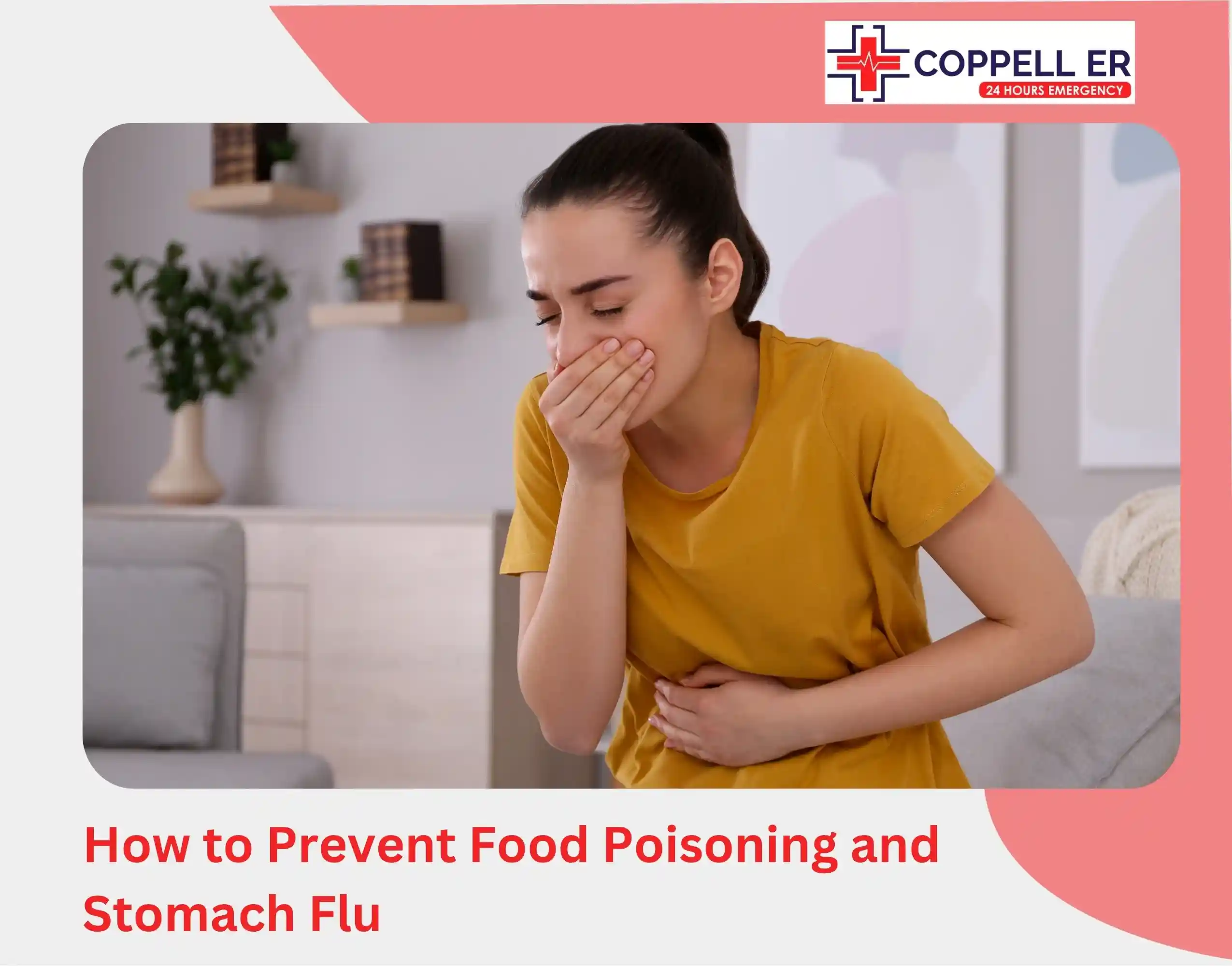
Since the two conditions spread differently, preventing them requires different strategies.
Preventing Food Poisoning
Cook meat, poultry, and eggs to their recommended internal temperatures. Refrigerate leftovers within two hours of cooking (one hour in hot weather). Wash fruits and vegetables under running water before eating. Keep raw meat separated from ready-to-eat foods during preparation. Avoid unpasteurized milk, soft cheeses, and raw shellfish if you are pregnant, elderly, or immunocompromised. When in doubt about whether food has been stored safely, throw it out. The cost of wasted food is far less than a trip to the ER.
Preventing Stomach Flu
Wash your hands with soap and water for at least 20 seconds, especially after using the bathroom, changing diapers, and before eating. Hand sanitizer is less effective against norovirus than soap and water. Disinfect high-touch surfaces with a bleach-based cleaner during and after illness in your household.
If a family member is sick, isolate their towels, utensils, and bedding. Keep sick children home from school or daycare until at least 48 hours after symptoms resolve to reduce spread. For infants, the rotavirus vaccine is highly effective at preventing the most severe form of stomach flu. Talk to your pediatric care provider about the vaccination schedule.
Key Takeaway
Food poisoning and stomach flu may feel similar, but the difference lies in the cause, timing, and how symptoms progress. Food poisoning often strikes quickly after eating contaminated food, while the stomach flu spreads through viruses and develops more gradually.
In most cases, both conditions resolve with rest, hydration, and simple home care. However, For severe food poisoning, stomach flu, or dehydration that is not improving with home care, seek emergency care. Coppell ER is a 24/7 freestanding emergency room at 720 N Denton Tap Rd Coppell, TX 75019 that ensures a faster, safer recovery for you and your family.
Food Poisoning vs Stomach Flu FAQ
1. How do you tell if it is food poisoning or stomach flu?
The fastest indicator is onset timing. Food poisoning hits within hours of eating a suspect meal, while the stomach flu takes 12 to 48 hours to develop after viral exposure.
2. Which one lasts longer, food poisoning or stomach flu?
The stomach flu generally lasts longer. Most food poisoning resolves within 1 to 3 days, while viral gastroenteritis can persist for 5 to 10 days. However, some bacterial food poisoning infections like Campylobacter can linger for a week or more.
3. Can food poisoning be contagious?
Most food poisoning is not contagious from person to person. However, norovirus, which can be transmitted through contaminated food, is highly contagious through person-to-person contact. So while the food itself caused your initial illness, you could spread norovirus to others through close contact even after the food source is gone.
4. What are the first signs of food poisoning?
The earliest food poisoning symptoms are usually sudden nausea and abdominal cramping, followed quickly by vomiting or diarrhea. These can appear as soon as 30 minutes after eating contaminated food or take up to 72 hours (with Salmonella). Rapid onset after a specific meal is the strongest early clue.
5. Should I go to the ER or urgent care for food poisoning?
For mild to moderate cases, urgent care is usually sufficient. Visit the ER if you notice blood in your stool or vomit, cannot keep fluids down for more than 12 hours, have high fever, or show signs of severe dehydration. Children under one year, elderly adults, and immunocompromised individuals should be seen sooner rather than later.