Experiencing chest tightness anxiety all of a sudden can be unsettling and frightening, especially without noticing any symptoms in the past. It is very common to worry about heart problems, especially when chest discomfort appears suddenly or is accompanied by shortness of breath. While anxiety can sometimes cause chest tightness, chest symptoms should never be ignored. Knowing how anxiety-related chest tightness feels, and understanding when emergency care is needed, can help you make safer decisions. In Coppell, Texas and the surrounding DFW area, emergency physicians are trained to rapidly evaluate chest symptoms and rule out serious conditions when uncertainty exists.
Quick Summary: Chest Tightness Anxiety
- Anxiety can sometimes cause chest tightness
- Symptoms may feel intense but vary widely
- Chest tightness can mimic heart or lung emergencies
- Only medical evaluation can rule out serious causes
- When in doubt, ER care is the safest option
Can Anxiety Cause Chest Tightness?
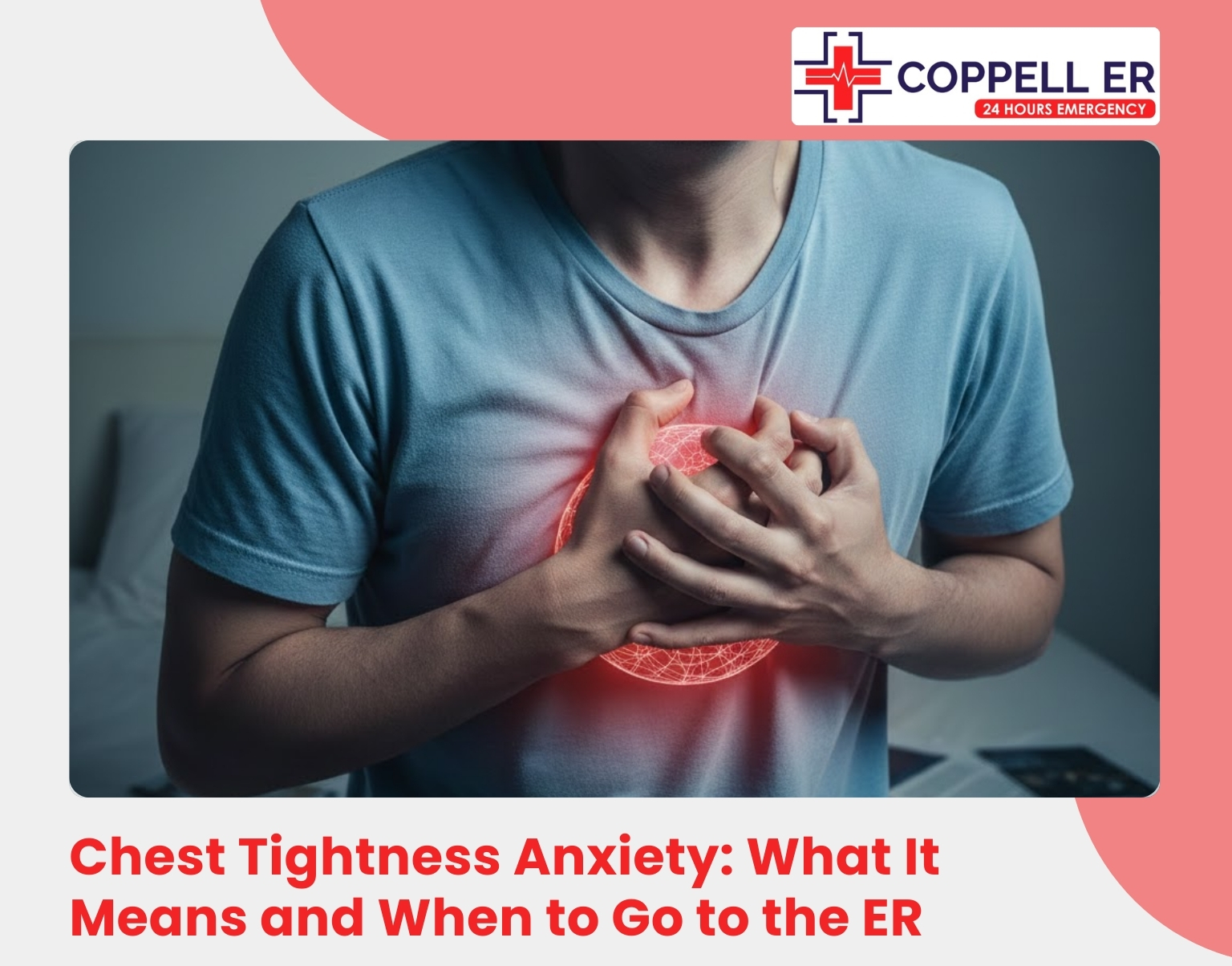
Yes can anxiety cause chest tightness is a commonly asked question. Anxiety triggers the body’s stress (fight-or-flight) response, which often leads to muscle tension, faster breathing, and increased heart rate. Together, these reactions can create a sensation of pressure or tightness in the chest.
However, chest tightness anxiety can closely resemble symptoms of cardiac emergencies. Because these symptoms can overlap, emergency physicians often recommend professional chest pain evaluation rather than assuming anxiety is the cause.
Understanding Anxiety Chest Pain
When understanding anxiety chest pain, it’s important to recognize that it does not follow a single pattern, and it is also crucially important to know that symptoms can vary widely from person to person. Anxiety-related chest pain may feel:
- Tight or squeezing
- Sharp or stabbing
- Burning or aching
Symptoms may worsen during panic episodes or emotional stress and sometimes may ease as anxiety levels settle. Still, emergency physicians emphasize that anxiety should be a diagnosis of exclusion, meaning serious medical causes must be ruled out first using clinical evaluation and testing
Common Anxiety-Related Chest Symptoms
- Chest tightness or pressure
- Rapid heartbeat
- Tingling in arms or hands
- Lightheadedness
- Feeling of impending doom
Because these symptoms overlap with emergencies, medical assessment is critical.
Chest Tightness Anxiety Shortness of Breath
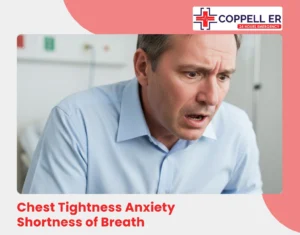
Chest tightness anxiety and shortness of breath can be distressing for many people. Anxiety can cause rapid or shallow breathing, making it feel difficult to take a full breath. This feeling can increase fear and worsens symptoms by over thinking.
However, chest tightness combined with breathing difficulty may also indicate lung or heart conditions that require urgent attention. Emergency departments equipped for respiratory problem care can quickly assess oxygen levels and breathing function.
Chest Pain Stress vs Heart-Related Chest Pain
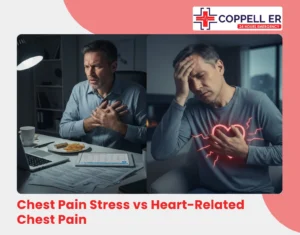
Understanding the difference between chest pain stress and heart-related chest pain is critical and pivotal for making prompt and swift decisions. While stress-related pain may fluctuate, cardiac pain often persists or worsens.
Comparison Table: Anxiety vs Heart-Related Chest Pain
| Feature | Anxiety / Stress | Heart-Related |
| Onset | During stress or panic | Sudden or exertional |
| Duration | May come and go | Often persistent |
| Radiation | Usually localized | Arm, jaw, neck, back |
| Response to rest | May improve | Often does not |
Because the differences are not always clear, emergency physicians use imaging and lab testing to make accurate determinations.
Chest Tightness Anxiety: When to Go to the ER
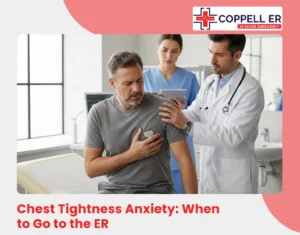
You should seek immediate emergency care if chest tightness anxiety is accompanied by:
Symptoms That Require Immediate ER Care
- Chest tightness with shortness of breath
- Pain spreading to arm, jaw, neck, or back
- Dizziness, fainting, or confusion
- Persistent or worsening chest pressure
- Symptoms in people with heart risk factors
In these cases, visiting a Coppell ER offering 24/7 emergency services ensures rapid evaluation and treatment.
Why ER Evaluation Matters Even If Anxiety Is Suspected
Emergency physicians focus on ruling out life-threatening conditions before anything else. On-site diagnostics such as EKGs, blood tests, and imaging help determine whether symptoms are anxiety-related or medical emergencies. In some cases, patients may need short-term monitoring through observation services before safe discharge.
What Medical Experts Say
According to the Mayo Clinic, anxiety can cause chest discomfort, but chest pain should always be evaluated when it is new, severe, or unexplained. The American Heart Association also emphasizes that chest pain and breathing difficulty should never be ignored, as early evaluation can be lifesaving.
Final Thoughts
While chest tightness anxiety can be distressing and upsetting, chest symptoms should never be ignored or dismissed. Anxiety may cause chest discomfort, but only emergency evaluation can rule out serious conditions with confidence. If symptoms feel severe, persistent, or uncertain, seeking immediate ER care in Coppell, TX or the DFW area ensures timely evaluation and peace of mind.
Frequently Asked Questions
Can anxiety cause chest tightness without heart disease?
Yes, anxiety can cause chest tightness, but heart-related causes must be ruled out by a medical professional.
How long does anxiety-related chest tightness last?
It may last minutes or longer depending on stress levels, but persistent symptoms require evaluation.
Is chest tightness anxiety shortness of breath dangerous?
It can be. Because breathing difficulty may indicate serious conditions, ER care is advised.
How do doctors tell anxiety chest pain from heart pain?
Through exams, heart monitoring, imaging, and lab tests performed in the ER.
When should stress-related chest pain be checked in the ER?
If chest pain stress is intense, worsening, or accompanied by other symptoms, emergency care is recommended.