
Stomach pain rarely announces its own cause, and guessing based on where it hurts is often wrong. A dull ache near the belly button can turn out to be early appendicitis; sharp pain under the right ribs can actually be your gallbladder, not your stomach at all.
Coppell ER doesn’t work from location alone. On-site CT, ultrasound, and lab work find the actual source, often within the hour, so GI pain treatment starts based on what’s really happening instead of just where it happens to hurt most.
Call Now: (469) 763-3136
Hours: 24/7/365; walk-ins welcome
Walk-In: 720 N Denton Tap Rd, Coppell, TX 75019
Stomach pain becomes a true emergency when it’s severe, sudden, and doesn’t ease, or when it comes with fever, vomiting blood, or pain that won’t let you stand up straight. The combination of symptoms matters more than the pain alone, since even mild-feeling pain can sit right next to a red flag that changes everything about how urgently it needs to be seen.
Watch for:
The sign people misread here isn’t a new symptom, it’s relief. If severe abdominal pain suddenly eases without treatment, especially after hours of steady worsening, that can mean something has perforated, not resolved. Sudden calm after severe pain is a reason to get checked, not a reason to relax.

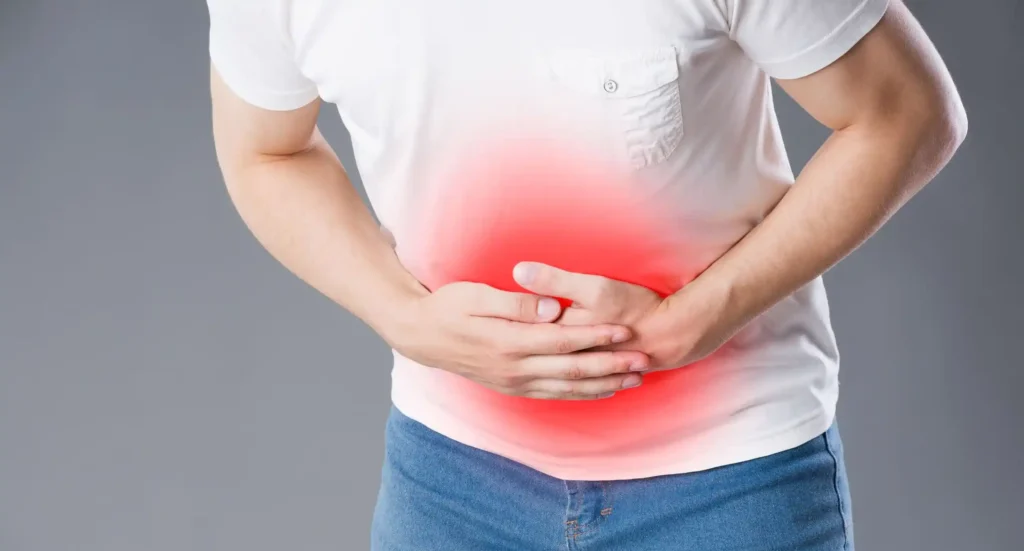
The location of stomach pain feels like it should point straight to the cause. It often doesn’t.
Appendicitis is the clearest example. It rarely starts where people expect. The first ache usually shows up near the belly button, vague and easy to dismiss as gas or a bad lunch. Only later, sometimes twelve hours in, does it settle into the sharp, localized pain in the lower right abdomen that finally makes someone worried enough to come in. By then, the window for a simple case has often narrowed.
Gallbladder pain does something similar in reverse. It can start under the right ribs and radiate straight to the right shoulder blade, far enough from the gallbladder itself that patients assume it’s a pulled muscle or a sleeping position. A kidney stone can mimic appendicitis from the other side of the body. Even heart-related pain occasionally shows up as upper abdominal discomfort instead ofchest pain.
That’s why an exam here doesn’t stop at asking where it hurts. Ultrasound checks the gallbladder directly. CT imaging looks at the appendix, the bowel, and everything between them, regardless of which spot a patient points to first.
Pain intensity feels like the most honest signal a body can send. It isn’t always.
Trapped gas can produce pain sharp enough to send someone to the floor, then vanish completely an hour later with no lasting damage done. A pulled abdominal muscle from a hard cough or an awkward lift can feel just as dramatic. Meanwhile, some of the more dangerous causes of stomach pain, a slow gastrointestinal bleed, an early bowel obstruction, appendicitis in older adults or people on certain medications, can present as a dull, tolerable ache that never quite escalates into something obviously alarming.
Age and health history shift this further. Older adults and people with diabetes often feel less pain than the situation actually warrants, sometimes masking a genuine surgical emergency behind what looks like routine discomfort. A genuinely dangerous cause can sit behind pain that never feels unbearable at all.
None of that means every ache needs a full workup. It means pain scores alone don’t decide anything here. Labs, imaging, and a physical exam catch what pain intensity by itself would miss in either direction.


Evaluation for stomach pain follows the same disciplined path regardless of where the pain started.
Treatment follows the cause, not just the complaint.
Pain relief comes first, but it doesn’t come at the cost of the diagnosis. IV pain medication controls severe discomfort quickly, without masking the symptoms a physician still needs to see and evaluate.
IV fluids correct dehydration from vomiting or diarrhea and often ease cramping on their own, well before any underlying cause is fully identified.
Antibiotics start when the picture points to a bacterial infection, such as diverticulitis or an infected gallbladder, rather than being handed out as a default.
For appendicitis, a confirmed gallbladder problem, or anything else requiring surgery, we don’t perform the procedure here, and we’re honest about that upfront. What we do is confirm the diagnosis, stabilize you, and coordinate directly with a surgeon or specialist, so the next step starts with answers instead of another round of tests from scratch.
For causes that resolve without intervention, like a viral stomach bug ortrapped gas and bloating, you leave with a clear explanation and a plan for what to watch for at home.

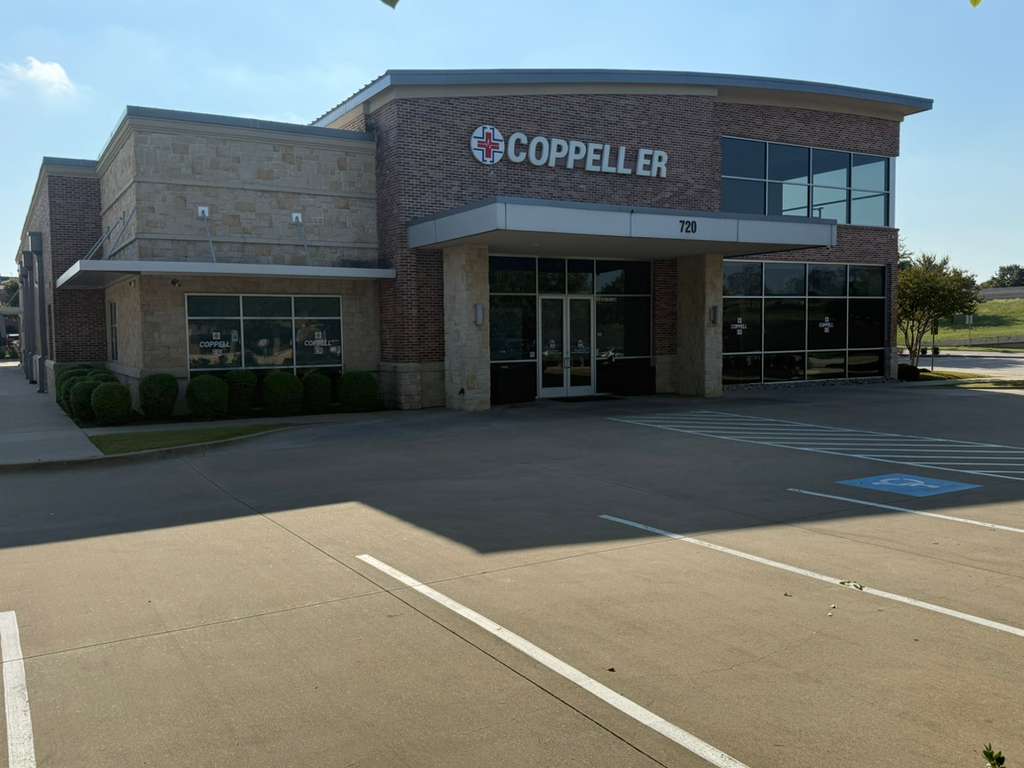
Searching for GI pain emergency room near Coppell? Our facility sits on N Denton Tap Road near the Sam Rayburn Tollway, with CT and ultrasound results ready fast enough to matter.
We regularly treat patients from:
We are open 24/7, including nights, weekends, and holidays. Patients from Irving and Carrollton often find us faster to reach than the drive into Dallas, especially with belly pain that won’t wait. Whether it’s stomach pain that started an hour ago or one that’s been building for days, walking in gets you answers the same visit, not a callback next week.
Stomach pain is confusing by nature. The same ache can mean gas or appendicitis, and the same intensity can mean nothing or everything, depending entirely on what’s actually happening underneath it.
Coppell ER doesn’t ask you to figure that out alone. Imaging, labs, and a physician who’s seen the pattern before are ready the moment you walk in, whatever the pain feels like or wherever it’s decided to show up.
Call Now: (469) 763-3136
Hours: 24/7/365; walk-ins welcome
Walk-In: 720 N Denton Tap Rd, Coppell, TX 75019
Some causes genuinely move. Appendicitis often starts near the navel before settling in the lower right side hours later. Gallbladder pain starts under the ribs and radiates to the shoulder. Moving pain is often exactly the pattern that needs an exam, not a reason to wait.
Classically in the lower right abdomen, but it usually starts elsewhere first, often as a dull ache near the belly button. That early stage is easy to mistake for indigestion. If pain migrates and worsens over several hours, it’s worth getting evaluated rather than waiting to see where it settles.
Go in if the pain is severe, sudden, or steadily worsening, or if it comes with fever, vomiting blood, a rigid abdomen, or fainting. Milder, stable pain that’s actually improving can usually wait for a regular doctor’s appointment instead of an ER visit.
Yes. It commonly radiates to the right shoulder blade or upper back, far enough from the gallbladder that people assume it’s muscular. It often worsens after fatty meals, a reliable clue that helps point back to the actual source of the problem.
The key difference is imaging and lab access. Urgent care can treat mild, clearly benign cases, but can’t rule out appendicitis or internal bleeding on-site. An ER visit here avoids the delay and added cost of being sent elsewhere mid-workup.
Yes, and the pattern itself is useful information. Cramping that comes in waves often points toward the bowel, gas, or early food poisoning, while constant, unrelenting pain points more toward inflammation or something surgical. Either pattern can still warrant an evaluation if it’s severe.
No appointment is ever needed. Walk in any hour for pain that just started or one you’ve put off. We accept most major insurance plans and offer flexible payment plans through Sunbit, with transparent billing throughout, not a surprise afterward.
Need help?