

A dry cough that lasts more than a week and does not improve is one of the most common walking pneumonia symptoms in adults. Other symptoms, such as constant tiredness or mild shortness of breath are often blamed on age.
Walking pneumonia is risky in adults because it quietly inflames the lungs over time. Unlike typical pneumonia, which often causes sudden and intense symptoms, walking pneumonia produces low-grade, slow-building symptoms that can become serious without proper treatment.
Walking pneumonia symptoms often hide in plain sight, blurring the line between normal fatigue and a developing lung infection. Recognizing these symptoms early can help prevent prolonged illness and respiratory complications.
What Is Walking Pneumonia?
Walking pneumonia is a milder form of lung infection that allows most people to continue daily activities without severe symptoms or hospitalization. The infection, typically caused by Mycoplasma pneumoniae bacteria, develops gradually over 1-2 weeks with low-grade fever, persistent dry cough, and fatigue rather than the sudden high fever and sharp chest pain seen in typical pneumonia.
Unlike typical pneumonia (which causes significant fever, chest pain, and difficulty breathing), this mild pneumonia often allows people to continue daily activities, which is how it got its name.
Mycoplasma pneumoniae infections can affect adults of all ages and often spread in community settings like offices, schools, and public transportation.
Atypical Pneumonia Signs (More Subtle Than Typical Pneumonia)
Walking pneumonia is part of a group known as atypical pneumonias. Signs tend to be:
- Gradual, not sudden
- Mild fever instead of high fever
- Dry cough instead of a productive cough
- Sweats and fatigue rather than severe chest pain
- Symptoms are often mistaken for bronchitis or a viral infection
Atypical pneumonia can “masquerade as a lingering cold,” making diagnosis difficult without imaging or medical evaluation.
8 Walking Pneumonia Symptoms in Adults
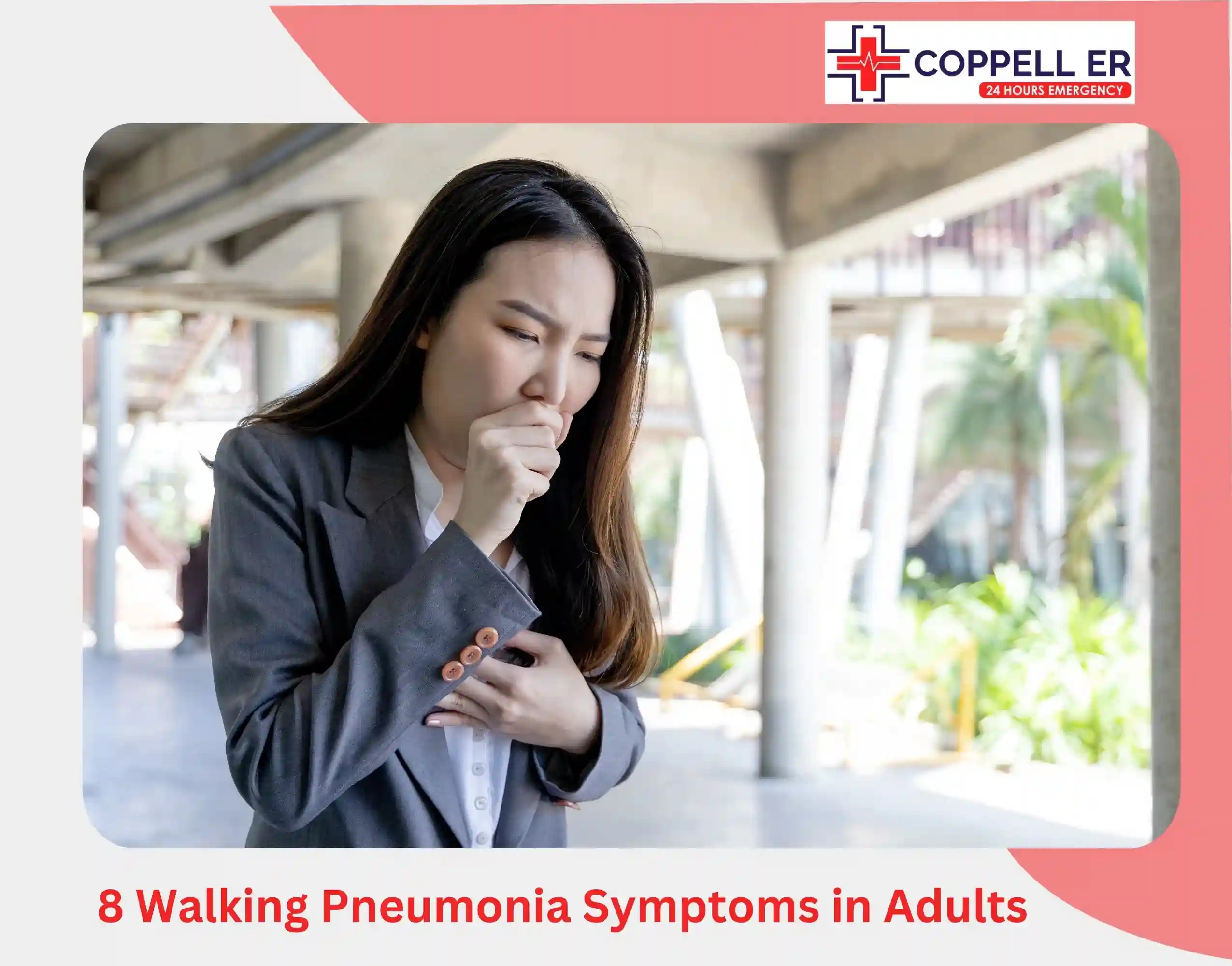
Walking pneumonia symptoms usually start gradually and worsen over 1–2 weeks. Many adults don’t realize they’re dealing with pneumonia because symptoms appear mild, nagging, or cold-like.
1. Persistent Dry Cough
A hallmark symptom of walking pneumonia is a dry, hacking cough that may linger for weeks. Unlike productive coughs that clear mucus, this cough feels unproductive and irritating, often worsening at night or when lying down.
2. Mild Fever
Adults may experience a low-grade fever (99–101°F). Fever may come and go or show up late in the infection. This distinguishes walking pneumonia from typical bacterial pneumonia, which usually produces immediate high fever above 102°F. Many adults dismiss this mild fever as stress or minor illness.
3. Sore Throat
Irritation from constant coughing may cause throat discomfort or hoarseness. Unlike strep throat (which causes severe pain and swollen tonsils), walking pneumonia throat pain feels scratchy and raw, developing gradually rather than suddenly.
4. Fatigue or Unusual Tiredness
Walking pneumonia causes fatigue that feels disproportionate to the mildness of other symptoms. Adults often describe feeling “wiped out” after minimal activity or needing more sleep than usual despite adequate rest.
5. Chest Discomfort
Some adults feel:
- Tightness
- Mild burning
- Discomfort with deep breaths
(Not typically the sharp chest pain seen in classic pneumonia.)
This chest discomfort differs from heart-related chest pain. It’s localized to the lungs and worsens with coughing or deep breathing rather than physical exertion.
6. Headache
Atypical pneumonia often triggers mild to moderate headaches due to inflammation and decreased oxygen exchange. These headaches typically feel dull and persistent rather than throbbing, and over-the-counter pain relievers may provide only temporary relief.
7. Shortness of Breath (Usually Mild)
Adults may notice:
- Breathlessness during exertion
- Mild wheezing
- Difficulty taking deep breaths
8. Walking Pneumonia Rash (Rare)
A small percentage develop a distinctive, scattered rash (erythema multiforme), more common in younger patients.
If you have a cough lasting longer than 10 days or worsening symptoms, walk into the ER for immediate evaluation.
Walking Pneumonia vs Typical Pneumonia
| Features | Walking Pneumonia | Typical Pneumonia |
| Onset | Slow | Sudden |
| Fever | Low | High |
| Cough | Dry | Productive |
| Chest Pain | Mild | Sharp |
| Breathing Issues | Mild | Severe |
| Likely to Need ER | Sometimes | Often |
What Causes Walking Pneumonia?
Walking pneumonia results from atypical bacteria, primarily Mycoplasma pneumoniae, that cause slower-developing lung infections than typical pneumonia bacteria. These organisms lack cell walls, making them resistant to common antibiotics like penicillin and requiring specific antibiotic treatment for effective clearance.
Most cases of walking pneumonia are caused by:
1. Mycoplasma pneumoniae (most common)
This organism accounts for the majority of community-acquired walking pneumonia cases, particularly in adults.
2. Chlamydophila pneumoniae
Atypical bacteria that spread easily in crowded environments.
3. Legionella pneumophila (less common, more severe)
Leads to Legionnaires’ disease, requiring urgent care.
How Walking Pneumonia Spreads
Walking pneumonia spreads through respiratory droplets when infected people cough or sneeze, with the contagious period lasting 2-4 weeks even after symptoms begin improving.
- Airborne droplets
- Close contact in homes, schools, and offices
- Shared surfaces and poorly ventilated indoor spaces
Adults who work in healthcare, schools, public transportation, customer-facing roles, or crowded workplaces are more prone. The incubation period typically ranges from 1-4 weeks after exposure, making it difficult to identify the source of infection.
When Walking Pneumonia Becomes Dangerous (ER Warning Signs)
Most cases begin as mild pneumonia, but in older adults or those with chronic conditions, walking pneumonia symptoms can progress to a more serious lung infection. Seek emergency care immediately for:
- Trouble Breathing: Shortness of breath at rest; rapid, shallow breathing, chest tightness, or inability to take a deep breath.
- Persistent High Fever (>102°F): Especially if unresponsive to medication.
- Chest Pain Radiating to the Shoulder or Back: Could indicate deeper infection or pleurisy.
- Coughing Up Blood: Even streaks of blood require immediate medical attention.
- Worsening Symptoms After a Week: Even if symptoms started mild.
- Blue Lips or Fingertips: Blue lips or fingertips, also called cyanosis, is a sign of low oxygen levels.
- Severe Weakness or Dizziness
Note: Pneumonia can rapidly become life-threatening in adults with weakened immune systems, heart disease, or lung disease.
How the ER Diagnoses Walking Pneumonia
We provide fast, same-visit evaluation with:
- Chest X-ray: To confirm inflammation or infection in the lungs.
- Pulse Oximetry: Check oxygen saturation levels.
- Blood Tests: Evaluate infection severity, dehydration, and inflammation levels.
- Rapid Viral & Bacterial Testing: Rule out COVID-19, flu, RSV, and other infections.
- Physical Examination: Lung sounds, breathing pattern, and signs of respiratory distress.
Treatment for Walking Pneumonia
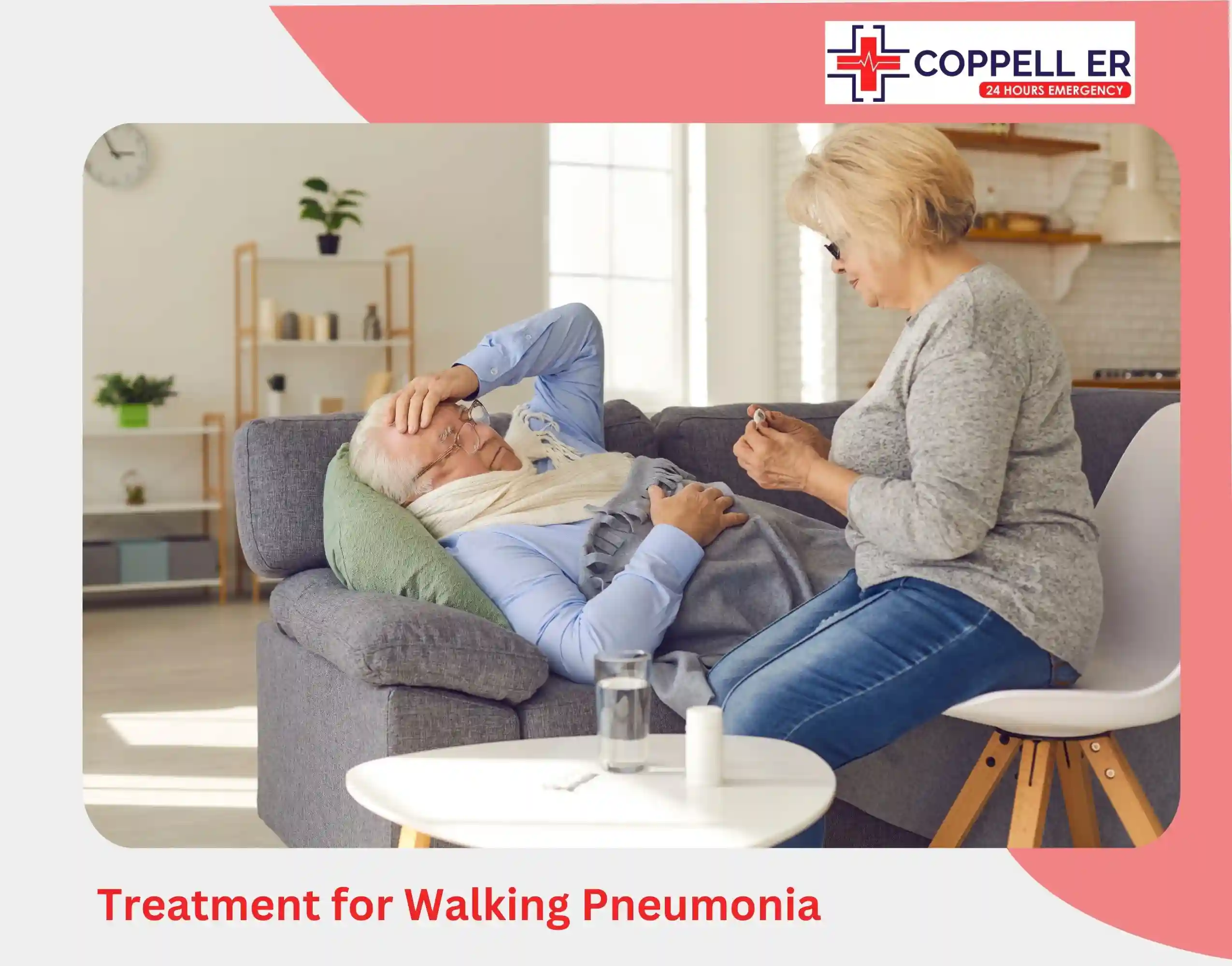
Treatment depends on severity of the walking pneumonia symptoms.
1. Antibiotics (if bacterial)
Most commonly:
- Azithromycin
- Doxycycline
- Fluoroquinolones (for adults when needed)
Mycoplasma pneumoniae infections often require macrolide or tetracycline antibiotics. Always consult a healthcare provider before starting any medication. Most patients notice symptom improvement within 48-72 hours of starting appropriate antibiotics.
2. Fever & Pain Management
Acetaminophen or ibuprofen reduce fever and ease body aches. Take as directed every 4-6 hours for acetaminophen or every 6-8 hours for ibuprofen to maintain consistent symptom control.
3. Breathing Treatments
Nebulizers or inhalers for wheezing help open airways and reduce chest tightness. Albuterol inhalers provide quick relief for adults experiencing mild shortness of breath or wheezing during recovery.
4. IV Fluids
For dehydration or weakness, particularly when fever or poor appetite has limited fluid intake for several days.
5. Oxygen Therapy
If breathing is impaired or oxygen saturation drops, supplemental oxygen ensures adequate oxygen delivery to vital organs while the lungs recover.
Who Is at Higher Risk for Severe Walking Pneumonia?
Higher risk groups for walking pneumonia include:
- Adults 65+
- Smokers
- People with asthma or COPD
- Adults with heart disease
- Diabetics
- Immunocompromised individuals
- Pregnant women
These patients should seek medical evaluation early, even with mild symptoms.
When to Visit the ER for Walking Pneumonia
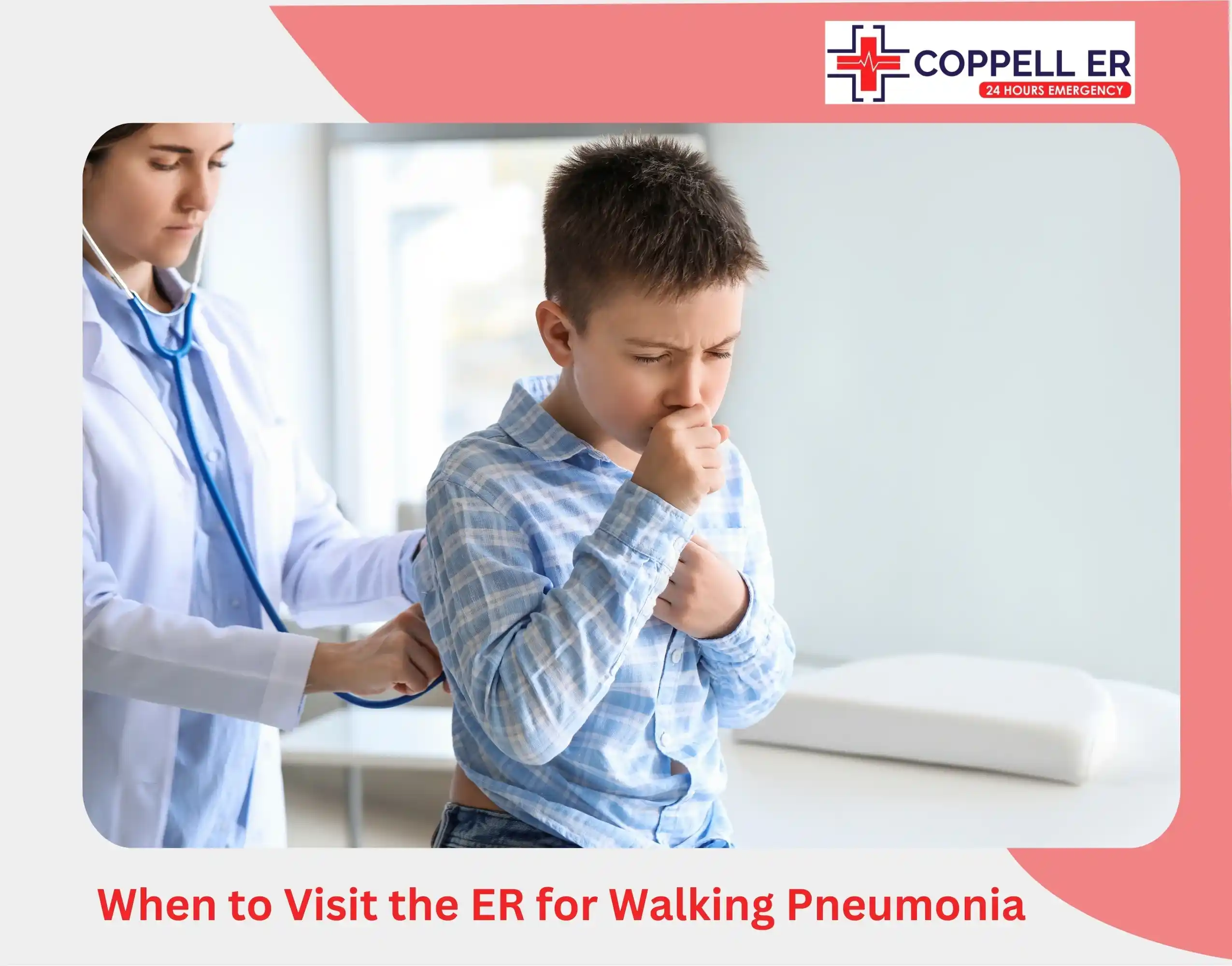
Go to the emergency room if you experience:
- Trouble breathing
- Chest pain
- Oxygen saturation < 94%
- High fever
- Severe fatigue
- Coughing up blood
- Symptoms worsening after antibiotics
- Dizziness or fainting
If you’re unsure, choose the emergency room, especially if breathing feels difficult.
Final Thoughts
Walking pneumonia symptoms in adults are easy to ignore. Remember this rule: if you develop a prolonged cough and fatigue that does not behave like a normal cold, get checked.
At ER Coppell, board-certified physicians are available 24/7 to identify oxygen drops, prevent complications, and start appropriate treatment before a “walking” illness turns into a serious respiratory problem. Early care helps prevent long recoveries, complications, and costly hospitalization.
FAQs
1. What does walking pneumonia feel like?
Walking pneumonia feels like a stubborn cold that won’t go away: a persistent dry cough, low-grade fever (99-101°F), unusual fatigue, and mild chest discomfort. Symptoms develop gradually rather than suddenly and rarely prevent daily activities, though you’ll feel noticeably run down and unable to shake the cough.
2. Can walking pneumonia symptoms go away on its own?
Sometimes, but untreated infections can worsen. Medical evaluation is recommended.
3. How long does walking pneumonia last?
Walking pneumonia usually lasts 1-2 weeks with treatment, though the dry cough often persists for 4-6 weeks after other symptoms resolve. Without antibiotics, the infection can linger for several weeks to months, and fatigue may continue even longer.
4. Is walking pneumonia contagious?
Yes, walking pneumonia is contagious for 2-4 weeks through respiratory droplets. People remain contagious even while taking antibiotics for the first 24-48 hours and can spread infection before symptoms appear.
5. Can walking pneumonia turn into regular pneumonia?
Yes, especially in older adults or those with chronic illness.
6. Do I need antibiotics for walking pneumonia?
Only if caused by bacteria like Mycoplasma pneumoniae. A doctor must diagnose first to confirm bacterial infection before prescribing antibiotics.
7. When should I go to the ER?
Breathing trouble, chest pain, high fever, dehydration, or rapidly worsening symptoms require immediate emergency evaluation to prevent respiratory failure or complications.