

Freestanding Emergency Room in Coppell: What to Expect and Why It Matters

When you need emergency care, you have four real options: a primary care office (if you can get an appointment), an urgent care clinic (if it is open and your condition is minor), a hospital ER (if you are prepared to wait), or a freestanding ER.

Most people understand the first three. The fourth is the one worth learning about. Coppell Emergency Room is a freestanding ER in Coppell. This page explains where it fits among those options, what it offers that the others do not, and what you should expect when you walk in.

What Is a Freestanding Emergency Room?

A freestanding emergency room is an independent, fully licensed emergency care facility that provides the same 24/7 emergency services as a hospital ER without being physically connected to a hospital. Freestanding ERs are staffed by board-certified emergency physicians and equipped with advanced imaging, laboratory, and treatment capabilities.

In Texas, freestanding ERs operate under Health and Safety Code Chapter 254, which sets the same licensing requirements applied to hospital-based emergency departments. They comply with EMTALA, the federal law requiring a medical screening examination for every patient regardless of insurance status or ability to pay. The clinical standards are not voluntary. They are regulatory requirements.

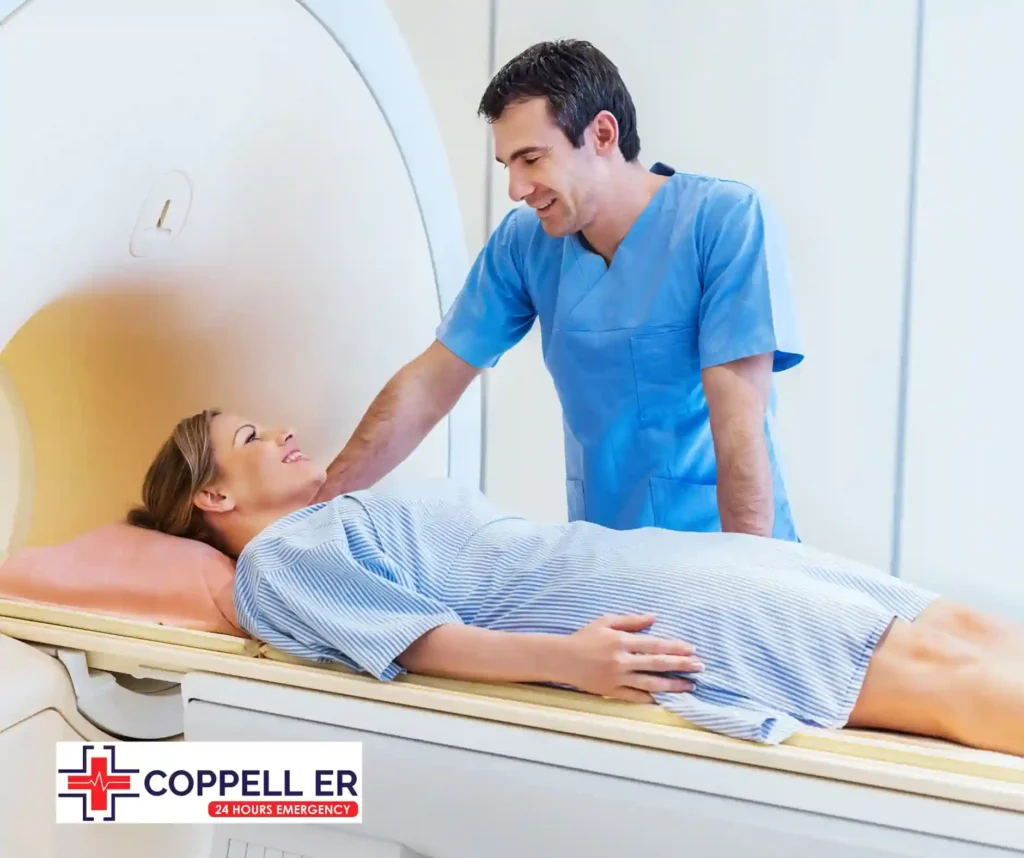
What Is an MRI

Benefits of Choosing a Freestanding ER in Coppell

Choosing a freestanding ER means faster access to board-certified emergency physicians, on-site CT scans and lab results during your visit, no wait times, 24/7 availability, and a private, patient-focused environment. Freestanding ERs deliver hospital-level care without hospital-level delays.

Board-Certified Emergency Physicians

Immediate access to emergency physicians

Board-certified ER doctors evaluate you directly. Not a triage nurse deciding when a doctor becomes available. Not a PA conducting the initial workup alone. Your physician is with you from evaluation through discharge
Affordable

On-site imaging and lab results

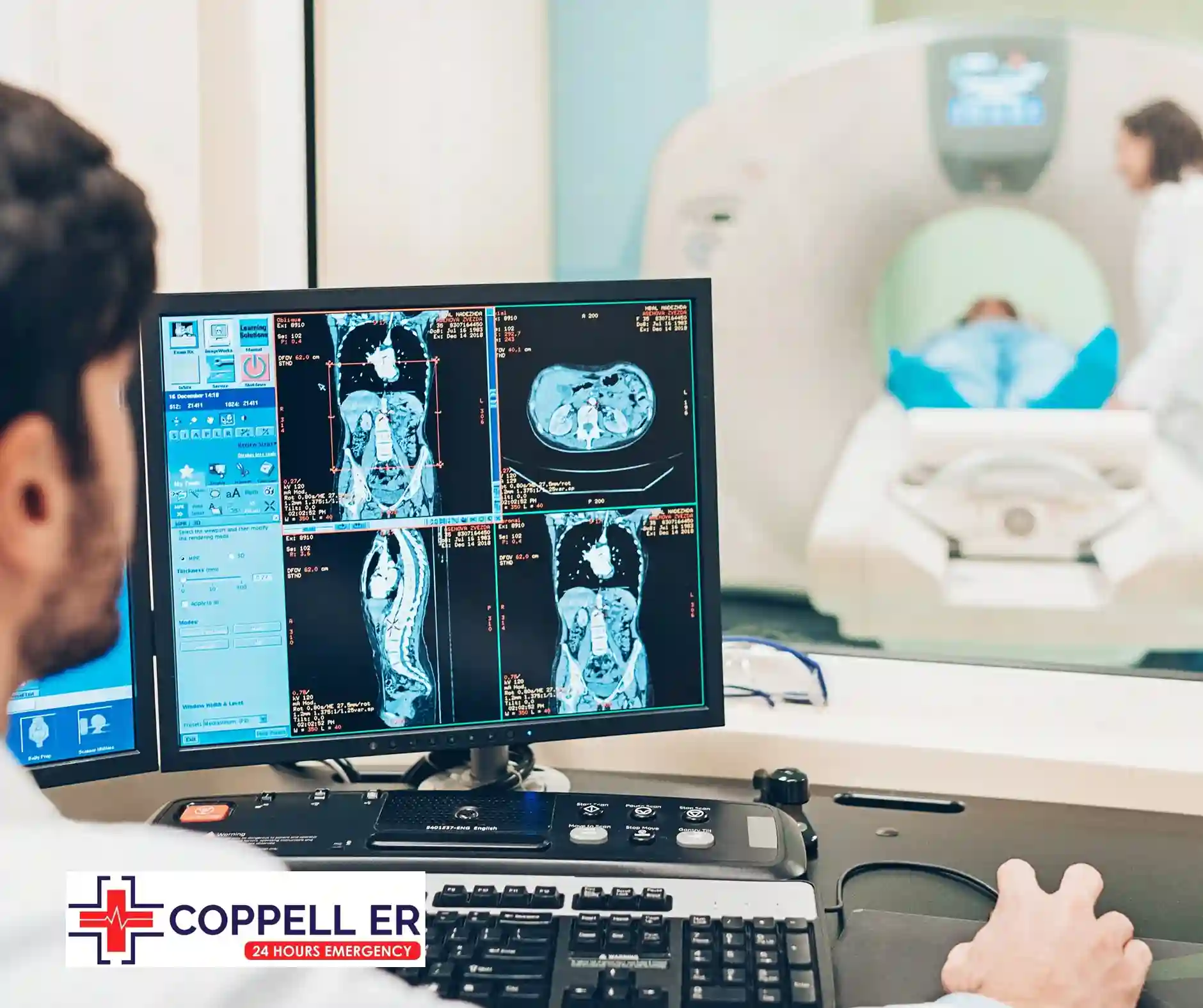
CT scans, digital X-rays, ultrasound, EKG, and a full on-site laboratory. Your physician interprets results while you are still in the treatment room. No callbacks, no follow-up appointments just to hear what the scan showed.

Fast Appointments

No wait times

Walk in and reach a private treatment room within minutes. Freestanding ERs serve lower patient volumes than hospitals and do not share imaging or lab capacity with inpatient departments. That structural difference is what makes near zero-wait care possible.

Open 247365

24/7/365 availability

Nights, weekends, every holiday. Full physician and nursing staff on-site at all hours.

Why Choose Emergency IV Fluids Rooms Coppell

Private rooms, lower stress

No shared spaces, no hallway beds, no ambient noise of a large hospital campus. Especially important for families with children or patients managing pain and anxiety.

Freestanding ER vs. Hospital Emergency Room

Freestanding ERs and hospital ERs share the same physician qualifications, diagnostic equipment, and emergency treatment protocols. Freestanding ERs typically offer shorter wait times and a less crowded environment, while hospital ERs provide inpatient admission, surgical capability, and MRI access.

What is the same?

Board-certified emergency physicians. Same diagnostic imaging (CT, X-ray, ultrasound, EKG). Same laboratory capabilities. Same IV medications and cardiac monitoring. Same EMTALA requirements. Same Texas licensing standards. The clinical care delivered in the treatment room is identical.

Shorter wait times because patient volume is lower. Imaging and lab equipment dedicated to ER patients, not shared with inpatient departments. Simpler facility access: park in front of the building, walk through one door, reach a treatment room. No parking garages, no campus navigation, no walking half a mile to find the ER entrance.

Inpatient admission for conditions requiring extended stay. Surgical suites for appendectomies, cardiac catheterization, and trauma surgery. MRI for conditions where CT or ultrasound are insufficient. On-site specialist consultations (neurology, cardiology, orthopedic surgery).

When to choose a hospital ER: If you know you need surgery (confirmed appendicitis, for example), if you have experienced major multi-system trauma (high-speed vehicle accident, industrial injury), or if you are in active labor with suspected complications. For these situations, call 911 or go directly to a hospital.

When a freestanding ER is the better choice: For everything else. Chest pain that needs evaluation, a child’s fever, a broken bone, severe abdominal pain, breathing problems, lacerations, infections, dehydration. The diagnosis and treatment happen faster, in a calmer environment, with no loss of medical quality.

diagnostic imaging Coppell

Freestanding ER vs. Urgent Care

Freestanding ERs differ from urgent care clinics in hours, physician qualifications, diagnostic capability, treatment scope, and ability to handle escalation. Here is how those differences play out:

  • Hours. Urgent cares in the Coppell area typically operate from 8 AM to 8 PM, closed on major holidays. Coppell Emergency Room is open 24/7/365.
  • Physicians. Urgent cares may be staffed by physician assistants or nurse practitioners. Coppell ER is staffed by board-certified emergency medicine physicians on every shift.
  • Diagnostics. Most urgent cares offer basic X-ray at best. No CT, no ultrasound, no cardiac monitoring, no on-site lab with rapid results. We have all of these.
  • Treatment. Urgent cares prescribe medication and send you home. They cannot administer IV fluids, IV antibiotics, or IV pain management. They cannot monitor cardiac rhythm or observe a patient for several hours.
  • Escalation. When an urgent care encounters something beyond its scope, it sends you to an ER. A freestanding ER handles both minor and major emergencies in the same visit. If hospital-level care is needed, it manages the stabilization and transfer. No middle step, no wasted time.


For a more detailed comparison, see our freestanding ER vs urgent care page.

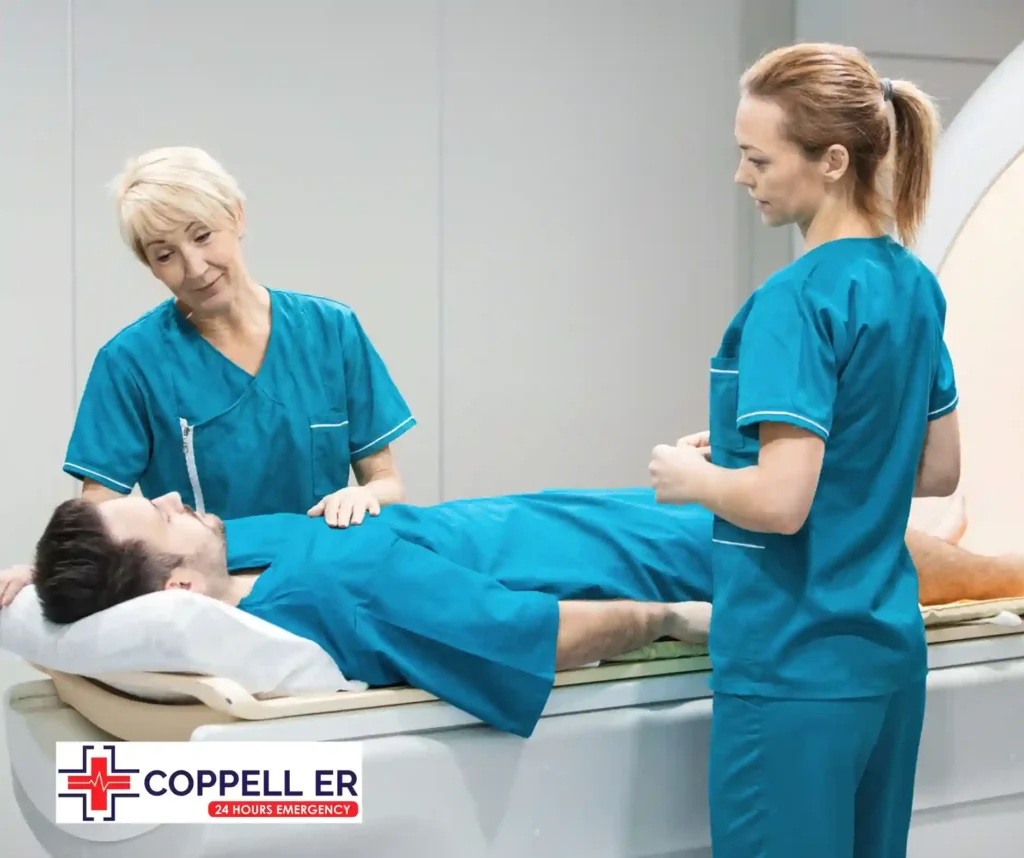
Step By Step Procedure for Urgent Care With MRI

Freestanding ER vs. Primary Care or Walk-In Clinic

Primary care offices require appointments and lack emergency equipment. Walk-in clinics handle minor issues during limited hours without imaging or IV capability. Freestanding ERs provide immediate emergency care 24/7 with full diagnostics, making them the appropriate choice when symptoms are urgent or uncertain.

Your primary care doctor is the right choice for scheduled checkups, chronic condition management, prescription refills, and health screenings. A walk-in clinic works for simple needs like a flu shot or a minor rash during business hours.

Neither is designed for emergencies. If you are dealing with sudden onset pain, a high fever that will not break, an injury that may involve a fracture, chest symptoms, or any situation where you feel genuinely uncertain about what is happening, a freestanding ER provides the diagnostic tools and physician expertise to evaluate you properly, on the spot, without an appointment.

This is not about replacing your primary care relationship. It is about knowing which door to walk through when the situation falls outside what a doctor’s office or a retail clinic can handle.

When Strep Throat Needs Emergency Care

Diagnostic Capabilities at Coppell Emergency Room

CAT scan (CT): Evaluates head injuries, abdominal emergencies, kidney stones, appendicitis, stroke, pulmonary conditions, and internal bleeding. Results interpreted during your visit.

Digital X-ray: Confirms fractures, evaluates chest conditions, identifies rib injuries. Images available within minutes.

Ultrasound: Assesses gallbladder, kidneys, soft tissue, blood flow, and pregnancy-related concerns. No radiation. Real-time imaging at the bedside.

Echocardiography: Evaluates heart structure and function. Used alongside EKG and cardiac enzyme testing for chest pain, palpitations, and shortness of breath.

Full Clinical Laboratory: Blood panels, metabolic testing, cardiac markers, urinalysis, infection screens, pregnancy testing, and rapid tests for flu, strep, RSV, mono, and COVID-19. All processed on-site.

ER Doctors, Not Urgent Care Providers

Emergency Care for Families in Coppell and Nearby Communities

Coppell Emergency Room serves patients from across the DFW mid-corridor, including Coppell, Irving, Lewisville, Flower Mound, The Colony, Carrollton, Farmers Branch, Addison, Grapevine, Highland Village, Southlake, Colleyville, Euless, Bedford, Hurst, and Keller.

For Coppell residents, we are a neighborhood ER. Irving and Carrollton families typically reach us faster than the nearest hospital ER during peak hours. If you are searching for a freestanding emergency room near me, a 24-hour ER in Coppell, or an emergency room with no wait, we are open around the clock.

Strep Prevention Tips (Coppell ER Recommendations)

What If You Need Hospital-Level Care?

If your condition requires surgery, extended hospitalization, or specialist intervention, Coppell Emergency Room stabilizes you and arranges a direct transfer to the appropriate hospital. Your ER physician contacts the receiving team directly, and all imaging, lab results, and treatment records travel with you. You do not restart the diagnostic process at the receiving facility.

For many emergency conditions, the initial evaluation and stabilization are the most time-critical steps. A freestanding ER’s shorter wait times mean those steps happen sooner, which can improve outcomes even when the patient ultimately needs hospital resources.

Insurance, Billing, and Financial Transparency

Coppell Emergency Room is a freestanding emergency medical care facility. Texas law requires your insurance provider to process emergency room visits at your in-network benefit level, regardless of our network status.

The federal  provides additional protection for emergency services at out-of-network facilities. You may still be responsible for copays, deductibles, and coinsurance as defined by your plan.

This facility does not participate in Medicare, Medicaid, or Tricare networks.

Coppell ER also offers flexible payment plans options for self-pay patients and those with high-deductible plans.

Visit a Freestanding ER in Coppell When It Matters Most

Coppell Emergency Room is open 24/7, including weekends and holidays.

Frequently Asked Questions

What can a freestanding ER treat?

Freestanding ERs treat the same range of conditions as hospital ERs: chest pain, stroke symptoms, fractures, severe abdominal pain, high fevers, breathing emergencies, lacerations, head injuries, allergic reactions, infections, dehydration, and more. Conditions requiring surgery or extended hospital admission are stabilized and transferred.

Freestanding ER rates are comparable to hospital ER rates, as required by Texas law. Your insurance processes the visit at your in-network ER benefit level regardless of network status. The No Surprises Act provides additional protection. Out-of-pocket costs depend on your specific plan’s copays, deductibles, and coinsurance structure.

Yes. Coppell Emergency Room provides  for patients of all ages. Our physicians are trained in pediatric emergency assessment and we carry age-appropriate medications. Children are treated in private rooms in a calm, family-friendly environment.

Your ER physician stabilizes your condition, contacts the receiving hospital directly, and arranges transport. All lab results, imaging, and physician notes transfer with you so the hospital team continues seamlessly. This process is often faster than arriving at a hospital ER and waiting through triage for the same initial evaluation.

Yes. We are open 24/7/365 on a walk-in basis. No appointment, no referral, no pre-registration required. Board-certified ER physicians are on-site at all hours.

Get in Touch with Us